Necessary Cookies

Required for the site to function. Cannot be disabled.

Analytics Cookies

Help us understand how visitors interact with our site (Google Analytics via GTM).

Marketing Cookies

Used to track visitors and deliver personalised advertisements.

We use cookies to enhance your browsing experience and analyse site traffic. By clicking Accept All, you consent to our use of cookies. Privacy Policy
NewsFire Global
Home News Europe World Christianity Culture Wars Opinion Video
Information
About Us Authors Advertising Terms & Conditions Privacy Policy Contact
R2B Media
R2B NEWSFIRE.GR PAPAFOTIS.GR THRACTION HELLENIC CONSERVATIVES RIGHT2THEBONE YT
News Europe

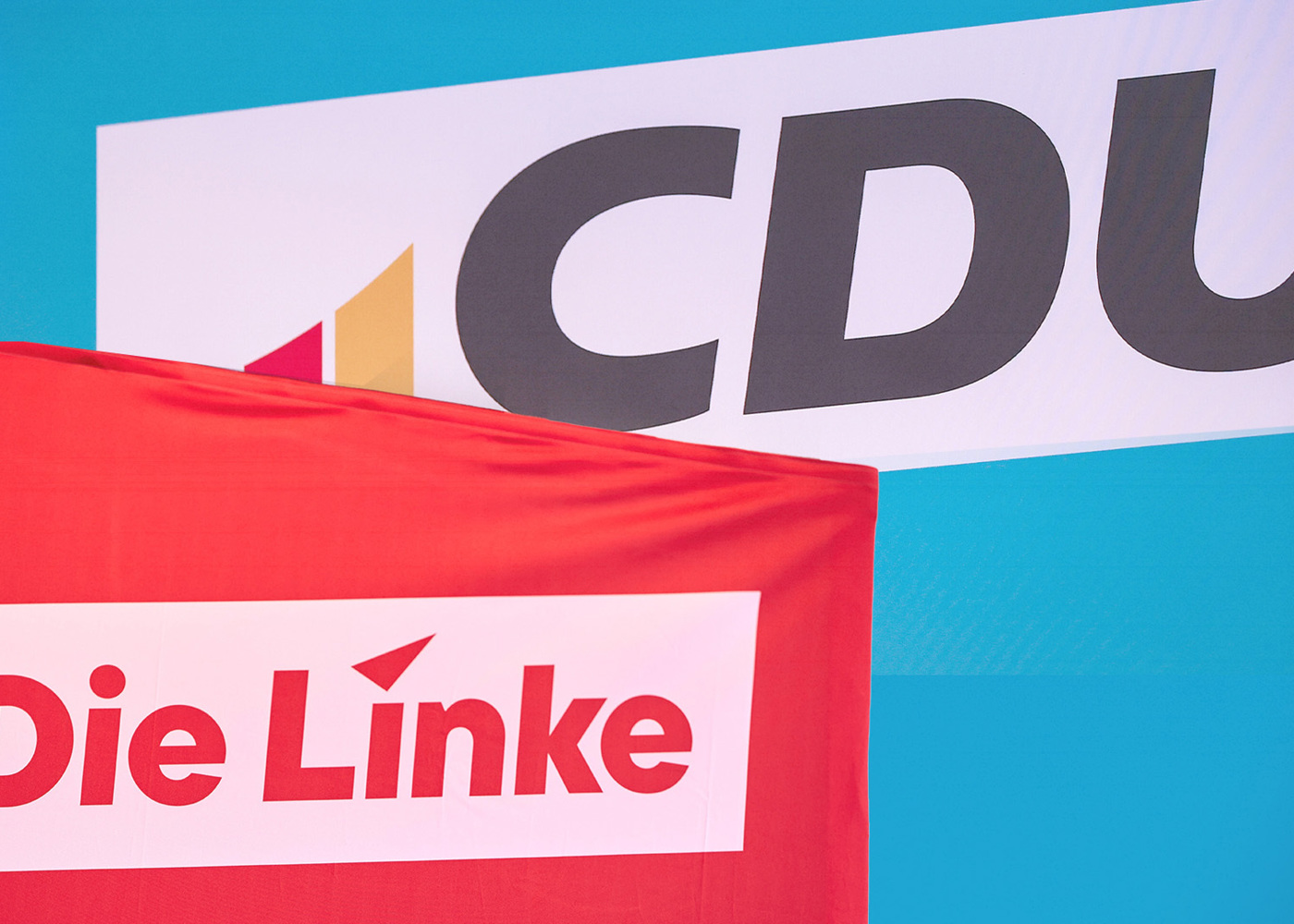
CDU Must Say Before Election If It Would Govern With The Left

The conservative Alternative for Germany leads polls in Saxony-Anhalt with over 40 percent, potentially forcing the CDU into an unprecedented coalition with the far-left to exclude it.

Dimitris Papafotis
Dimitris Papafotis Editor in Chief
JUNE 19, 2026 AT 12:05 PM

According to Nius, the Alternative for Germany has polled consistently above 40 percent in recent weeks in Saxony-Anhalt, with a slightly upward trajectory. The CDU trails far behind in second place, while the Left Party hopes for a double-digit result. The Social Democrats are barely clinging to the 5 percent threshold needed for parliamentary representation, with the Greens, the Sahra Wagenknecht Alliance, and the Free Democrats all polling below that crucial mark.

Depending on how many parties fail to clear the 5 percent hurdle, the Alternative for Germany could potentially form a government on its own. Even if it falls short of an outright majority, the party would be so dominant in the Magdeburg state parliament that only a coalition of all other parties—including the Left Party—could muster a governing majority to exclude it.

Ein Bild, das für Furore sorgte: CDU-Fraktionschef Guido Heuer und AfD-Spitzenkandidat Ulrich Siegmund fröhlich und Schulter an Schulter bei einer Veranstaltung in Sachsen-Anhalt.
Photo: nius.de

Both scenarios carry implications that extend well beyond Saxony-Anhalt, particularly as similar polling dynamics are emerging across other eastern German states. The state elections in Saxony-Anhalt and Mecklenburg-Western Pomerania have therefore become a focal point of national political debate.

Reiner Haseloff, the former Minister-President of Saxony-Anhalt, took the polling data seriously enough to break his earlier promise to remain in office until the end of the legislative term. He stepped down significantly earlier to give his chosen successor at least some incumbency advantage before the election. The polls have shown no response to this maneuver.

No substantive policy issue has managed to dominate the campaign. Yet when the CDU parliamentary group leader and the Alternative for Germany top candidate were photographed engaging in friendly conversation at a public event, the image generated nationwide media controversy. Guido Heuer and Ulrich Siegmund were shown standing shoulder to shoulder, smiling—a photograph that sparked debate about the so-called firewall between the established parties and the Alternative for Germany.

Voters Demand Clarity on Coalition Intentions

Election campaigns are meant to enable informed voting decisions by clarifying what parties intend to do after the election. Yet the CDU has remained conspicuously silent on the most pertinent question facing Saxony-Anhalt voters: what the party will do if polling predictions materialize on election day.

Such an outcome is far from unlikely, Nius notes, given that recent elections across Germany have consistently validated polling trends. The central message from Saxony-Anhalt surveys is clear: preventing an Alternative for Germany government majority—if possible at all—would require the CDU to cooperate with the Left Party. Whether the Union is prepared to do so remains an open question that interests a great many voters, particularly as statements from CDU figures leave all possibilities on the table.

By refusing to answer this question, the CDU may avoid immediate internal conflicts, but it intensifies voter uncertainty. Voters who prefer to cast their ballots based on clear scenarios feel dismissed. With Saxony-Anhalt’s current dismal polling numbers, the Union should recognize that honesty and clarity can only improve its position.

Evasion is no longer a viable strategy. Mail-in voting begins in just a few weeks, and time is running out.

With information from Nius

Share:
Dimitris Papafotis
Dimitris Papafotis

Dimitris Papafotis is the editor-in-chief of NewsFire.GR. He was born and raised in Athens. He studied at the Journalism Workshop (1991-1993). He currently lives in Pyrgos, Ilia, where he has been active in radio and various newspapers, while also maintaining his personal blog, Papafotis.gr.

According to Nius, the Alternative for Germany has polled consistently above 40 percent in recent weeks in Saxony-Anhalt, with a slightly upward trajectory. The CDU trails far behind in second place, while the Left Party hopes for a double-digit result. The Social Democrats are barely clinging to the 5 percent threshold needed for parliamentary representation, with the Greens, the Sahra Wagenknecht Alliance, and the Free Democrats all polling below that crucial mark.

Depending on how many parties fail to clear the 5 percent hurdle, the Alternative for Germany could potentially form a government on its own. Even if it falls short of an outright majority, the party would be so dominant in the Magdeburg state parliament that only a coalition of all other parties—including the Left Party—could muster a governing majority to exclude it.

Ein Bild, das für Furore sorgte: CDU-Fraktionschef Guido Heuer und AfD-Spitzenkandidat Ulrich Siegmund fröhlich und Schulter an Schulter bei einer Veranstaltung in Sachsen-Anhalt.
Photo: nius.de

Both scenarios carry implications that extend well beyond Saxony-Anhalt, particularly as similar polling dynamics are emerging across other eastern German states. The state elections in Saxony-Anhalt and Mecklenburg-Western Pomerania have therefore become a focal point of national political debate.

Reiner Haseloff, the former Minister-President of Saxony-Anhalt, took the polling data seriously enough to break his earlier promise to remain in office until the end of the legislative term. He stepped down significantly earlier to give his chosen successor at least some incumbency advantage before the election. The polls have shown no response to this maneuver.

No substantive policy issue has managed to dominate the campaign. Yet when the CDU parliamentary group leader and the Alternative for Germany top candidate were photographed engaging in friendly conversation at a public event, the image generated nationwide media controversy. Guido Heuer and Ulrich Siegmund were shown standing shoulder to shoulder, smiling—a photograph that sparked debate about the so-called firewall between the established parties and the Alternative for Germany.

Voters Demand Clarity on Coalition Intentions

Election campaigns are meant to enable informed voting decisions by clarifying what parties intend to do after the election. Yet the CDU has remained conspicuously silent on the most pertinent question facing Saxony-Anhalt voters: what the party will do if polling predictions materialize on election day.

Such an outcome is far from unlikely, Nius notes, given that recent elections across Germany have consistently validated polling trends. The central message from Saxony-Anhalt surveys is clear: preventing an Alternative for Germany government majority—if possible at all—would require the CDU to cooperate with the Left Party. Whether the Union is prepared to do so remains an open question that interests a great many voters, particularly as statements from CDU figures leave all possibilities on the table.

By refusing to answer this question, the CDU may avoid immediate internal conflicts, but it intensifies voter uncertainty. Voters who prefer to cast their ballots based on clear scenarios feel dismissed. With Saxony-Anhalt’s current dismal polling numbers, the Union should recognize that honesty and clarity can only improve its position.

Evasion is no longer a viable strategy. Mail-in voting begins in just a few weeks, and time is running out.

With information from Nius

