Necessary Cookies

Required for the site to function. Cannot be disabled.

Analytics Cookies

Help us understand how visitors interact with our site (Google Analytics via GTM).

Marketing Cookies

Used to track visitors and deliver personalised advertisements.

We use cookies to enhance your browsing experience and analyse site traffic. By clicking Accept All, you consent to our use of cookies. Privacy Policy
NewsFire Global
Home News Europe World Christianity Culture Wars Opinion Video
Information
About Us Authors Advertising Terms & Conditions Privacy Policy Contact
R2B Media
R2B NEWSFIRE.GR PAPAFOTIS.GR THRACTION HELLENIC CONSERVATIVES RIGHT2THEBONE YT
News Culture Wars

Public broadcaster ‘Funk’ distances itself from ‘Bible is garbage’ post

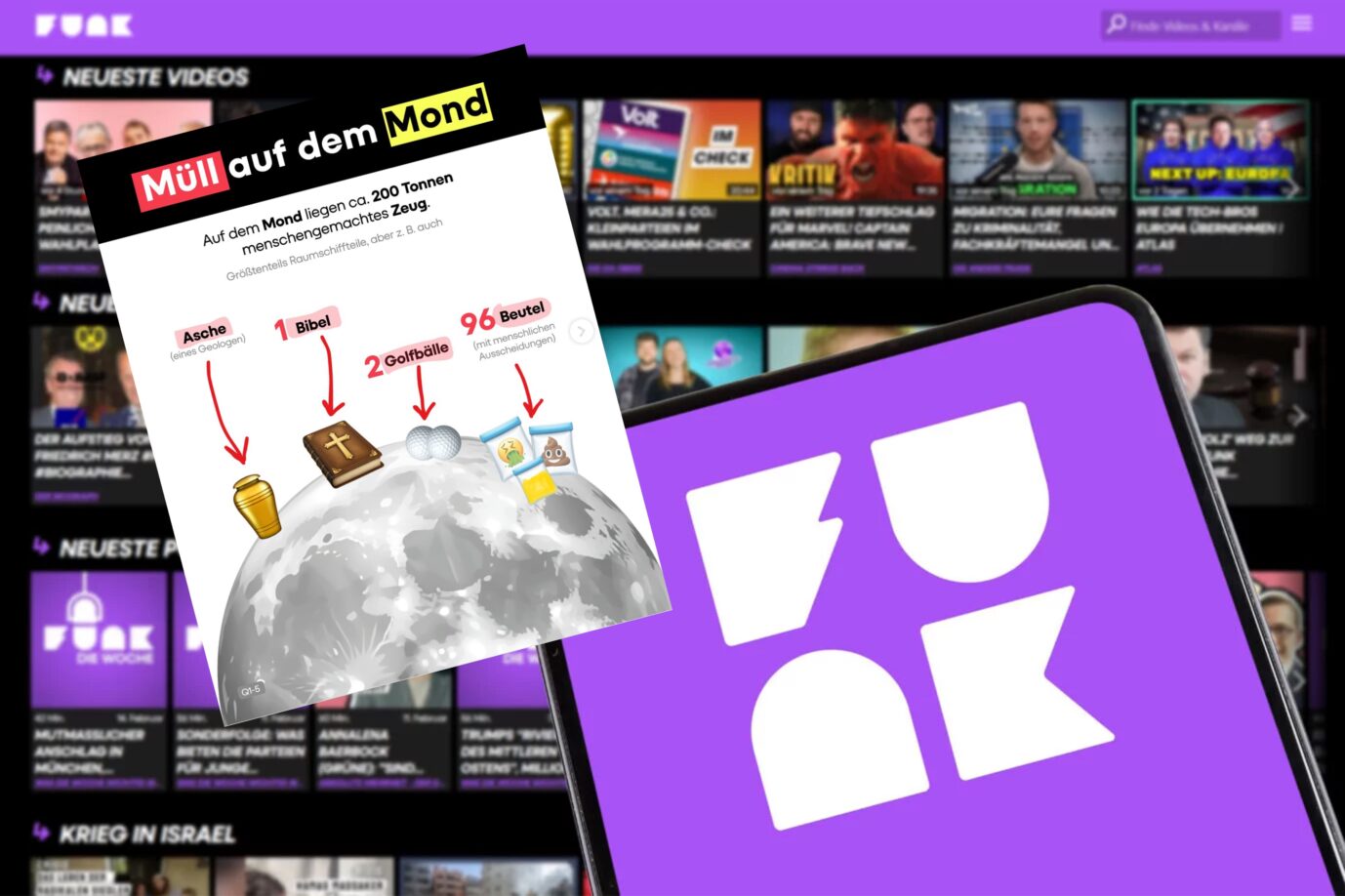
German public broadcaster Funk distanced itself from a post calling the Bible "trash" left on the moon after widespread criticism over the characterization it deemed inappropriate.
Stefanos Banos
Stefanos Banos Staff Writer
JUNE 19, 2026 AT 6:45 AM

The youth-oriented format, operated jointly by ARD and ZDF, issued a statement to Junge Freiheit acknowledging that the characterization was inappropriate. A Funk spokesperson declared that the framing explicitly does not represent the editorial position of Funk, adding that the term “trash” was intended to describe objects that would not be at the location without human intervention.

The controversy erupted after Funk published a social media post listing examples of “trash on the moon.” According to Junge Freiheit, the list included ashes, two golf balls, 96 bags of human waste, and a Bible. The post attempted to explain that astronauts leave items behind to make room for lunar rock samples on return trips to Earth, noting that even bodily waste is abandoned on the lunar surface.

Initial Defense Backfires

When criticism first mounted on Instagram, Funk initially defended the post by claiming the word “trash” was not meant pejoratively but rather to denote objects that would not naturally be present on the moon. The broadcaster insisted that items like the Bible or an urn are “naturally not trash.”

This explanation proved unconvincing to critics who pointed out that standard German dictionaries define “Müll” (trash) very differently. The Duden dictionary defines it as solid waste from households or industrial operations collected in containers for disposal. The Digital Dictionary of the German Language similarly describes trash as waste materials that are typically collected, discarded, and then deposited, burned, recycled, or otherwise disposed of.

Network Promises Corrective Action

In its formal statement, Funk acknowledged that the broadcaster is aware the choice of words “can be perceived as irritating or hurtful” when applied to the Bible. The network claimed it had intended to present scientific information in a platform-appropriate manner but admitted the execution fell short.

Funk stated it is taking the criticism seriously and will implement measures to ensure “more sensitive and contextually appropriate communication” in the future. The broadcaster said it is reviewing the incident carefully and will take corresponding action.

The incident highlights ongoing tensions between Germany’s publicly funded broadcasters and conservative audiences who view such content as evidence of institutional bias against Christian values. The youth format’s initial attempt to redefine a common German word to suit its narrative only intensified the backlash before the formal apology was issued.

With information from Junge Freiheit

Share:
Stefanos Banos
Stefanos Banos

Stefanos Banos was born in Piraeus and is an editor at NewsFire.GR, specializing in political analysis and international relations. He graduated from the Department of Communication and Media at the University of Bremen in Germany, where he also completed his Master of Arts in Communication and Media Studies. Married to Zoi, he is a proud father of three boys.

The youth-oriented format, operated jointly by ARD and ZDF, issued a statement to Junge Freiheit acknowledging that the characterization was inappropriate. A Funk spokesperson declared that the framing explicitly does not represent the editorial position of Funk, adding that the term “trash” was intended to describe objects that would not be at the location without human intervention.

The controversy erupted after Funk published a social media post listing examples of “trash on the moon.” According to Junge Freiheit, the list included ashes, two golf balls, 96 bags of human waste, and a Bible. The post attempted to explain that astronauts leave items behind to make room for lunar rock samples on return trips to Earth, noting that even bodily waste is abandoned on the lunar surface.

Initial Defense Backfires

When criticism first mounted on Instagram, Funk initially defended the post by claiming the word “trash” was not meant pejoratively but rather to denote objects that would not naturally be present on the moon. The broadcaster insisted that items like the Bible or an urn are “naturally not trash.”

This explanation proved unconvincing to critics who pointed out that standard German dictionaries define “Müll” (trash) very differently. The Duden dictionary defines it as solid waste from households or industrial operations collected in containers for disposal. The Digital Dictionary of the German Language similarly describes trash as waste materials that are typically collected, discarded, and then deposited, burned, recycled, or otherwise disposed of.

Network Promises Corrective Action

In its formal statement, Funk acknowledged that the broadcaster is aware the choice of words “can be perceived as irritating or hurtful” when applied to the Bible. The network claimed it had intended to present scientific information in a platform-appropriate manner but admitted the execution fell short.

Funk stated it is taking the criticism seriously and will implement measures to ensure “more sensitive and contextually appropriate communication” in the future. The broadcaster said it is reviewing the incident carefully and will take corresponding action.

The incident highlights ongoing tensions between Germany’s publicly funded broadcasters and conservative audiences who view such content as evidence of institutional bias against Christian values. The youth format’s initial attempt to redefine a common German word to suit its narrative only intensified the backlash before the formal apology was issued.

With information from Junge Freiheit