
Ex-UK Media Watchdog Chief Blasts Progressives on Free Speech
Lord Michael Grade accused progressive elites of suppressing free speech and targeting GB News for reflecting views of millions of ordinary Britons that mainstream outlets ignore.
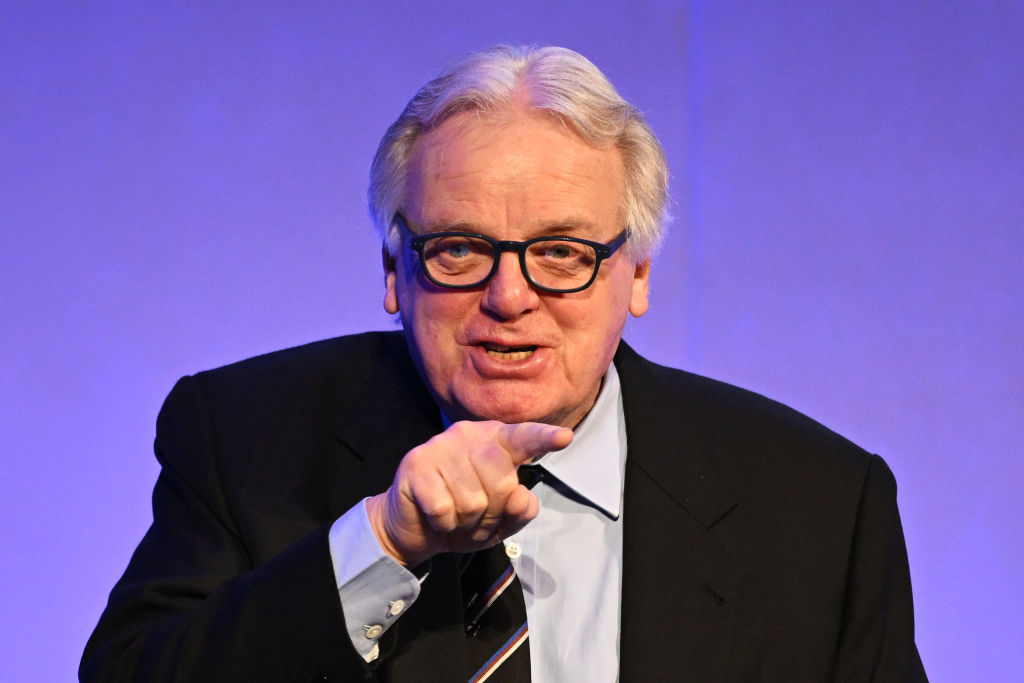

Lord Michael Grade, who recently stepped down as chair of the Office of Communications (Ofcom), has come out swinging against critics of GB News, arguing that the right-leaning broadcaster is being targeted simply for reflecting the views of a large segment of the British public, according to Brussels Signal.
Grade, a broadcasting heavyweight who has led ITV, Channel 4, and the BBC during his career, said opponents of GB News want to confine acceptable public discourse to what he described as a narrow liberal, Islington consensus. He warned that the same impartiality standards apply to GB News as to the BBC, Sky, and ITN, and that different editorial priorities should not be treated as violations.
Speaking Freely After Regulatory Shackles Removed
Since leaving his regulatory post, Grade has given a series of candid interviews in which he says he is now free of the shackles that prevented him from speaking openly. He has defended GB News against what he characterizes as an elite-driven campaign to limit viewpoint diversity in British media.
Grade argued that GB News addresses issues such as immigration and Brexit with a weighting that mainstream outlets, especially the BBC, have historically minimized or ignored. He said a large portion of the voting population has no voice on the BBC, and that GB News speaks to the agenda of the majority.
In comments to The Guardian, Grade warned that a prolonged failure to give the white majority a voice in national debates would harm social integration in Britain. He stated that what critics truly dislike is the existence of a television station giving voice to a significant body of opinion in the country that has been sidelined for years.
Progressive Backlash and Ofcom Distance
The remarks have triggered sharp pushback from former Ofcom officials and academic observers. Chris Banatvala, Ofcom’s founding director of standards, accused Grade of misunderstanding broadcasting code requirements on due impartiality, arguing that a single sentence in a script rarely suffices to balance controversial subjects.
Professor Steven Barnett of the University of Westminster said Grade appeared to have rewritten the law on impartiality. Other critics have raised concerns that Ofcom under Grade’s leadership was insufficiently rigorous in enforcing rules against GB News, particularly regarding interviews such as the one with Donald Trump.
Ofcom itself has distanced itself from Grade’s personal statements, emphasizing that it applies rules fairly and equally to all broadcasters and has taken action against GB News where breaches were identified.
GB News has described itself as Britain’s number one news channel, serving the public rather than what it calls the media establishment elite.
Wider Battle Over Free Speech and Broadcasting Standards
The controversy reflects broader tensions over broadcasting impartiality requirements, the role of partisan-leaning channels, and escalating arguments about free speech in the United Kingdom. Grade, who retook the Conservative whip in the House of Lords after departing Ofcom, has long been associated with resistance to what he previously termed the woke brigade.
The debate underscores a widening divide between those who believe traditional media gatekeepers have failed to represent conservative and working-class viewpoints, and those who argue that impartiality standards are being eroded by ideologically driven outlets.
With information from Brussels Signal





