
Rome Book Fair Sparks Censorship Row Over ‘Anti-Fascist’ Pledge
Italy's largest small press book fair sparked controversy after requiring publishers to sign an anti-fascist declaration, prompting Prime Minister Giorgia Meloni to condemn it as censorship.
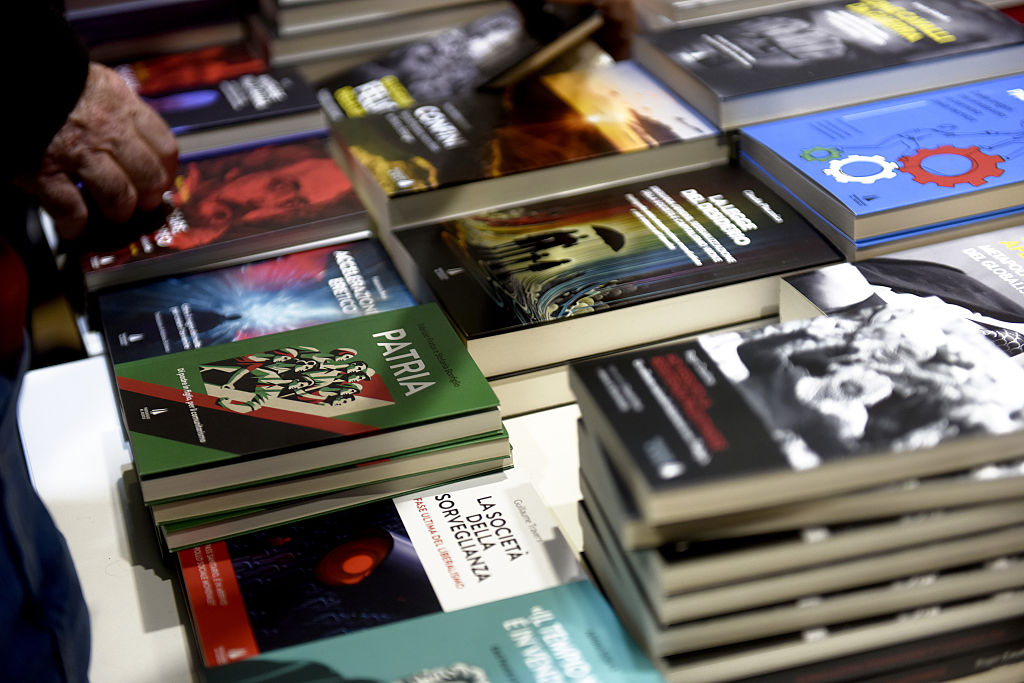

The controversy centers on the upcoming 25th edition of Più Libri Più Liberi, a major literary event scheduled for December 4 to 8, 2026, at La Nuvola in Rome’s EUR district. According to Brussels Signal, organizers have introduced new participation rules requiring publishers to sign a declaration endorsing anti-fascist values as a condition of entry.
Giorgia Meloni took to X on June 14 to denounce what she termed an “anti-fascist certificate” for publishers. The Italian Prime Minister described the requirement as quite simply, censorship and warned that censorship has no place in any democratic society.
Meloni argued that organizers were imposing discriminatory criteria for participation and using political labels to determine who may take part in public cultural life. Her intervention has elevated what was already a simmering dispute within Italy’s publishing world into a national political flashpoint.
The fair’s organizers pushed back against the censorship characterization, as Brussels Signal reports, insisting the declaration represented a “need for clarity” rather than censorship. They indicated that the prime minister’s remarks and the ensuing debate had prompted them to review the matter out of institutional respect.
Deputy Prime Minister Antonio Tajani adopted a more conciliatory tone, stating that while he personally held anti-fascist views, no one should be labeled a fascist simply for holding different opinions.
Background to the Dispute
The Italian Publishers Association (Associazione Italiana Editori, AIE) organizes Più Libri Più Liberi, which attracts more than 600 exhibitors annually and stands as Italy’s premier event dedicated exclusively to small and medium-sized publishers.
Tensions have been mounting in Italy’s publishing sector for several years as publishers associated with conservative and right-wing authors have increasingly participated in major literary fairs. Left-wing cultural figures, activists and some writers have expressed alarm at what they perceive as growing right-wing influence in the cultural sector, repeatedly calling for certain publishers to be barred from book fairs and publicly funded cultural events on the grounds that they promote ideas allegedly incompatible with democratic values.
December 2025 Controversy
The December 2025 edition of Più Libri Più Liberi proved particularly contentious when Passaggio al Bosco, a publisher whose catalogue critics claim glorifies figures from Italy’s Fascist and Nazi past, participated for the first time.
Some 80 writers, intellectuals and cultural figures—including historian Alessandro Barbero, novelist Antonio Scurati, and cartoonist Zerocalcare—signed an open letter questioning the publisher’s inclusion. Several authors withdrew from scheduled appearances while local officials distanced themselves from the opening ceremony.
The Italian Publishers Association’s then-president, Innocenzo Cipolletta, defended the decision, asserting that readers should judge books for themselves and courts should assess their legality in a country that bans the glorification of fascism.
New Participation Rules
In response to the 2025 uproar, organizers have introduced new participation rules for the 2026 edition. Publishers applying for exhibition space must now sign a declaration recognizing and sharing the values underpinning Italy’s constitutional order, including what organizers describe as its anti-fascist foundations.
The text commits exhibitors to repudiating fascist ideology and all forms of totalitarianism, and prohibits displaying or selling material that glorifies fascism or incites hatred or discrimination. Violators face immediate exclusion. The fair’s online application system blocks any submission that does not accept these clauses.
Supporters of the measure contend that anti-fascism is not a partisan political position but a core principle of the Italian Republic itself.
With information from Brussels Signal





