Necessary Cookies

Required for the site to function. Cannot be disabled.

Analytics Cookies

Help us understand how visitors interact with our site (Google Analytics via GTM).

Marketing Cookies

Used to track visitors and deliver personalised advertisements.

We use cookies to enhance your browsing experience and analyse site traffic. By clicking Accept All, you consent to our use of cookies. Privacy Policy
NewsFire Global
Home News Europe World Christianity Culture Wars Opinion Video
Information
About Us Authors Advertising Terms & Conditions Privacy Policy Contact
R2B Media
R2B NEWSFIRE.GR PAPAFOTIS.GR THRACTION HELLENIC CONSERVATIVES RIGHT2THEBONE YT
News Europe

Germany Must Prepare for War with Russia, Army Chief Warns

Germany's army chief warns the Bundeswehr must prepare for potential combat with Russia by 2029 as Moscow expands its military beyond Ukraine war needs, prompting Berlin to boost defense spending.

Dimitris Papafotis
Dimitris Papafotis Editor in Chief
JUNE 12, 2026 AT 10:25 AM

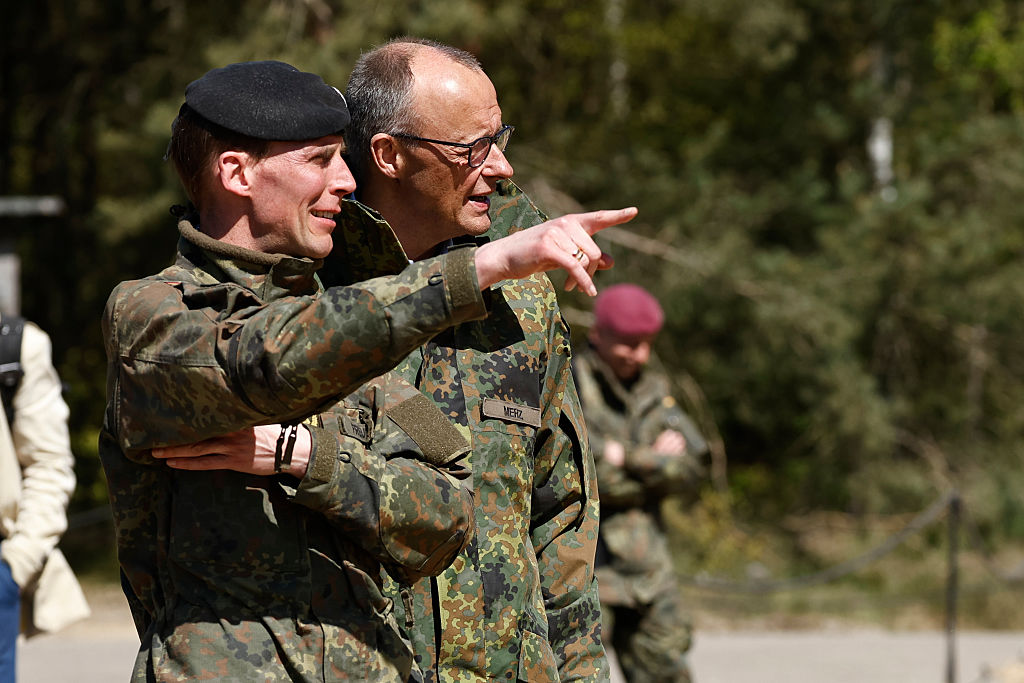
Lieutenant General Christian Freuding, who assumed leadership of the German army in October 2025, stated that Russia is reconstituting its armed forces at a pace that exceeds the requirements of its war in Ukraine, according to Brussels Signal. The assessment leaves Berlin with a narrow window to modernize its own military and industrial capacity.

Freuding’s remarks align with a broader European shift toward rearmament. NATO Secretary General Mark Rutte has consistently pressed member states to embrace a wartime footing, while alliance nations are now discussing raising defense expenditure targets to 5 percent of GDP.

Intelligence Points to 2029 Threat Window

German and allied Western intelligence agencies have concluded that Russia may possess the capability to launch a major assault on NATO territory by 2029. Freuding has previously characterized this timeline as arriving almost immediately.

Chancellor Friedrich Merz has committed to establishing Europe’s most powerful conventional military force. His government plans to increase defense spending to €153 billion by decade’s end, enabled by loosened constitutional restrictions on government borrowing.

Ukrainian Combat Veterans to Train Bundeswehr

Freuding has played a central role in implementing Germany’s military revival. Before his current command, he directed the defense ministry task force that managed German military assistance to Ukraine, which totaled €20 billion by the conclusion of 2025, as reported by the Kiel Institute.

In an unusual arrangement, Berlin has agreed to bring Ukrainian instructors into Bundeswehr training facilities to transfer battlefield knowledge gained from over four years of combat against Russian forces. Freuding has described the partnership as a reversal of traditional roles and a relationship based on security parity.

Future Warfare Demands New Technology

The German army chief has outlined his vision of future conflict as dominated by comprehensive surveillance and long-range precision weaponry. This assessment has driven substantial German investment in unmanned systems and artificial intelligence designed to accelerate tactical decision-making.

Moscow has dismissed claims it intends to attack NATO as fabrications, charging Western governments with manufacturing threats to legitimize increased military budgets.

Russia launched its full-scale invasion of Ukraine in February 2022. The conflict has fundamentally altered European defense strategy and compelled Germany, historically cautious about military expansion, into its most rapid armed forces buildup since the Cold War era.

With information from Brussels Signal

Share:
Dimitris Papafotis
Dimitris Papafotis

Dimitris Papafotis is the editor-in-chief of NewsFire.GR. He was born and raised in Athens. He studied at the Journalism Workshop (1991-1993). He currently lives in Pyrgos, Ilia, where he has been active in radio and various newspapers, while also maintaining his personal blog, Papafotis.gr.

Lieutenant General Christian Freuding, who assumed leadership of the German army in October 2025, stated that Russia is reconstituting its armed forces at a pace that exceeds the requirements of its war in Ukraine, according to Brussels Signal. The assessment leaves Berlin with a narrow window to modernize its own military and industrial capacity.

Freuding’s remarks align with a broader European shift toward rearmament. NATO Secretary General Mark Rutte has consistently pressed member states to embrace a wartime footing, while alliance nations are now discussing raising defense expenditure targets to 5 percent of GDP.

Intelligence Points to 2029 Threat Window

German and allied Western intelligence agencies have concluded that Russia may possess the capability to launch a major assault on NATO territory by 2029. Freuding has previously characterized this timeline as arriving almost immediately.

Chancellor Friedrich Merz has committed to establishing Europe’s most powerful conventional military force. His government plans to increase defense spending to €153 billion by decade’s end, enabled by loosened constitutional restrictions on government borrowing.

Ukrainian Combat Veterans to Train Bundeswehr

Freuding has played a central role in implementing Germany’s military revival. Before his current command, he directed the defense ministry task force that managed German military assistance to Ukraine, which totaled €20 billion by the conclusion of 2025, as reported by the Kiel Institute.

In an unusual arrangement, Berlin has agreed to bring Ukrainian instructors into Bundeswehr training facilities to transfer battlefield knowledge gained from over four years of combat against Russian forces. Freuding has described the partnership as a reversal of traditional roles and a relationship based on security parity.

Future Warfare Demands New Technology

The German army chief has outlined his vision of future conflict as dominated by comprehensive surveillance and long-range precision weaponry. This assessment has driven substantial German investment in unmanned systems and artificial intelligence designed to accelerate tactical decision-making.

Moscow has dismissed claims it intends to attack NATO as fabrications, charging Western governments with manufacturing threats to legitimize increased military budgets.

Russia launched its full-scale invasion of Ukraine in February 2022. The conflict has fundamentally altered European defense strategy and compelled Germany, historically cautious about military expansion, into its most rapid armed forces buildup since the Cold War era.

With information from Brussels Signal

