Necessary Cookies

Required for the site to function. Cannot be disabled.

Analytics Cookies

Help us understand how visitors interact with our site (Google Analytics via GTM).

Marketing Cookies

Used to track visitors and deliver personalised advertisements.

We use cookies to enhance your browsing experience and analyse site traffic. By clicking Accept All, you consent to our use of cookies. Privacy Policy
NewsFire Global
Home News Europe World Christianity Culture Wars Opinion
Information
About Us Authors Advertising Terms & Conditions Privacy Policy Contact
R2B Media
R2B NEWSFIRE.GR PAPAFOTIS.GR THRACTION HELLENIC CONSERVATIVES RIGHT2THEBONE YT
News Europe

Brussels Wants to Turn Out Your Lights

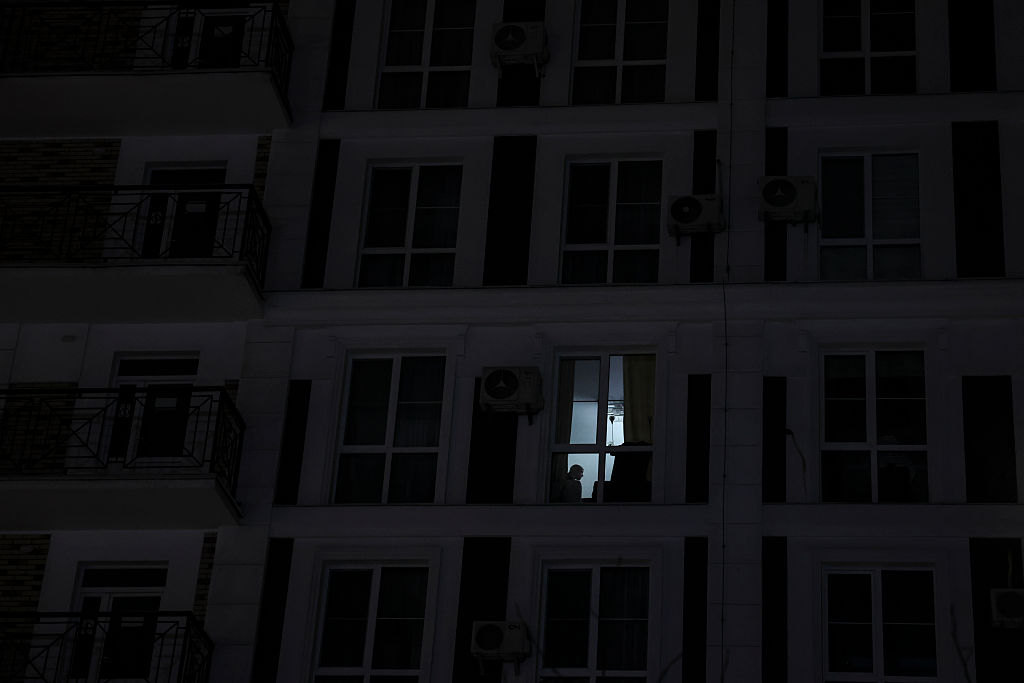
The EU plans to install AI-powered smart meters that could remotely reduce household electricity during peak hours to help achieve net zero carbon emissions by 2050.

Dimitris Papafotis
Dimitris Papafotis Editor in Chief
JUNE 8, 2026 AT 10:40 AM

According to Brussels Signal, the scheme is outlined in a new European Commission document titled the Strategic Roadmap for Digitalisation and Artificial Intelligence in Energy, which will soon be presented to the European Parliament and Council for approval.

While fuel rationing has already returned to parts of Europe—Slovenia became the first country to implement it recently due to reduced stockpiles following closure of the Strait of Hormuz—Brussels is preparing a rationing program of an entirely different nature. This time, the crisis is not externally driven but stems from the EU’s own ideological commitments.

Data Centers Drive Electricity Demand

The surge in data center construction across the developed world has created unprecedented electricity demand. In the United States, data centers currently consume approximately 4.4 percent of total electricity, a figure projected to reach 12 percent by decade’s end. The EU average stood at roughly 1.5 percent in 2025, though Ireland set a world record when data centers consumed 22 percent of the country’s electricity that year.

The Commission document calls for the creation of “smart grids” and mandatory “smart metering systems” that would provide the “control needed to increase the uptake of renewables,” as Brussels Signal reports. These smart meters, the Commission argues, will help in “reducing the curtailment of renewable energy and facilitating electrification.”

AI-Controlled Energy Rationing

Brussels claims the meters will help consumers “better manage their energy consumption, save energy and lower their bill” while aiding the “transition to a clean energy economy.” But the reality is more troubling. These AI-driven smart meters are connected to a broader cloud system, and households will be “prompted” to reduce electricity use during evening hours when demand peaks.

The trajectory is clear: what begins as prompting will inevitably become mandatory. Europeans will be expected to curtail energy use when demand is highest, and the AI-powered meters will enforce compliance automatically by cutting power remotely.

Anthony J. Constantini, writing in Brussels Signal, notes that Brussels remains dogmatically attached to achieving net zero by 2050 regardless of circumstances—whether wars, energy shortages, or the emergence of technologies unforeseen when the promise was made six years ago.

Ignoring Practical Alternatives

The European Union has several viable options for managing increased electricity demand. Expanding nuclear power would provide immense amounts of clean energy at low cost with minimal waste. An “all of the above” energy strategy combining fossil fuels, nuclear, and renewables could ensure reliability. Instead, Brussels has chosen to force populations onto renewables while installing meters that restrict energy use at certain times.

The timing raises serious concerns. Peak demand typically coincides with genuine need—during summer heat waves, for instance. Heat deaths already claim more European lives annually than firearms kill Americans, including suicides. Will elderly citizens or families relying on air conditioning during extreme heat receive warnings that they are consuming too much electricity at peak times?

Meanwhile, the EU’s obsessive pursuit of net zero occurs even as China and India continue emissions levels that render European efforts nearly irrelevant on a global scale. Yet nothing will shake Brussels from its ideological commitment—not practicality, not public welfare, and certainly not common sense.

With information from Brussels Signal

Share:
Dimitris Papafotis
Dimitris Papafotis

Dimitris Papafotis is the editor-in-chief of NewsFire.GR. He was born and raised in Athens. He studied at the Journalism Workshop (1991-1993). He currently lives in Pyrgos, Ilia, where he has been active in radio and various newspapers, while also maintaining his personal blog, Papafotis.gr.

According to Brussels Signal, the scheme is outlined in a new European Commission document titled the Strategic Roadmap for Digitalisation and Artificial Intelligence in Energy, which will soon be presented to the European Parliament and Council for approval.

While fuel rationing has already returned to parts of Europe—Slovenia became the first country to implement it recently due to reduced stockpiles following closure of the Strait of Hormuz—Brussels is preparing a rationing program of an entirely different nature. This time, the crisis is not externally driven but stems from the EU’s own ideological commitments.

Data Centers Drive Electricity Demand

The surge in data center construction across the developed world has created unprecedented electricity demand. In the United States, data centers currently consume approximately 4.4 percent of total electricity, a figure projected to reach 12 percent by decade’s end. The EU average stood at roughly 1.5 percent in 2025, though Ireland set a world record when data centers consumed 22 percent of the country’s electricity that year.

The Commission document calls for the creation of “smart grids” and mandatory “smart metering systems” that would provide the “control needed to increase the uptake of renewables,” as Brussels Signal reports. These smart meters, the Commission argues, will help in “reducing the curtailment of renewable energy and facilitating electrification.”

AI-Controlled Energy Rationing

Brussels claims the meters will help consumers “better manage their energy consumption, save energy and lower their bill” while aiding the “transition to a clean energy economy.” But the reality is more troubling. These AI-driven smart meters are connected to a broader cloud system, and households will be “prompted” to reduce electricity use during evening hours when demand peaks.

The trajectory is clear: what begins as prompting will inevitably become mandatory. Europeans will be expected to curtail energy use when demand is highest, and the AI-powered meters will enforce compliance automatically by cutting power remotely.

Anthony J. Constantini, writing in Brussels Signal, notes that Brussels remains dogmatically attached to achieving net zero by 2050 regardless of circumstances—whether wars, energy shortages, or the emergence of technologies unforeseen when the promise was made six years ago.

Ignoring Practical Alternatives

The European Union has several viable options for managing increased electricity demand. Expanding nuclear power would provide immense amounts of clean energy at low cost with minimal waste. An “all of the above” energy strategy combining fossil fuels, nuclear, and renewables could ensure reliability. Instead, Brussels has chosen to force populations onto renewables while installing meters that restrict energy use at certain times.

The timing raises serious concerns. Peak demand typically coincides with genuine need—during summer heat waves, for instance. Heat deaths already claim more European lives annually than firearms kill Americans, including suicides. Will elderly citizens or families relying on air conditioning during extreme heat receive warnings that they are consuming too much electricity at peak times?

Meanwhile, the EU’s obsessive pursuit of net zero occurs even as China and India continue emissions levels that render European efforts nearly irrelevant on a global scale. Yet nothing will shake Brussels from its ideological commitment—not practicality, not public welfare, and certainly not common sense.

With information from Brussels Signal

