Necessary Cookies

Required for the site to function. Cannot be disabled.

Analytics Cookies

Help us understand how visitors interact with our site (Google Analytics via GTM).

Marketing Cookies

Used to track visitors and deliver personalised advertisements.

We use cookies to enhance your browsing experience and analyse site traffic. By clicking Accept All, you consent to our use of cookies. Privacy Policy
NewsFire Global
Home News Europe World Christianity Culture Wars Opinion
Information
About Us Authors Advertising Terms & Conditions Privacy Policy Contact
R2B Media
R2B NEWSFIRE.GR PAPAFOTIS.GR THRACTION HELLENIC CONSERVATIVES RIGHT2THEBONE YT
News Europe

EU’s decline three times worse than Qing dynasty, expert warns

A French foreign policy expert warns the European Union is declining three times faster than China's Qing Dynasty, with its global economic share falling from 30 to 17 percent in just 17 years.

Dimitris Papafotis
Dimitris Papafotis Editor in Chief
JUNE 3, 2026 AT 11:34 PM

Luis Vassy, the newly appointed director of Sciences Po and former senior French diplomat, made the striking comparison in a lengthy essay published on Le Grand Continent, according to Brussels Signal. His analysis argues that European leaders have fundamentally failed to understand the return of power politics in a world no longer governed by Western rules and values.

Vassy contends that Europe has shifted from a position where it shaped global norms and projected its influence outward to one where external forces now dictate terms to the continent. He points out that the conditions governing European social models, freedoms, and collective decision-making are increasingly determined for a good part outside of us.

From Global Dominance to Rapid Decline

The French academic traces Europe’s reversal of fortune to the early 2000s. Between 1990 and 2005, he notes, combined American and European GDP represented more than half of global wealth. This economic dominance fueled theories about the “end of history” and sustained transatlantic cultural unity.

That era is conclusively over. Vassy provides stark figures: France now accounts for just one percent of the world’s population and 2.5 percent of global production. The European Union’s share of the world economy has plummeted from 30 percent to 17 percent between 2008 and 2025—a span of only 17 years.

By comparison, China experienced a similar proportional decline between 1820 and 1870, a period of 50 years. Brussels Signal reports that Vassy concludes Europe is therefore declining three times faster than the Qing dynasty did during its terminal phase.

A Century of Humiliation Ahead?

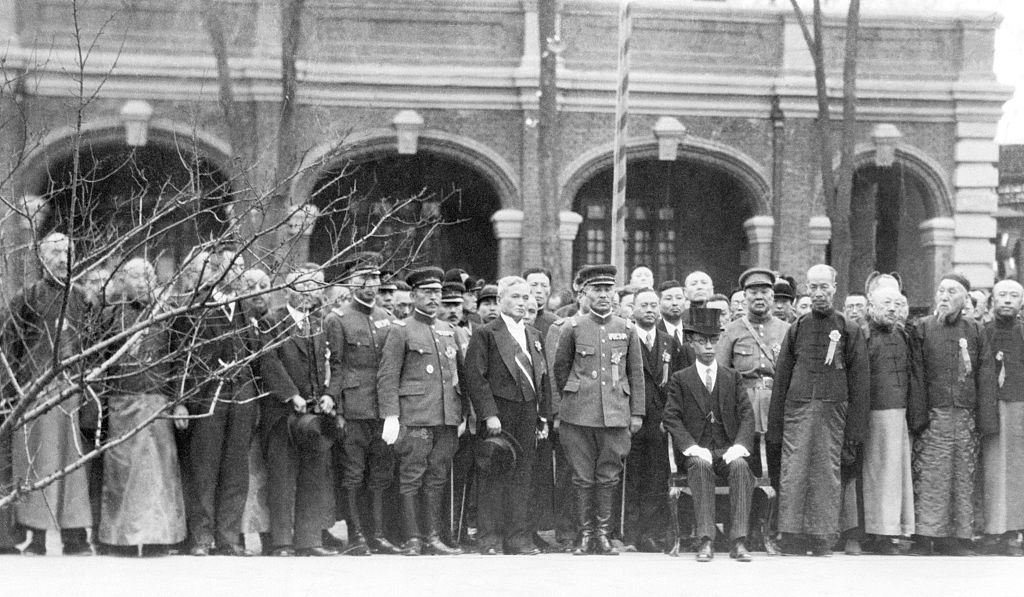
The Qing comparison is deliberately provocative. That dynasty’s collapse ushered in China’s “Century of Humiliation,” characterized by foreign invasions, territorial losses, internal decay, and technological backwardness relative to Western powers.

Vassy uses this historical parallel to demonstrate how rapidly a dominant civilization can lose its position when it fails to recognize and adapt to shifting global power dynamics. His warning is that Europe faces a similar fate if current trends continue unchecked.

Europe’s Dangerous Blind Spot

At the heart of Europe’s decline, Vassy argues, is an intellectual failure. He criticizes European social sciences and political thought for excelling at internal societal analysis while systematically neglecting the external dimensions of power, conflict, and strategy.

The dominant European mindset, particularly in France and Brussels, treats international relations as an extension of domestic politics rather than as a domain defined by competition, power, and security imperatives. This represents a dangerous delusion in an increasingly multipolar world.

Vassy warns that abandoning serious thinking about power does not liberate Europe from its effects. Instead, it ensures that others will exercise power over Europe and determine whether Europeans retain the freedoms, rights, and social models that took centuries to establish.

Call for Strategic Reset

The Sciences Po director calls for a fundamental intellectual reset among European elites. He urges a return to understanding the language of power, strategic autonomy, and the hard realities of international anarchy—concepts that have been systematically downplayed in European political discourse for decades.

To achieve this transformation, Vassy proposes placing power politics and strategic thinking at the center of elite education across the continent. Without this shift, he suggests, Europe will continue its accelerating decline.

Establishment Wake-Up Call

The intervention is particularly significant because it originates from within the French establishment rather than from populist or Eurosceptic quarters. As a former senior diplomat now leading one of Europe’s most prestigious institutions, Vassy represents the kind of elite voice that typically defends the European project.

His willingness to draw such stark historical parallels and deliver such a pessimistic assessment signals growing alarm within establishment circles about Europe’s trajectory. The demand now, he insists, must be a focus on security and defense rather than continued adherence to post-Cold War illusions about a rules-based international order.

With information from Brussels Signal
Share:
Dimitris Papafotis
Dimitris Papafotis

Dimitris Papafotis is the editor-in-chief of NewsFire.GR. He was born and raised in Athens. He studied at the Journalism Workshop (1991-1993). He currently lives in Pyrgos, Ilia, where he has been active in radio and various newspapers, while also maintaining his personal blog, Papafotis.gr.

Luis Vassy, the newly appointed director of Sciences Po and former senior French diplomat, made the striking comparison in a lengthy essay published on Le Grand Continent, according to Brussels Signal. His analysis argues that European leaders have fundamentally failed to understand the return of power politics in a world no longer governed by Western rules and values.

Vassy contends that Europe has shifted from a position where it shaped global norms and projected its influence outward to one where external forces now dictate terms to the continent. He points out that the conditions governing European social models, freedoms, and collective decision-making are increasingly determined for a good part outside of us.

From Global Dominance to Rapid Decline

The French academic traces Europe’s reversal of fortune to the early 2000s. Between 1990 and 2005, he notes, combined American and European GDP represented more than half of global wealth. This economic dominance fueled theories about the “end of history” and sustained transatlantic cultural unity.

That era is conclusively over. Vassy provides stark figures: France now accounts for just one percent of the world’s population and 2.5 percent of global production. The European Union’s share of the world economy has plummeted from 30 percent to 17 percent between 2008 and 2025—a span of only 17 years.

By comparison, China experienced a similar proportional decline between 1820 and 1870, a period of 50 years. Brussels Signal reports that Vassy concludes Europe is therefore declining three times faster than the Qing dynasty did during its terminal phase.

A Century of Humiliation Ahead?

The Qing comparison is deliberately provocative. That dynasty’s collapse ushered in China’s “Century of Humiliation,” characterized by foreign invasions, territorial losses, internal decay, and technological backwardness relative to Western powers.

Vassy uses this historical parallel to demonstrate how rapidly a dominant civilization can lose its position when it fails to recognize and adapt to shifting global power dynamics. His warning is that Europe faces a similar fate if current trends continue unchecked.

Europe’s Dangerous Blind Spot

At the heart of Europe’s decline, Vassy argues, is an intellectual failure. He criticizes European social sciences and political thought for excelling at internal societal analysis while systematically neglecting the external dimensions of power, conflict, and strategy.

The dominant European mindset, particularly in France and Brussels, treats international relations as an extension of domestic politics rather than as a domain defined by competition, power, and security imperatives. This represents a dangerous delusion in an increasingly multipolar world.

Vassy warns that abandoning serious thinking about power does not liberate Europe from its effects. Instead, it ensures that others will exercise power over Europe and determine whether Europeans retain the freedoms, rights, and social models that took centuries to establish.

Call for Strategic Reset

The Sciences Po director calls for a fundamental intellectual reset among European elites. He urges a return to understanding the language of power, strategic autonomy, and the hard realities of international anarchy—concepts that have been systematically downplayed in European political discourse for decades.

To achieve this transformation, Vassy proposes placing power politics and strategic thinking at the center of elite education across the continent. Without this shift, he suggests, Europe will continue its accelerating decline.

Establishment Wake-Up Call

The intervention is particularly significant because it originates from within the French establishment rather than from populist or Eurosceptic quarters. As a former senior diplomat now leading one of Europe’s most prestigious institutions, Vassy represents the kind of elite voice that typically defends the European project.

His willingness to draw such stark historical parallels and deliver such a pessimistic assessment signals growing alarm within establishment circles about Europe’s trajectory. The demand now, he insists, must be a focus on security and defense rather than continued adherence to post-Cold War illusions about a rules-based international order.

With information from Brussels Signal