Celebrated exuberantly”: How state TV downplays Paris violence
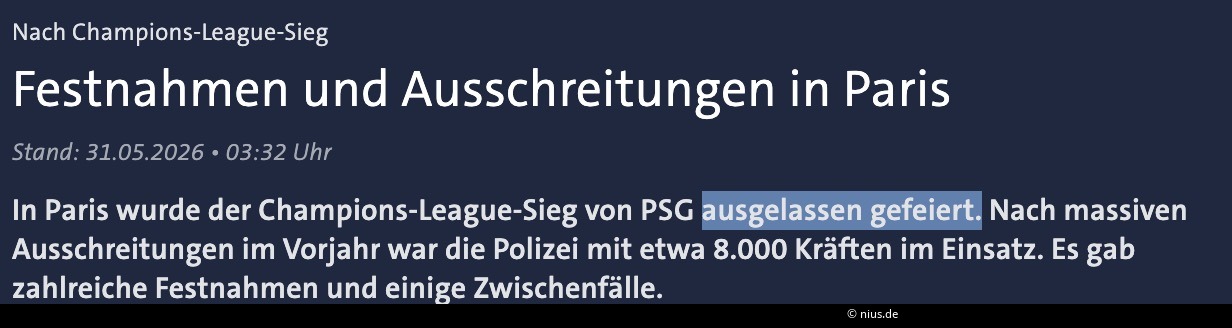
German broadcaster ARD drew criticism for calling Paris riots "exuberant celebrations" despite 400 arrests and seven injured officers after PSG's Champions League win.


According to Nius, the Tagesschau news program opened its coverage with a remarkably innocuous phrase stating that the Champions League victory was “exuberantly celebrated” in Paris. This characterization stands in stark contrast to the reality on the ground, where French authorities deployed a massive security operation involving 22,000 police officers nationwide, including 8,000 in the capital alone.
French Interior Minister Laurent Nuñez confirmed that seven police officers sustained injuries during the unrest. The total number of arrests reached 400 across France, with 283 detained in Paris itself.
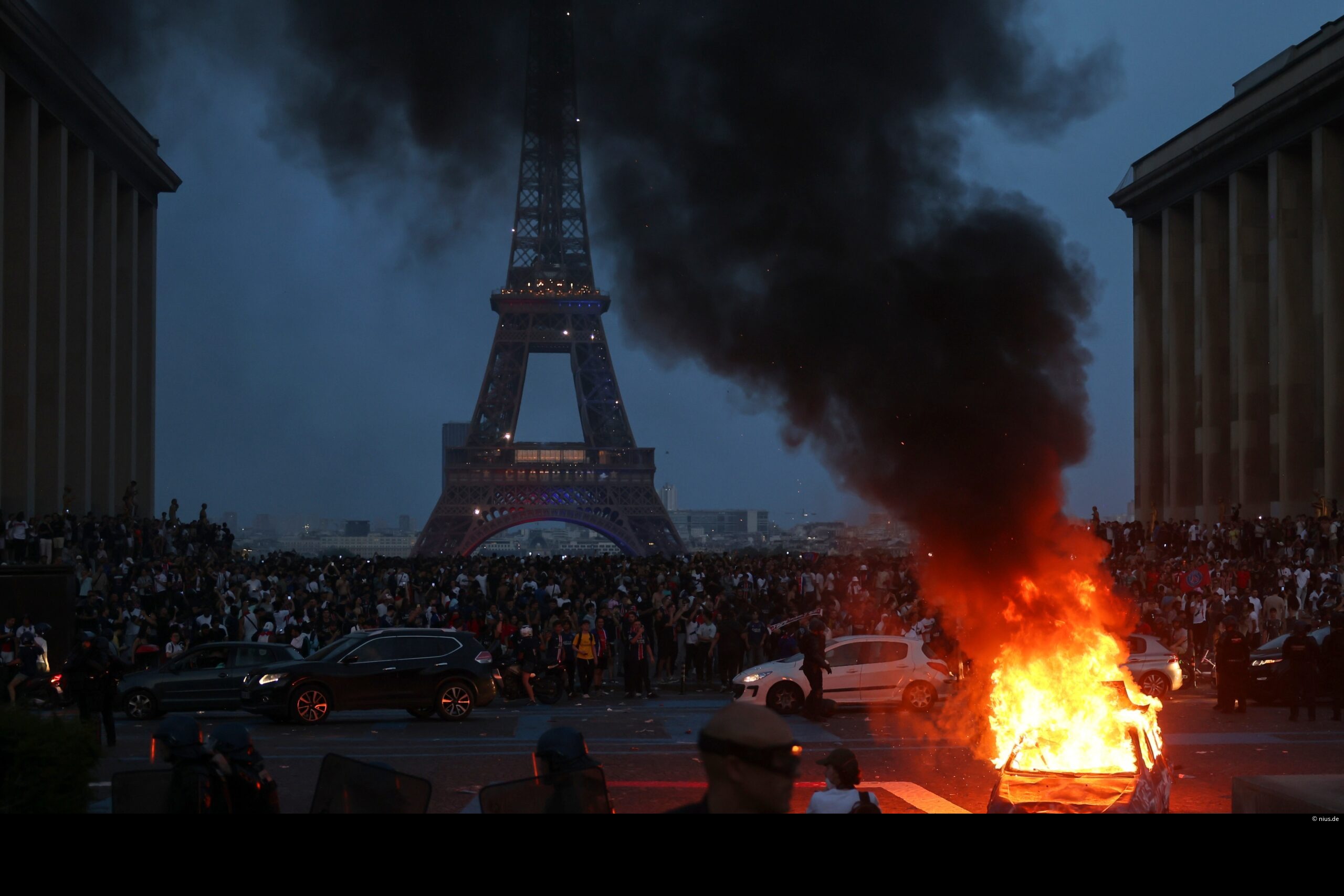
The Tagesschau reported that approximately 20,000 people gathered on the Champs-Élysées, claiming that violence occurred only “on the margins” of the celebrations. However, as Nius reports, this linguistic minimization appears jarring given the scale of disorder that followed.
Masked individuals repeatedly clashed with security forces throughout the night. Police deployed tear gas while rioters hurled projectiles at officers. A bus shelter was damaged and numerous other instances of property destruction were documented across the city.
The public broadcaster characterized these events as “some incidents,” a description that critics view as grossly understating the severity of a situation that required tens of thousands of law enforcement personnel to contain.
The disparity between the Tagesschau’s gentle terminology and the facts of the case has reignited debates about editorial bias in German state-funded media. Multiple clashes with rioters, hundreds of arrests, injured police, property damage, and a security deployment of historic proportions were reduced to language suggesting little more than high spirits.
This incident adds to a growing list of controversies surrounding ARD’s coverage choices, particularly regarding public order events and their framing in broadcast reporting.
With information from Nius