Necessary Cookies

Required for the site to function. Cannot be disabled.

Analytics Cookies

Help us understand how visitors interact with our site (Google Analytics via GTM).

Marketing Cookies

Used to track visitors and deliver personalised advertisements.

We use cookies to enhance your browsing experience and analyse site traffic. By clicking Accept All, you consent to our use of cookies. Privacy Policy
NewsFire Global
Home News Europe World Christianity Culture Wars Opinion
Information
About Us Authors Advertising Terms & Conditions Privacy Policy Contact
R2B Media
R2B NEWSFIRE.GR PAPAFOTIS.GR THRACTION HELLENIC CONSERVATIVES RIGHT2THEBONE YT
News

Iran and US End Negotiations Without Reaching Agreement

US-Iran talks to resolve the nuclear crisis ended without agreement as Tehran rejected Washington’s flexible terms, while US forces began clearing mines from the strategic Strait of Hormuz.

Dimitris Papafotis
Dimitris Papafotis Editor in Chief
APRIL 12, 2026 AT 10:49 AM Updated: May 17, 2026 3:26 AM

The first diplomatic attempt to resolve the crisis over the intervention in Iran between Tehran and Washington ended without an agreement.

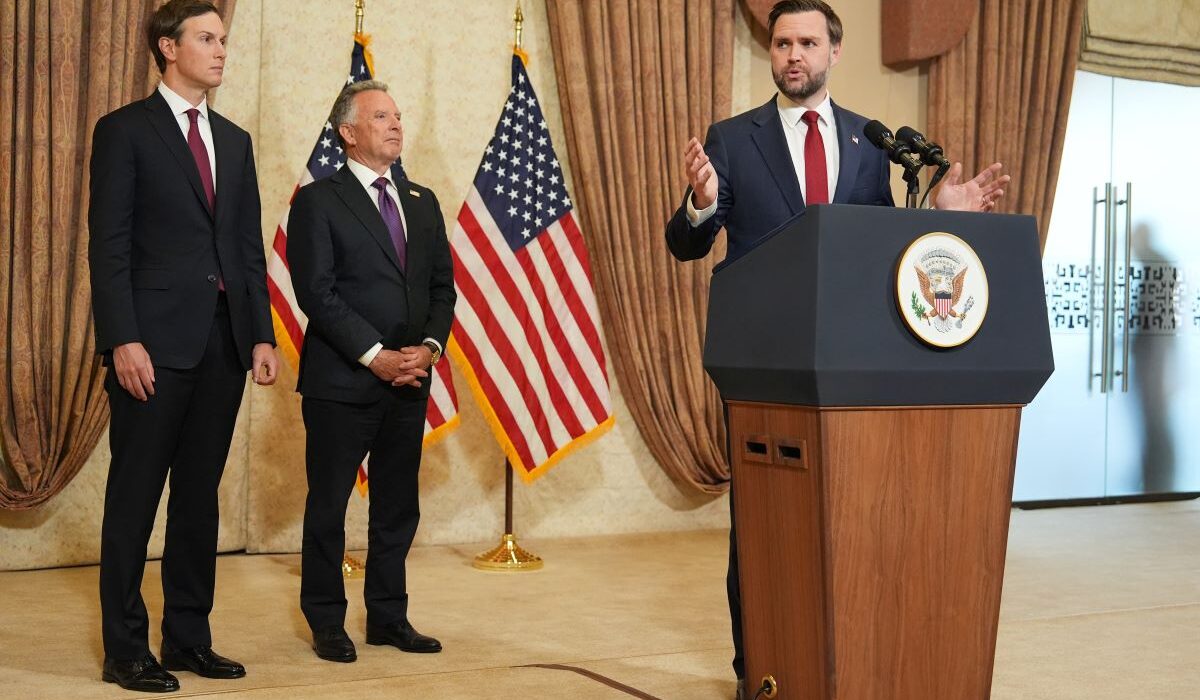
U.S. Vice President J.D. Vance, just before boarding the return flight, was clear. Washington had submitted its final and best proposal, he said, and its terms were fairly flexible.

However, Iran refused to commit to abandoning its nuclear program, which made the agreement impossible.

Different Perspective from Tehran

The Iranians see things differently. The state news agency Tasnim, reporting from Islamabad immediately after the talks concluded, spoke of excessive demands and ambitions from the American side that prevented any common ground.

Officials in Tehran fully blamed the American delegation’s stance for the “failure” and made clear through state media that there is no intention for a new round of talks in the near future.

Ongoing Communication with Trump

Throughout the marathon 21-hour session, J.D. Vance remained in open contact with President Donald Trump.

They spoke at least six to twelve times, according to Vance himself. Although the mobilization was intense, the vice president noted that the news is much worse for Iran than for the U.S., implying the consequences for Tehran of failing to reach an agreement.

The talks had begun with some hope after the initial 15-hour meeting, but the final phase on Sunday confirmed the deep division. J.D. Vance is already traveling back to the United States, leaving behind a Middle East under tension.

U.S. Forces Begin Mine Clearance in the Strait of Hormuz

At the same time, U.S. military forces have begun clearing mines from the Strait of Hormuz, as previously announced by Donald Trump.

The U.S. Central Command (CENTCOM) forces started preparations on April 11. Two U.S. Navy destroyers, the USS Frank E. Peterson (DDG 121) and USS Michael Murphy (DDG 112), passed through the Strait of Hormuz and are operating in the Arabian Gulf.

According to CENTCOM’s announcement, the broader mission’s objective is to ensure the strait is completely cleared of mines that had previously been laid by the Islamic Revolutionary Guard Corps of Iran.


Share:
Dimitris Papafotis
Dimitris Papafotis

Dimitris Papafotis is the editor-in-chief of NewsFire.GR. He was born and raised in Athens. He studied at the Journalism Workshop (1991-1993). He currently lives in Pyrgos, Ilia, where he has been active in radio and various newspapers, while also maintaining his personal blog, Papafotis.gr.

The first diplomatic attempt to resolve the crisis over the intervention in Iran between Tehran and Washington ended without an agreement.

U.S. Vice President J.D. Vance, just before boarding the return flight, was clear. Washington had submitted its final and best proposal, he said, and its terms were fairly flexible.

However, Iran refused to commit to abandoning its nuclear program, which made the agreement impossible.

Different Perspective from Tehran

The Iranians see things differently. The state news agency Tasnim, reporting from Islamabad immediately after the talks concluded, spoke of excessive demands and ambitions from the American side that prevented any common ground.

Officials in Tehran fully blamed the American delegation’s stance for the “failure” and made clear through state media that there is no intention for a new round of talks in the near future.

Ongoing Communication with Trump

Throughout the marathon 21-hour session, J.D. Vance remained in open contact with President Donald Trump.

They spoke at least six to twelve times, according to Vance himself. Although the mobilization was intense, the vice president noted that the news is much worse for Iran than for the U.S., implying the consequences for Tehran of failing to reach an agreement.

The talks had begun with some hope after the initial 15-hour meeting, but the final phase on Sunday confirmed the deep division. J.D. Vance is already traveling back to the United States, leaving behind a Middle East under tension.

U.S. Forces Begin Mine Clearance in the Strait of Hormuz

At the same time, U.S. military forces have begun clearing mines from the Strait of Hormuz, as previously announced by Donald Trump.

The U.S. Central Command (CENTCOM) forces started preparations on April 11. Two U.S. Navy destroyers, the USS Frank E. Peterson (DDG 121) and USS Michael Murphy (DDG 112), passed through the Strait of Hormuz and are operating in the Arabian Gulf.

According to CENTCOM’s announcement, the broader mission’s objective is to ensure the strait is completely cleared of mines that had previously been laid by the Islamic Revolutionary Guard Corps of Iran.
