California voters back billionaire tax despite economic warnings
More than half of California's likely voters support a controversial wealth tax on billionaires despite warnings it could cost over 108,000 jobs and $28 billion in wages.
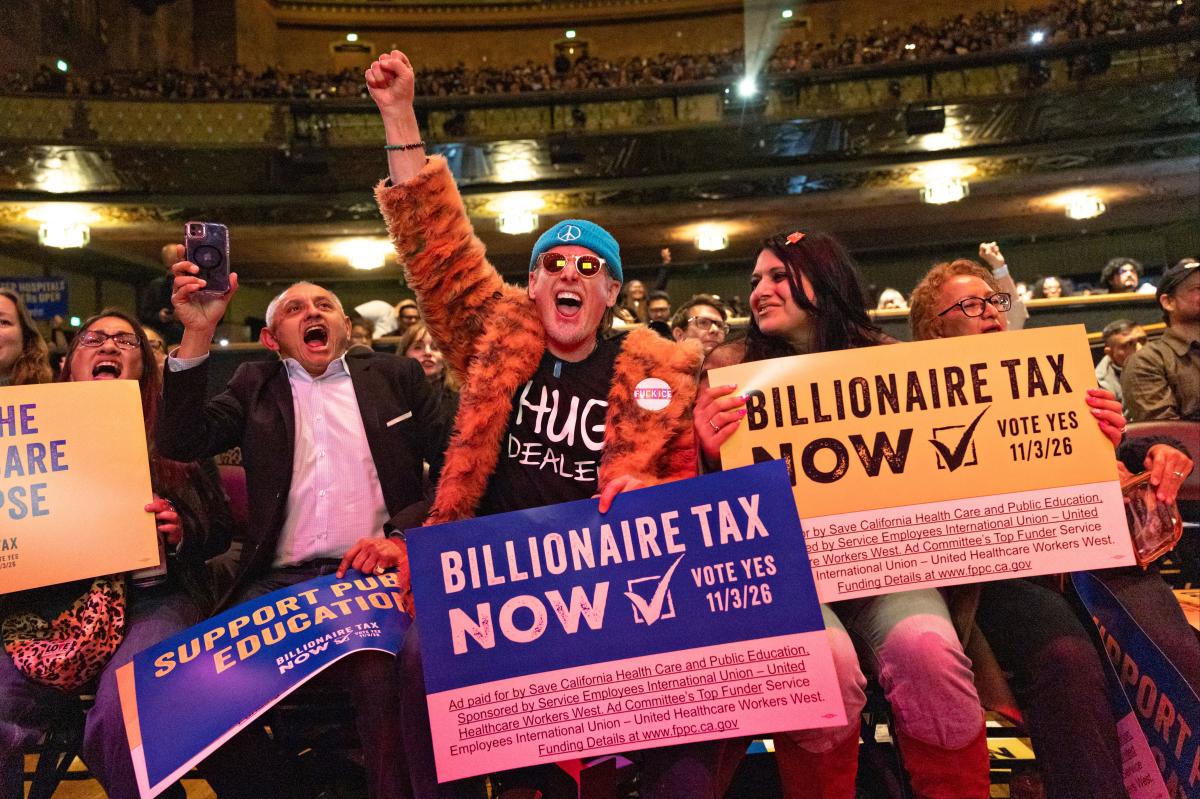

A survey conducted by the Public Policy Institute of California found that 54% of likely voters support the proposed ballot measure, according to New York Post. The tax would impose a one-time 5% levy on California residents holding assets exceeding $1 billion. Labor unions backing the initiative claim they have gathered sufficient signatures to place the measure on the November ballot.
The poll surveyed 986 likely voters between May 14 and 18.
Sharp Partisan Divide on Wealth Tax
Support for the billionaire tax breaks sharply along party lines. Democrats overwhelmingly favor the measure at 76%, while Republicans strongly oppose it with 82% voting against. Independent voters show a narrow majority in favor at 53%.
Income levels also reveal stark divisions in voter attitudes. Californians earning less than $100,000 annually decisively support the tax, but higher-income voters are far more divided, with only 52% expressing support.
Renters favor the tax by a margin of 71% to 27%, while homeowners are nearly evenly split. Geographic location matters as well, with urban centers like Los Angeles showing stronger support than the Central Valley, where 56% of likely voters oppose the measure.
Economic Warnings From Business Leaders and Governor
Business groups and opponents, including Democratic Governor Gavin Newsom, have issued stark warnings about the economic consequences of the proposed tax. They argue that corporate executives would flee California, taking jobs and economic activity with them.
One economic analysis projects the loss of more than 108,000 jobs if the tax takes effect, as New York Post reports. The same study estimates that $28 billion in wages would disappear from California’s economy.
A research paper released Wednesday by the Hoover Institution challenged union claims that the tax would address a “$19 billion-per-year budget hole” caused by federal funding cuts. Researchers argued that California faces a spending crisis in its Medicaid program that existed before any federal reductions.
Joshua D. Rauh, an economics fellow at Hoover, stated that costly spending increases reflect Sacramento’s failure to control a program it expanded through its own decisions, adding that a wealth tax doesn’t fix this spending problem; it just delays the reckoning.
Unions Push Health Care Crisis Narrative
Labor unions supporting the tax continue to emphasize federal health care cuts as justification for the measure. They pointed to a report Thursday suggesting California’s uninsured population could double due to cuts and new federal Medicaid work requirements.
Debru Carthan, executive vice president of SEIU-UHW, one of the lead unions behind the tax proposal, claimed California faces a health care affordability and accessibility crisis. He argued that millions of Californians will lose coverage and hospitals will be forced to close unless billionaires pay what he called their fair share.
Wealthy Residents Already Fleeing State
Several ultra-wealthy Californians have already announced their departure from the state. Among them is Sergey Brin, co-founder of Google, who is reportedly funding competing ballot initiatives to counter the wealth tax proposal.
With information from New York Post