Necessary Cookies

Required for the site to function. Cannot be disabled.

Analytics Cookies

Help us understand how visitors interact with our site (Google Analytics via GTM).

Marketing Cookies

Used to track visitors and deliver personalised advertisements.

We use cookies to enhance your browsing experience and analyse site traffic. By clicking Accept All, you consent to our use of cookies. Privacy Policy
NewsFire Global
Home News Europe World Christianity Culture Wars Opinion
Information
About Us Authors Advertising Terms & Conditions Privacy Policy Contact
R2B Media
R2B NEWSFIRE.GR PAPAFOTIS.GR THRACTION HELLENIC CONSERVATIVES RIGHT2THEBONE YT
News Europe

Meloni: EU Bureaucracy Smothering Industrial Development

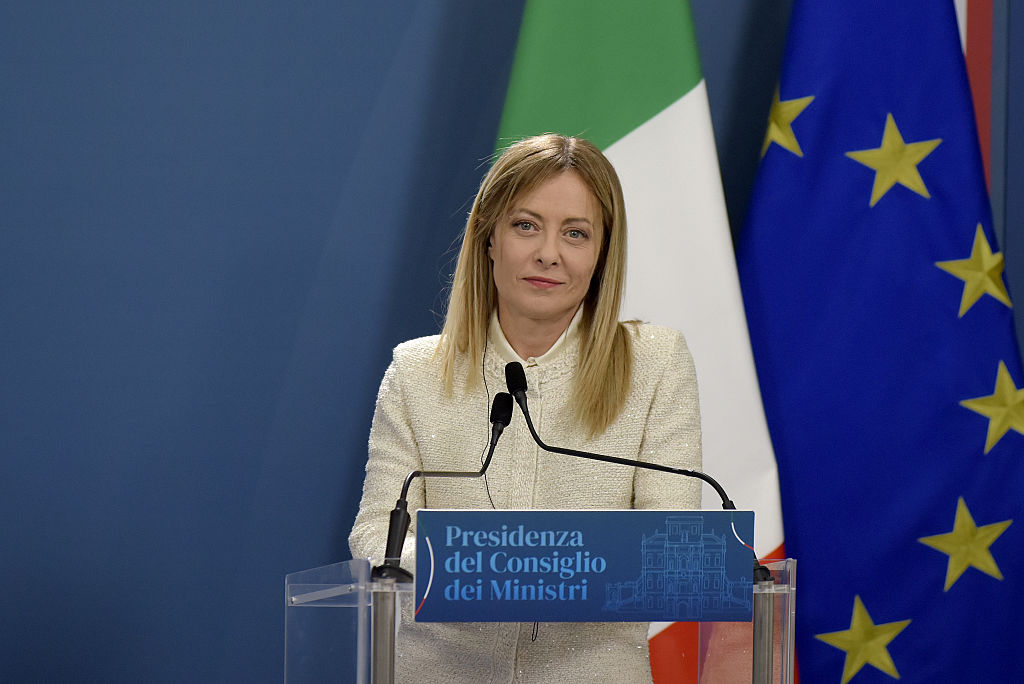
Italian Prime Minister Giorgia Meloni criticized the EU's excessive regulations before business leaders, calling for Brussels to simplify rules and prioritize competitiveness over bureaucracy.

Dimitris Papafotis
Dimitris Papafotis Editor in Chief
MAY 27, 2026 AT 9:02 PM

According to Brussels Signal, Meloni addressed Italy’s main business confederation, Confindustria, on May 26, 2026, delivering remarks that called for a fundamental reorientation of EU priorities away from technocratic regulation and toward economic freedom and competitiveness.

Confindustria represents approximately 150,000 companies and more than five million workers across Italy. Speaking before the group’s annual assembly in Rome, Meloni argued that the European Union has repeatedly sacrificed growth and strategic independence in favor of ideological and technocratic frameworks that serve no practical purpose.

The Italian leader urged Brussels to adopt a new governing principle: do less, but do it better. She called for a framework in which everything not explicitly forbidden should be allowed, free from bureaucratic constraints that serve only to suffocate economic initiative.

A Call for Competitiveness and Simplification

Meloni pressed for sweeping simplification of EU regulations, emphasizing the urgent need for greater competitiveness and an end to red tape that weighs down European businesses. She reflected on recent global disruptions, noting that ideological posturing has been swept aside by hard realities, forcing Europe into what she described as a rude awakening.

The Prime Minister also committed to pursuing bureaucratic reform within Italy itself, alongside initiatives to return to nuclear energy and implement legal changes that her government has been advancing in recent months.

Before leaving the stage to applause, Meloni declared that Italy is no longer the weak link in Europe but has become a credible and authoritative nation. She urged her audience not to rest on that progress but to aim high, dare to innovate, and resist complacency.

Quoting the Roman poet Virgil, Meloni invoked the Latin phrase “Sic itur ad astra”—thus the path to the stars is taken—and called on business leaders to embrace courage in uncertain times. She promised to meet them with the same bravery.

Industrial Desertification and Rising Costs

Meloni’s remarks come amid mounting alarm from European industrial leaders over regulatory overload, spiraling energy costs, and intensifying competition from China and the United States. The war in Ukraine and escalating tensions in the Middle East, particularly surrounding the Strait of Hormuz, have further strained production costs and energy security across the continent.

Emanuele Orsini, President of Confindustria, reinforced the Prime Minister’s concerns, warning of the risk of industrial desertification unless Brussels takes immediate action on energy policy, trade, and regulatory simplification.

Meloni has consistently advocated for technological neutrality and a more pragmatic approach to the EU’s Green Deal and emissions trading system, which she has criticized for imposing unfair burdens on European producers and deepening competitive disadvantages.

Italy Pushes Back Against Brussels

The Italian government’s stance reflects a broader pushback against centralized EU policymaking that prioritizes climate ideology over economic vitality. Meloni has positioned herself as a leading voice for national sovereignty and industrial realism within the bloc, challenging Brussels to reconsider its approach before European competitiveness is irreversibly damaged.

Her speech underscores a growing divide between member states that prioritize economic growth and those that continue to pursue regulatory expansion in the name of environmental and social goals.

With information from Brussels Signal

Share:
Dimitris Papafotis
Dimitris Papafotis

Dimitris Papafotis is the editor-in-chief of NewsFire.GR. He was born and raised in Athens. He studied at the Journalism Workshop (1991-1993). He currently lives in Pyrgos, Ilia, where he has been active in radio and various newspapers, while also maintaining his personal blog, Papafotis.gr.

According to Brussels Signal, Meloni addressed Italy’s main business confederation, Confindustria, on May 26, 2026, delivering remarks that called for a fundamental reorientation of EU priorities away from technocratic regulation and toward economic freedom and competitiveness.

Confindustria represents approximately 150,000 companies and more than five million workers across Italy. Speaking before the group’s annual assembly in Rome, Meloni argued that the European Union has repeatedly sacrificed growth and strategic independence in favor of ideological and technocratic frameworks that serve no practical purpose.

The Italian leader urged Brussels to adopt a new governing principle: do less, but do it better. She called for a framework in which everything not explicitly forbidden should be allowed, free from bureaucratic constraints that serve only to suffocate economic initiative.

A Call for Competitiveness and Simplification

Meloni pressed for sweeping simplification of EU regulations, emphasizing the urgent need for greater competitiveness and an end to red tape that weighs down European businesses. She reflected on recent global disruptions, noting that ideological posturing has been swept aside by hard realities, forcing Europe into what she described as a rude awakening.

The Prime Minister also committed to pursuing bureaucratic reform within Italy itself, alongside initiatives to return to nuclear energy and implement legal changes that her government has been advancing in recent months.

Before leaving the stage to applause, Meloni declared that Italy is no longer the weak link in Europe but has become a credible and authoritative nation. She urged her audience not to rest on that progress but to aim high, dare to innovate, and resist complacency.

Quoting the Roman poet Virgil, Meloni invoked the Latin phrase “Sic itur ad astra”—thus the path to the stars is taken—and called on business leaders to embrace courage in uncertain times. She promised to meet them with the same bravery.

Industrial Desertification and Rising Costs

Meloni’s remarks come amid mounting alarm from European industrial leaders over regulatory overload, spiraling energy costs, and intensifying competition from China and the United States. The war in Ukraine and escalating tensions in the Middle East, particularly surrounding the Strait of Hormuz, have further strained production costs and energy security across the continent.

Emanuele Orsini, President of Confindustria, reinforced the Prime Minister’s concerns, warning of the risk of industrial desertification unless Brussels takes immediate action on energy policy, trade, and regulatory simplification.

Meloni has consistently advocated for technological neutrality and a more pragmatic approach to the EU’s Green Deal and emissions trading system, which she has criticized for imposing unfair burdens on European producers and deepening competitive disadvantages.

Italy Pushes Back Against Brussels

The Italian government’s stance reflects a broader pushback against centralized EU policymaking that prioritizes climate ideology over economic vitality. Meloni has positioned herself as a leading voice for national sovereignty and industrial realism within the bloc, challenging Brussels to reconsider its approach before European competitiveness is irreversibly damaged.

Her speech underscores a growing divide between member states that prioritize economic growth and those that continue to pursue regulatory expansion in the name of environmental and social goals.

With information from Brussels Signal

