
Ferrari’s Electric Push Sparks Backlash Among Car Enthusiasts
Ferrari's first all-electric Luce has sparked fierce backlash from enthusiasts who criticize its minimalist interior and departure from the Italian marque's traditional sports car design.
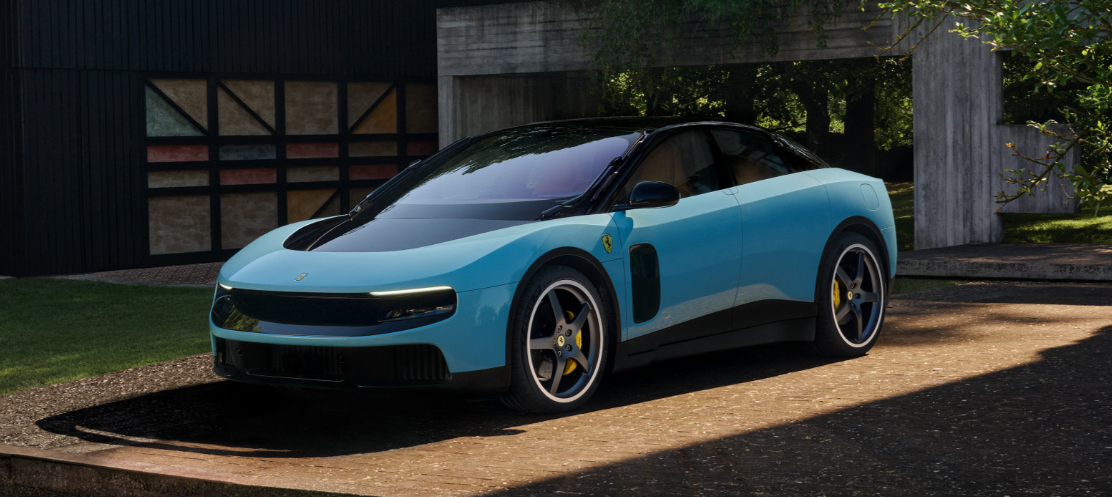

The luxury carmaker presented the Luce in Rome as its first fully electric model, according to Brussels Signal, but the radical departure from Ferrari’s signature mid-engined supercar silhouette has sparked widespread criticism online and in automotive circles.
Design Controversy and Spec Sheet
The Luce breaks with Ferrari tradition in multiple ways, featuring an unprecedented five-seat layout, coach doors, and a sprawling 597-litre boot—the largest ever fitted to a Ferrari. Four electric motors generate over 1,000 horsepower, propelling the car from 0-62 mph in 2.5 seconds with a top speed of 193 mph. The 122 kWh battery provides up to 330 miles of WLTP range and sits on an 800V architecture supporting fast charging up to 350 kW.
All this technology comes at a steep price: €550,000 and upward depending on options. European orders are expected to open later this year, with US deliveries slated for the second quarter of 2027, according to the company.
Industrial Interior Draws Particular Ire
The cabin, developed in collaboration with former Apple designer Sir Jony Ive and Australian industrial designer Marc Newson through their LoveFrom studio, has become a focal point of criticism. The minimalist interior features brushed aluminium, glass surfaces, and digital displays in a calm, symmetrical layout that critics say resembles Silicon Valley more than Italy’s legendary Motor Valley.
Prominent designers have branded the interior as “soulless” and “utterly inappropriate for a Ferrari,” Brussels Signal reports. One critic compared the cabin—notably stripped of the prancing horse badge—to that of “a medium-sized Honda.”
Enthusiasts Reject “Generic EV” Aesthetic
Social media reaction has been overwhelmingly negative. Enthusiasts have described the exterior as “ugly,” “weird,” and indistinguishable from a generic electric vehicle. Comments ranged from “Enzo must be turning in his grave” to observations that the design only makes traditional combustion Ferraris more appealing by comparison.
Many users shared AI-generated redesigns created in seconds, claiming these amateur efforts surpassed what Ferrari’s professional designers had delivered.
Regulatory Pressure Behind Electric Push
Ferrari executives have acknowledged the divisive reception. The company has framed the Luce as the opening chapter of a “multi-energy” strategy while continuing to develop hybrid and internal combustion models. Under a revised five-year plan, Ferrari has scaled back its all-electric target to just 20 percent of the lineup by 2030, down from a previous goal of 40 percent. Hybrids will account for another 40 percent, with the remaining 40 percent powered by traditional internal combustion engines.
The push toward electrification at Ferrari and other luxury brands is widely understood as a response to stringent EU emissions regulations. The bloc’s 2035 ban on new internal combustion engine sales and punishing fleet-wide CO₂ targets force even low-volume manufacturers to adapt or face heavy penalties, despite hybrids already helping to lower emissions averages.
Developing these electric platforms requires massive investment in batteries and powertrains—costs that are difficult to recover when demand remains minimal in the supercar segment.
Lamborghini Abandons Electric Plans
Lamborghini has scrapped plans for its fully electric Lanzador model entirely. CEO Stephan Winkelmann described full EVs as an “expensive hobby” due to “close to zero” acceptance among clientele who “miss the noise,” Brussels Signal reports.
The Luce’s troubled reception underscores a broader tension in the luxury automotive world: regulatory mandates pushing manufacturers toward electrification even as their customer base remains deeply attached to the character and performance of traditional powertrains.
With information from Brussels Signal





