Migration as a battleground between national sovereignty and human rights
Foreign ministers of 46 Council of Europe states adopted a declaration reaffirming sovereign rights to control migration and calling on the European Court of Human Rights to respect national legal systems.
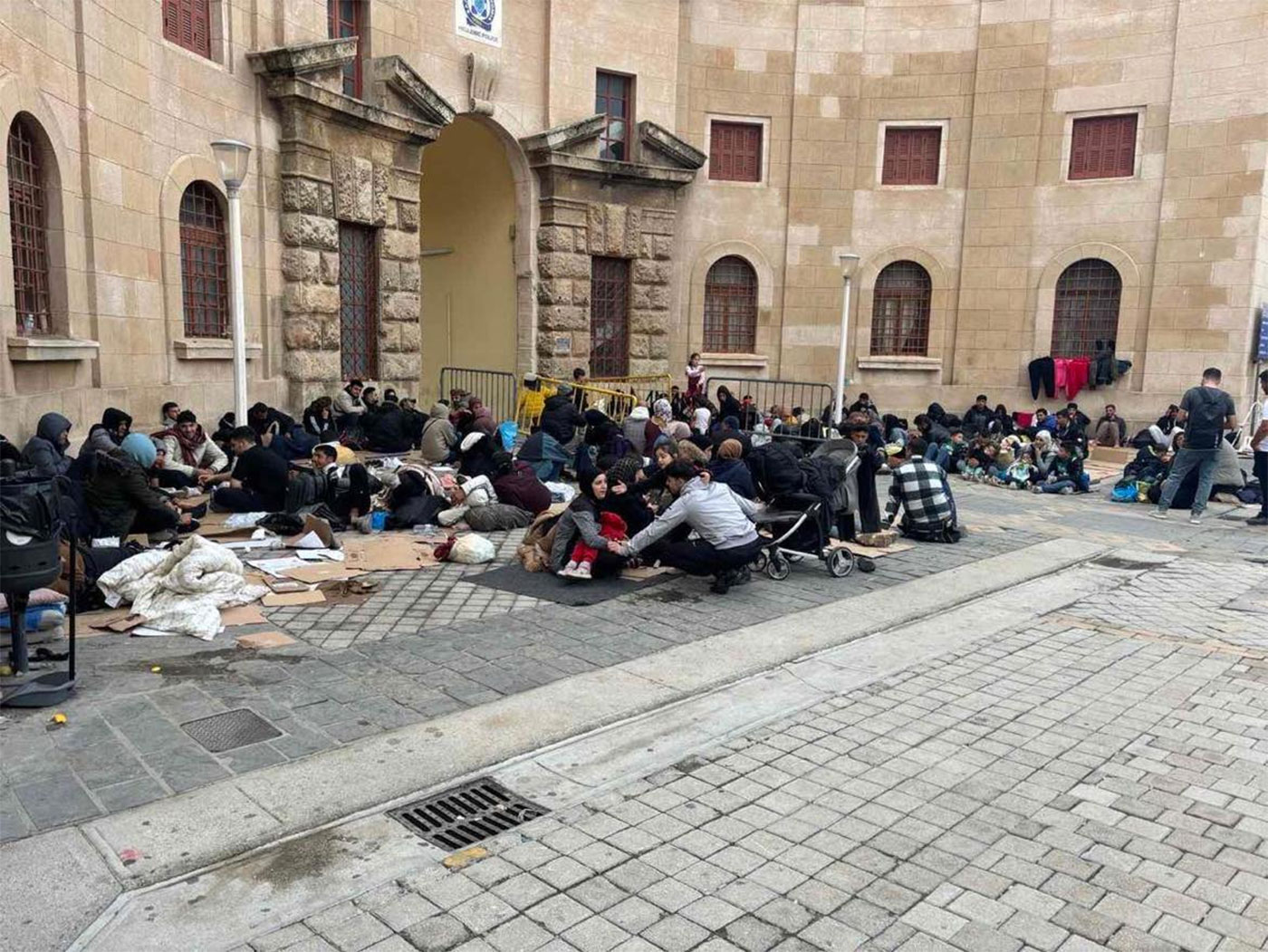

The migration issue as a field of conflict between national sovereignty and human rights
written by Nikodimos Kallinteris, Lawyer
The 135th annual session of the Committee of Ministers of the Council of Europe, which took place on May 14-15, 2026 in Chisinau, Moldova, was relegated to the fine print in domestic news coverage.
There, the Foreign Ministers of the 46 member states adopted a joint political declaration on migration, which in diplomatic language sends clear messages to the European Court of Human Rights (ECHR) regarding its rulings on deportations.
From the declaration we highlight the following significant points:
- States reaffirm their “unquestionable sovereign right to decide and control the entry and stay of foreign nationals in their territory” (§18).
- They express their concern about obstacles “to deport or extradite a person who has been convicted of or charged with a serious offense” (§20).
- They call on the ECHR to respect “the particularities of national legal systems and traditions” (§33).
- They emphasize that “the arrival of large numbers of migrants constitutes a complex and evolving challenge for frontline states, including their sovereign right to protect national borders and decide who enters their territory lawfully, as well as their fundamental responsibility to ensure national security and public safety” (§34).
- They underline that “it is important that states, including those exposed to mass arrivals, be able to pursue new approaches to address and potentially deter irregular migration. Among the new approaches envisaged by many member states are the processing of international protection claims in a third country, ‘return hubs’ in third countries, and cooperation with transit countries”.
The whole issue began to take on broader dimensions as early as May 2025, when 9 member states (Belgium, Poland, Italy, Denmark, Czech Republic, Estonia, Latvia, Lithuania, and Austria) requested in a joint letter a different interpretation of the European Convention on Human Rights (ECHR), so that they could deport third-country nationals who have committed criminal offenses.
The leaders of the signatory countries, led by Italy and Denmark, argued that the ECHR through its case law has extended the scope of the Convention “far beyond the original intentions” while noting that “the Court’s interpretation has limited their ability to make political decisions in their own democracies and in this way has affected the means by which we as leaders can protect our democratic societies and our populations”.
In essence, this letter emphatically formalized the position of certain European states that some of the Court’s decisions have undermined the competence of nation-states to make sovereign decisions in policy areas related to public order and security. The aim of this initiative was to start a broader discussion within the Council of Europe about how international law is interpreted by the ECHR in a way that restricts national policies, particularly on issues of asylum and border control.
Before the letter from the 9 leaders, there had been an ECHR decision on March 17, 2025 (Sharafane v. Denmark) in which the Court refused to re-examine a case against Denmark, establishing a “right to return” for foreigners who were deported following criminal conviction.
Through the rejection, the ECHR confirmed that the “right to return” of deported foreigners to European territory is now established case law of the Court and is intended to apply to all member states of the Council of Europe. After this development, it was logical and natural that there would be strong concern, especially in states that due to their geographical location face significant migration pressures.
In December 2025, in a joint declaration within the framework of the Conference of Justice Ministers of the Council of Europe, 27 member states noted among other things the following regarding the instrumentalization of migration flows: “We recognize the extremely sensitive geopolitical context and the need to properly ensure national security and public safety, including cases where human rights and fundamental freedoms are subject to abuse and exploitation by hostile regimes and individual applicants with hidden motives, with negative effects on the Convention system”.
According to a recent article in The Economist (1/4/26), the pressures that European societies are receiving from migration waves have “ignited” legal and political debates, especially in the United Kingdom, about revising the ECHR. ECHR decisions have “put the brakes on” deportations in many cases of migrants who have committed criminal offenses, on the grounds that their right to family life (Article 8 of the ECHR) must be protected and they must not be separated from their families.
The article notes that in Britain, both the Reform UK party, which is leading in the polls, and the Conservatives propose the country’s withdrawal from the ECHR. On the other hand, left-wing parties support the logic of the ECHR’s decisions, while Prime Minister Keir Starmer himself, as a former human rights lawyer, has in the past authored a 900-page work on these issues.
In a recent (30/3/26) intervention in the Telegraph, Sir Michael Ellis, Lawyer, former Minister and former Attorney General for England and Wales, claimed that European states have ceded excessive power to human rights judges. According to what he states, the ECHR through its decisions “blocks” deportations of migrants, specifically migrants who have committed criminal offenses, and places the rights of offenders above those of law-abiding and taxpaying citizens. He accuses the Court of not simply applying the provisions of the ECHR but interpreting it according to political criteria (“left-wing activism”).
He observes, however, that overall in Europe a major shift is happening on this issue and argues that democracy must prevail in the sense of implementing the will of sovereign peoples and not the legalistic logic of judges.
He believes that the “left-wing” conception of the rule of law has been transformed into a deity, which it is sacrilege to criticize. However, it is not the very concept of the rule of law that is problematic – it remains more important than ever. In his opinion, Europeans are beginning to realize that the problem is the courts that “over-interpret” the rules of law by giving political significance to the rule of law. He concludes that the Court’s days may be numbered.
With these concerns at the center, an event was held in the hall of the Athens Bar Association by the Hellenic League for Human Rights with three Greek ECHR Judges as guests: Christos Rozakis, former Vice-President of the ECHR (1998-2011) and Emeritus Professor of International Law at the National and Kapodistrian University of Athens, Ioannis Ktistakis, President of the 3rd Section of the ECHR and Associate Professor at the Law School of Democritus University of Thrace, and Linos-Alexandros Sicilianos, former President of the ECHR and Professor at the Law School of the National and Kapodistrian University of Athens.
During the event, the following critical question was posed: does the ECHR engage in politics through its decisions? In the answers given by Linos-Alexandros Sicilianos and Christos Rozakis, a significant differentiation appeared. The former emphatically stressed that “the Court does not engage in politics and should not engage in politics” while the latter immediately countered that “despite the Court’s efforts to be objective and not politicize cases, this is ultimately impossible”.
Are we heading toward a confrontation between member states and ECHR Judges? Will this recent political declaration by the Committee of Ministers influence the Court’s case law on migration issues? Will a balance be found between the protection of human rights and the national sovereignty of states? Do political/ideological considerations enter into ECHR decisions or are they made based on purely legal criteria?
These are thorny questions that are troubling, and it remains to be seen if and how they will ever be answered…