Necessary Cookies

Required for the site to function. Cannot be disabled.

Analytics Cookies

Help us understand how visitors interact with our site (Google Analytics via GTM).

Marketing Cookies

Used to track visitors and deliver personalised advertisements.

We use cookies to enhance your browsing experience and analyse site traffic. By clicking Accept All, you consent to our use of cookies. Privacy Policy
NewsFire Global
Home News Europe World Christianity Culture Wars Opinion Video
Information
About Us Authors Advertising Terms & Conditions Privacy Policy Contact
R2B Media
R2B NEWSFIRE.GR PAPAFOTIS.GR THRACTION HELLENIC CONSERVATIVES RIGHT2THEBONE YT
News World

How Film “Palestine 36” Distorts Origins of Mideast Conflict

A new film about the 1936 Arab uprising in British Mandate Palestine has been criticized for omitting key historical context, including the presence of 400,000 Jews and the revolt's origins in violence.

Stefanos Banos
Stefanos Banos Staff Writer
MAY 25, 2026 AT 11:05 PM

According to Nius, director Annemarie Jacir’s “Palestine 36” frames the Arab revolt of 1936–1939 as the decisive moment in the Israeli-Arab conflict, while carefully omitting critical context that undermines the film’s anti-colonial narrative.
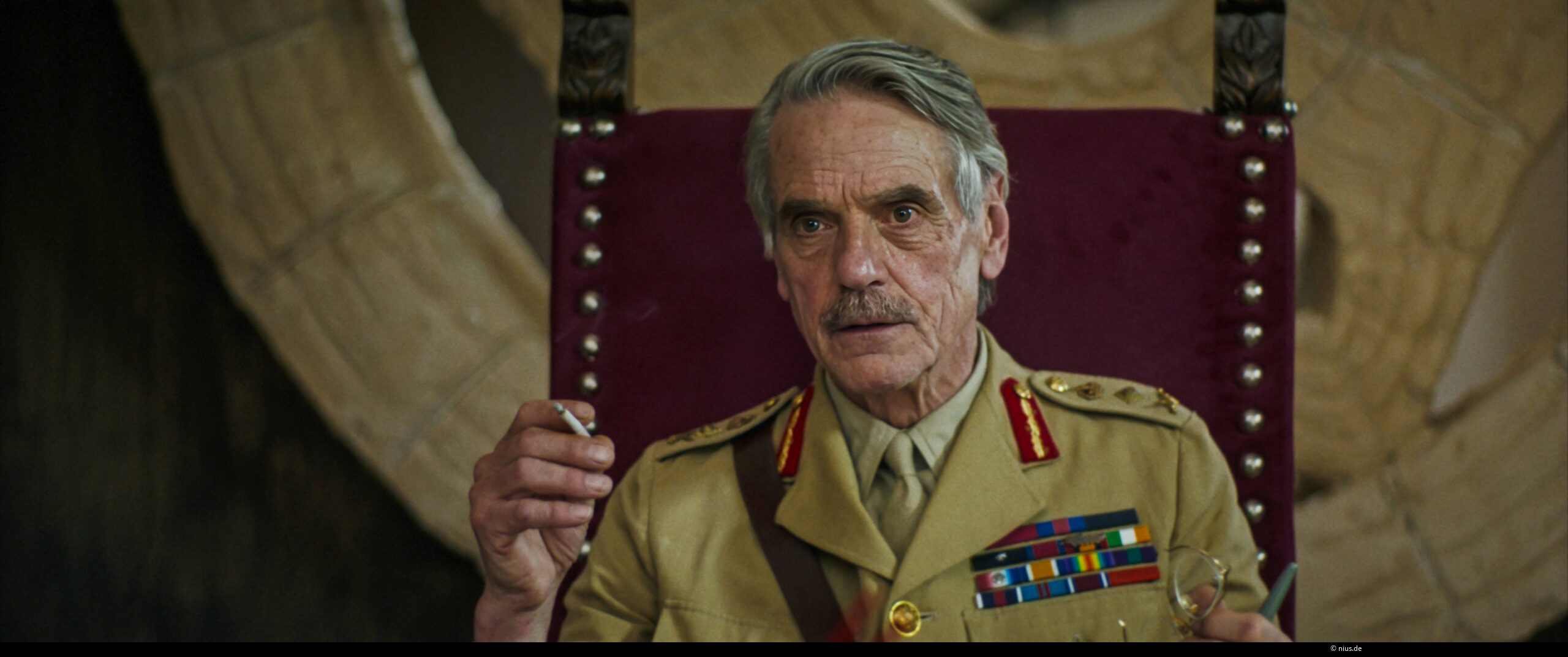
Jeremy Irons als britischer Hochkommissar Arthur Wauchchope.
Photo: nius.de

The film follows Yusuf, a young Palestinian man who becomes a fighter against the British after personal tragedies strike his family. His transformation from chauffeur to insurgent is meant to illustrate the supposedly inevitable radicalization caused by British-Zionist collaboration. Yet as Nius reports, this narrative rests on selective historical memory and outright omissions.

Most notably absent from the two-hour film is any meaningful representation of the 400,000 Jews living in Palestine at the time—both long-established communities and refugees fleeing pogroms in Tsarist Russia and Nazi Germany. When Jews do appear, they are relegated to shadowy background figures without speaking roles. The complexities of land sales, in which Arab landowners willingly sold property to Jewish settlers for substantial profit, are likewise ignored.
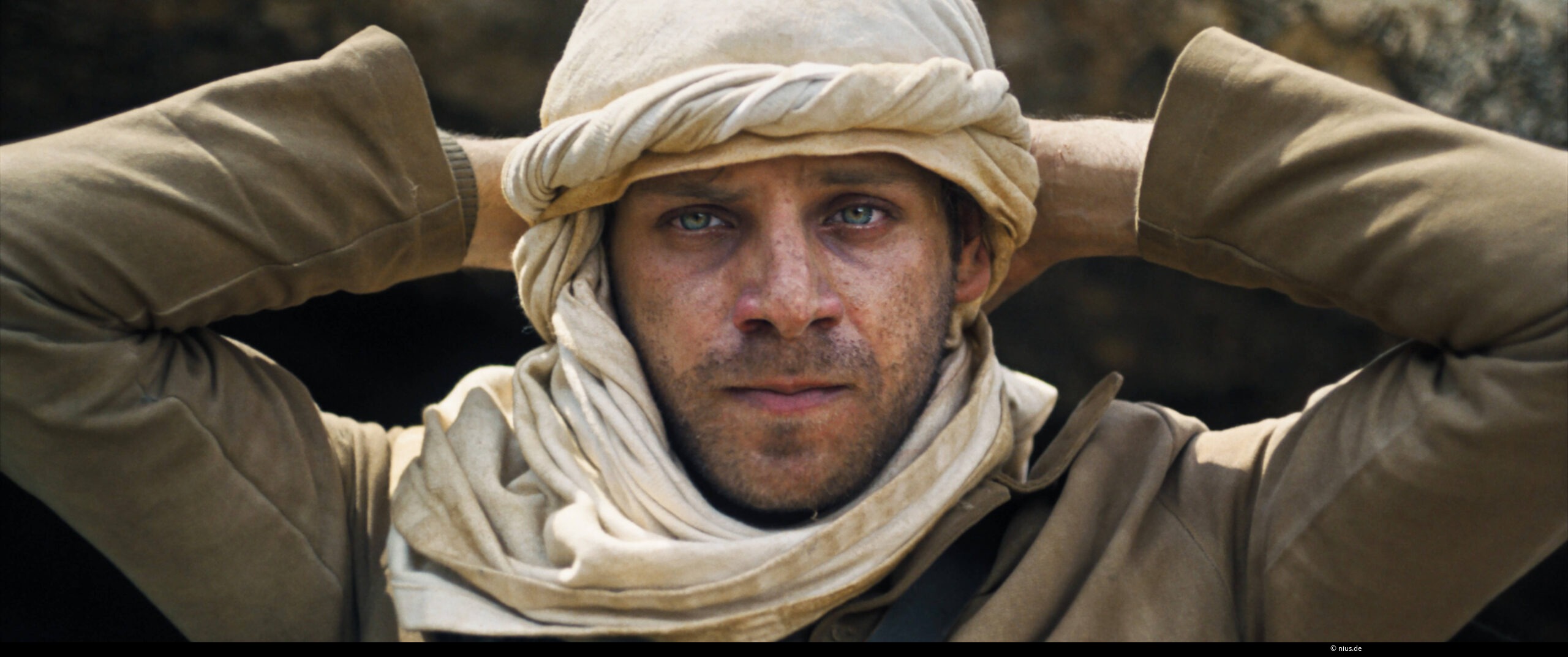
Yusuf (Karim Daoud Anaya) wird zum Aufständischen gegen die Briten.
Photo: nius.de

Instead, the British become the primary villains, represented by High Commissioner Arthur Wauchope (played by Jeremy Irons) and Orde Wingate, a Christian Zionist who helped Jews organize self-defense against Arab militias. The film suggests Britain simply handed Arab land to Jews, a claim Nius notes lacks historical support. British officials were divided, and typically backed whichever side caused them fewer problems.

The film’s most glaring distortion concerns the outbreak of the 1936 revolt itself. Jacir depicts it beginning with a general strike, when in fact it started with the murder of two Jews by Arab bandits who ambushed a bus, followed by a retaliatory killing of two Arab workers by the Jewish militant group Irgun. These inconvenient facts are simply erased.

Annemarie Jacir und ihr Team treten als Aktivisten auf.
Photo: nius.de

Even more troubling is the complete absence of the most important figure of the period: the Grand Mufti of Jerusalem, whose role in organizing anti-Jewish violence and later collaboration with Nazi Germany would apparently complicate the film’s preferred narrative of righteous anti-colonial resistance.

The massacres of Jews that preceded the 1936 revolt, particularly the 1929 Hebron massacre in which hundreds of Jews were murdered, receive no mention whatsoever. In Jacir’s telling, Palestinians exist in a vacuum, reacting only to British and Zionist provocations, never as agents with their own ethnic and religious animosities.

History Rewritten for Activism

Nius emphasizes that while any film is entitled to take a particular perspective, “Palestine 36” crosses the line from viewpoint to propaganda by systematically rewriting history. The exclusion of Arab land sales, Jewish victimization, and the role of Arab leadership transforms complex historical reality into a simple morality tale.

The film’s message is transparent: the British Empire gave Jewish settlers Arab land, against which the native population had no choice but to resist. By extension, this “anti-colonial struggle” continues today with Israel having replaced Britain as the oppressor. This framing deliberately ignores a century of Arab rejection of any Jewish state in the region, regardless of borders or circumstances.

The production team, as shown in promotional materials, openly presents itself as activists rather than historians. The film becomes yet another entry in the long tradition of Palestinian grievance narratives that erase Jewish experience, agency, and historical presence while casting Arabs exclusively as victims of foreign machinations.

For audiences seeking to understand the October 7, 2023 Hamas attack on Israel through historical context, “Palestine 36” offers not enlightenment but mystification—a carefully curated version of the past designed to justify rather than explain contemporary violence.

With information from Nius

Share:
Stefanos Banos
Stefanos Banos

Stefanos Banos was born in Piraeus and is an editor at NewsFire.GR, specializing in political analysis and international relations. He graduated from the Department of Communication and Media at the University of Bremen in Germany, where he also completed his Master of Arts in Communication and Media Studies. Married to Zoi, he is a proud father of three boys.

According to Nius, director Annemarie Jacir’s “Palestine 36” frames the Arab revolt of 1936–1939 as the decisive moment in the Israeli-Arab conflict, while carefully omitting critical context that undermines the film’s anti-colonial narrative.

Jeremy Irons als britischer Hochkommissar Arthur Wauchchope.
Photo: nius.de

The film follows Yusuf, a young Palestinian man who becomes a fighter against the British after personal tragedies strike his family. His transformation from chauffeur to insurgent is meant to illustrate the supposedly inevitable radicalization caused by British-Zionist collaboration. Yet as Nius reports, this narrative rests on selective historical memory and outright omissions.

Most notably absent from the two-hour film is any meaningful representation of the 400,000 Jews living in Palestine at the time—both long-established communities and refugees fleeing pogroms in Tsarist Russia and Nazi Germany. When Jews do appear, they are relegated to shadowy background figures without speaking roles. The complexities of land sales, in which Arab landowners willingly sold property to Jewish settlers for substantial profit, are likewise ignored.

Yusuf (Karim Daoud Anaya) wird zum Aufständischen gegen die Briten.
Photo: nius.de

Instead, the British become the primary villains, represented by High Commissioner Arthur Wauchope (played by Jeremy Irons) and Orde Wingate, a Christian Zionist who helped Jews organize self-defense against Arab militias. The film suggests Britain simply handed Arab land to Jews, a claim Nius notes lacks historical support. British officials were divided, and typically backed whichever side caused them fewer problems.

The film’s most glaring distortion concerns the outbreak of the 1936 revolt itself. Jacir depicts it beginning with a general strike, when in fact it started with the murder of two Jews by Arab bandits who ambushed a bus, followed by a retaliatory killing of two Arab workers by the Jewish militant group Irgun. These inconvenient facts are simply erased.

Annemarie Jacir und ihr Team treten als Aktivisten auf.
Photo: nius.de

Even more troubling is the complete absence of the most important figure of the period: the Grand Mufti of Jerusalem, whose role in organizing anti-Jewish violence and later collaboration with Nazi Germany would apparently complicate the film’s preferred narrative of righteous anti-colonial resistance.

The massacres of Jews that preceded the 1936 revolt, particularly the 1929 Hebron massacre in which hundreds of Jews were murdered, receive no mention whatsoever. In Jacir’s telling, Palestinians exist in a vacuum, reacting only to British and Zionist provocations, never as agents with their own ethnic and religious animosities.

History Rewritten for Activism

Nius emphasizes that while any film is entitled to take a particular perspective, “Palestine 36” crosses the line from viewpoint to propaganda by systematically rewriting history. The exclusion of Arab land sales, Jewish victimization, and the role of Arab leadership transforms complex historical reality into a simple morality tale.

The film’s message is transparent: the British Empire gave Jewish settlers Arab land, against which the native population had no choice but to resist. By extension, this “anti-colonial struggle” continues today with Israel having replaced Britain as the oppressor. This framing deliberately ignores a century of Arab rejection of any Jewish state in the region, regardless of borders or circumstances.

The production team, as shown in promotional materials, openly presents itself as activists rather than historians. The film becomes yet another entry in the long tradition of Palestinian grievance narratives that erase Jewish experience, agency, and historical presence while casting Arabs exclusively as victims of foreign machinations.

For audiences seeking to understand the October 7, 2023 Hamas attack on Israel through historical context, “Palestine 36” offers not enlightenment but mystification—a carefully curated version of the past designed to justify rather than explain contemporary violence.

With information from Nius

