Athens Braces for Fresh Tensions with Turkey
Athens is preparing escalation scenarios after Turkey revived Aegean territorial disputes following the Greek-Israeli defense deal, with officials believing Erdogan seeks domestic political gains.
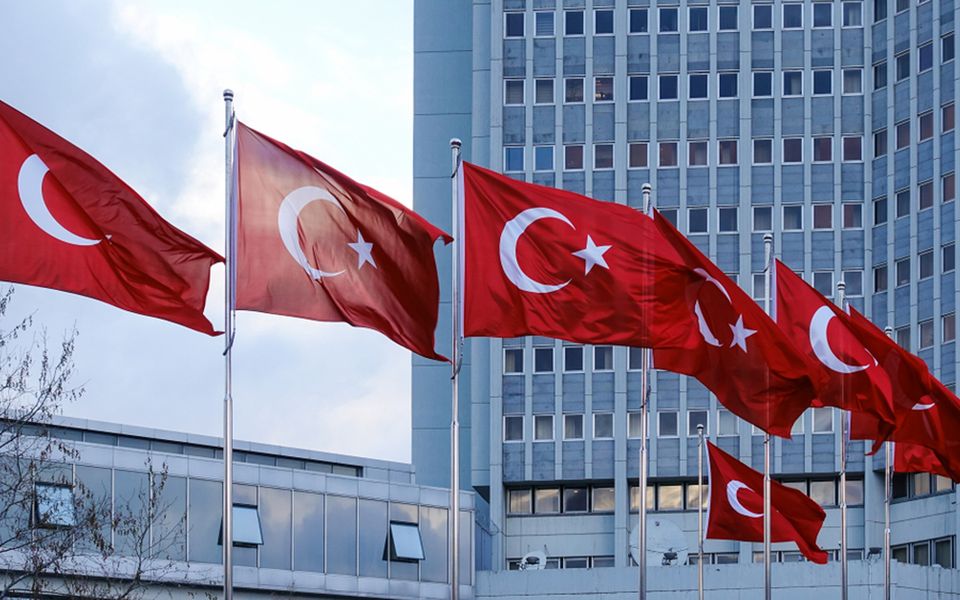

Greek government officials believe that President Recep Tayyip Erdogan is seeking to generate regional tension for domestic political purposes rather than provoke a full-blown crisis. However, Athens is taking no chances, preparing both diplomatic and operational responses, including the potential extension of territorial waters to 12 nautical miles south of Crete.
For the first time, Greece has explicitly invoked this sovereign right in a recent diplomatic note rejecting Turkey’s declaration of so-called national marine parks within Greek continental shelf areas. The demarche emphasized that Greece’s right under the United Nations Convention on the Law of the Sea to extend territorial waters around its islands remains entirely unaffected by Turkish claims. Greek officials are also ensuring their legal positions are thoroughly documented in case disputes eventually reach international judicial forums.
Three Flashpoints on the Horizon
According to reliable sources, three specific developments could trigger renewed confrontation in the coming weeks. First, Greece is set to issue presidential decrees defining maritime zones under its Marine Spatial Planning framework. Second, Turkey has announced plans for a “Blue Homeland” bill that Athens fears may attempt to restrict navigation, research activities, and fishing rights beyond Turkish territorial waters. Third, the Greece-Cyprus electricity interconnection project, known as the Great Sea Interconnector, is moving forward with France’s Meridiam now holding a majority stake.
Potential Crisis Scenarios Under Review
Greek defense and diplomatic planners are modeling several possible scenarios. These include a repeat of the 2020 Oruc Reis incident, with Turkish research vessels operating south of Kastellorizo; Turkish fishing fleets entering Greece’s exclusive economic zone, potentially including environmentally protected areas; and renewed Turkish unmanned aerial vehicle incursions, which could force difficult decisions about whether to shoot down drones after appropriate warnings.
Looking further ahead, tensions could intensify around the delivery of Israeli defense systems, including components of the Achilles Shield air defense platform and PULS precision missile artillery systems.
Dialogue Channels Remain Open Despite Tensions
Despite the mounting pressure, communication channels between Athens and Ankara remain operational. Ibrahim Kalin, chief of Turkey’s national intelligence organization MIT, recently visited Athens for meetings with Themis Demiris, head of Greece’s National Intelligence Service (EYP), and Prime Minister Kyriakos Mitsotakis. A potential meeting between Mitsotakis and Erdogan on the sidelines of the United Nations General Assembly in late September has been discussed, though sources currently consider it unlikely.
Athens attributes a significant portion of Turkey’s recent aggressive rhetoric and operational activity, including surveys by the Turkish research vessel Tubitak Marmara south of Kastellorizo, to Greece’s deepening strategic cooperation with Israel.
Greek Foreign Ministry Rejects Turkish Claims
The Greek Foreign Ministry has categorically rejected Turkey’s revived claims challenging Greek sovereignty over islands, islets, and rocks in the Aegean, describing them as baseless, arbitrary, and lacking any foundation in international law. Athens emphasized that the sovereign status of these territories is firmly established by international treaties.
The resurgence of Turkish territorial demands and the revival of claims concerning demilitarization of Greek islands represent a significant shift in regional dynamics, coming at a time when Greece has been strengthening its defense partnerships with both Israel and Western allies.
With information from Kathimerini (EN)