Necessary Cookies

Required for the site to function. Cannot be disabled.

Analytics Cookies

Help us understand how visitors interact with our site (Google Analytics via GTM).

Marketing Cookies

Used to track visitors and deliver personalised advertisements.

We use cookies to enhance your browsing experience and analyse site traffic. By clicking Accept All, you consent to our use of cookies. Privacy Policy
NewsFire Global
Home News Europe World Christianity Culture Wars Opinion Video
Information
About Us Authors Advertising Terms & Conditions Privacy Policy Contact
R2B Media
R2B NEWSFIRE.GR PAPAFOTIS.GR THRACTION HELLENIC CONSERVATIVES RIGHT2THEBONE YT
News Europe

Turkey Slams Greece’s Extended Border Fence Along Evros River

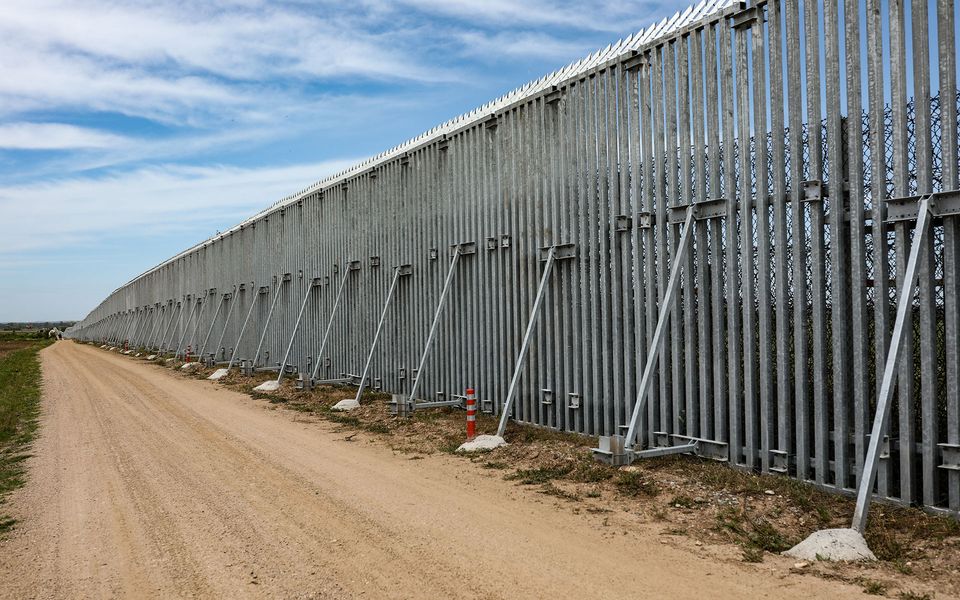
Turkey has filed a formal protest against Greece over border fence construction along the Evros River, claiming parts are being built on Turkish territory amid disputes over the shifting river course.

Dimitris Papafotis
Dimitris Papafotis Editor in Chief
SEPTEMBER 4, 2026 AT 6:56 PM

The dispute marks a fresh flashpoint in bilateral relations between the two nations, though Greek authorities have pressed ahead with construction work despite the Turkish objections, sources indicate.

Fence Construction Left Incomplete at Multiple Sites

The border fence project in the central Evros region commenced in 2023 and reached completion in early 2025. However, work remained unfinished at no fewer than seven locations spanning the 35-kilometer stretch of the installation.

These sites, concentrated primarily near Soufli with additional points near Didymoteicho, account for approximately 5 kilometers of combined length. Greek military cartography designates these zones as falling within Greek sovereign territory, while Turkish authorities maintain they lie on the Turkish side of the frontier.

Shifting River Course Creates Border Ambiguity

The disagreement originates partly from natural alterations to the course of the Evros River, which constitutes a portion of the Greek-Turkish boundary, generating uncertainty regarding the exact demarcation line.

Police sources revealed that construction was originally suspended at the contested locations for both tactical and diplomatic considerations. One option under review involved deploying a mobile barrier system capable of repositioning if required, rather than establishing a permanent installation with foundations and fixed support posts.

Digital Mapping Reveals Discrepancies

Diplomatic sources disclosed that an additional complication surfaced in 2024 when Greek officials initiated digital mapping of the border zone. Prior to this effort, existing maps had relied on analog surveys conducted in 1926.

A diplomatic source noted that small discrepancies emerged between the analog and digital representations, requiring technical services from both nations to reach consensus on unified mapping standards.

A comparable mapping disagreement between Greece and Turkey had also arisen in 2024, the source confirmed.

Greece Proceeds with Permanent Construction

Approximately five months ago, Greek authorities made the decision to move forward with completing the fence in the disputed sectors based on Greek cartographic data. Construction crews are now employing pile-driving techniques to establish permanent foundations, effectively abandoning the previous proposal for a relocatable barrier system.

This decision triggered the Turkish government’s submission of a formal diplomatic protest, known as a note verbale, delivered through the trilateral contact point maintained by Greece, Turkey and Bulgaria at the Kapitan Andreevo border crossing.

With information from Kathimerini (EN)

Share:
Dimitris Papafotis
Dimitris Papafotis

Dimitris Papafotis is the editor-in-chief of NewsFire.GR. He was born and raised in Athens. He studied at the Journalism Workshop (1991-1993). He currently lives in Pyrgos, Ilia, where he has been active in radio and various newspapers, while also maintaining his personal blog, Papafotis.gr.

Recent News

The dispute marks a fresh flashpoint in bilateral relations between the two nations, though Greek authorities have pressed ahead with construction work despite the Turkish objections, sources indicate.

Fence Construction Left Incomplete at Multiple Sites

The border fence project in the central Evros region commenced in 2023 and reached completion in early 2025. However, work remained unfinished at no fewer than seven locations spanning the 35-kilometer stretch of the installation.

These sites, concentrated primarily near Soufli with additional points near Didymoteicho, account for approximately 5 kilometers of combined length. Greek military cartography designates these zones as falling within Greek sovereign territory, while Turkish authorities maintain they lie on the Turkish side of the frontier.

Shifting River Course Creates Border Ambiguity

The disagreement originates partly from natural alterations to the course of the Evros River, which constitutes a portion of the Greek-Turkish boundary, generating uncertainty regarding the exact demarcation line.

Police sources revealed that construction was originally suspended at the contested locations for both tactical and diplomatic considerations. One option under review involved deploying a mobile barrier system capable of repositioning if required, rather than establishing a permanent installation with foundations and fixed support posts.

Digital Mapping Reveals Discrepancies

Diplomatic sources disclosed that an additional complication surfaced in 2024 when Greek officials initiated digital mapping of the border zone. Prior to this effort, existing maps had relied on analog surveys conducted in 1926.

A diplomatic source noted that small discrepancies emerged between the analog and digital representations, requiring technical services from both nations to reach consensus on unified mapping standards.

A comparable mapping disagreement between Greece and Turkey had also arisen in 2024, the source confirmed.

Greece Proceeds with Permanent Construction

Approximately five months ago, Greek authorities made the decision to move forward with completing the fence in the disputed sectors based on Greek cartographic data. Construction crews are now employing pile-driving techniques to establish permanent foundations, effectively abandoning the previous proposal for a relocatable barrier system.

This decision triggered the Turkish government’s submission of a formal diplomatic protest, known as a note verbale, delivered through the trilateral contact point maintained by Greece, Turkey and Bulgaria at the Kapitan Andreevo border crossing.

With information from Kathimerini (EN)