
Taz Author Blames Israel for Vaccine Shortage That Didn’t Exist
A German newspaper corrected an article blaming Israel for a Palestinian family's polio after critics noted the vaccine did not exist until 1955, seven years after the alleged incident.


The Berlin-based Taz newspaper ran an article by Mohamed Ibrahim, who describes himself as a Palestinian refugee who arrived in Berlin in 1973. In the piece, Ibrahim recounted what he presented as his family’s traumatic history, claiming his father was born in Palestine in 1945 and expelled in 1948, according to Nius.
The article’s central accusation against Israel was striking: Ibrahim wrote that due to the 1948 displacement, his father did not receive a timely polio vaccination, subsequently contracted the disease, and suffered lifelong paralysis in his right leg that caused him to limp.
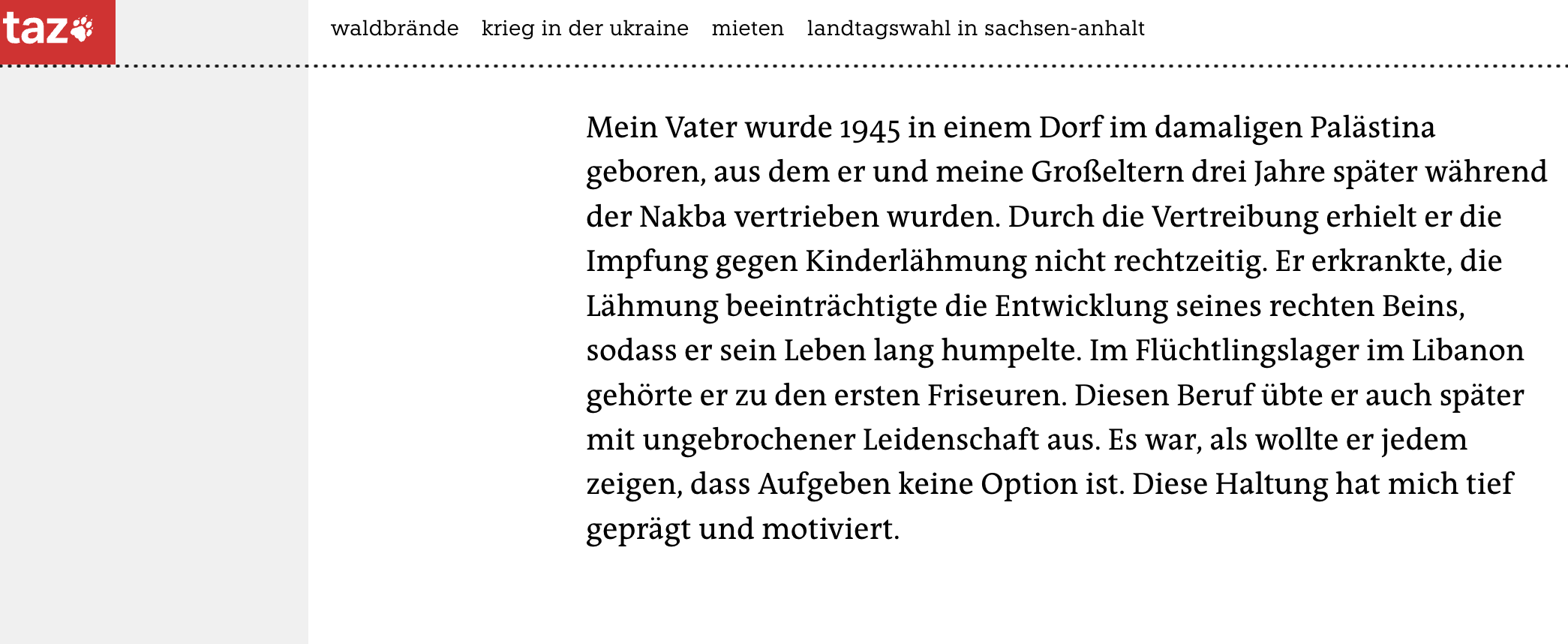
There was one glaring problem with this account. The polio vaccine did not exist in 1948. The first polio vaccine was developed by Jonas Salk, a Jewish physician and immunologist, and was not approved for use in the United States until 1955—seven years after the events Ibrahim described.
The author thus opened his text with a demonstrably false accusation against Israel, the Jewish state, while presenting it as a deeply personal family trauma, as Nius reports.
Delayed Correction After Social Media Backlash
The article was originally published on August 4. After the historically inaccurate claim against Israel sparked significant criticism across social media platforms, Taz announced it would examine “a possible error” and would “correct it if necessary.”
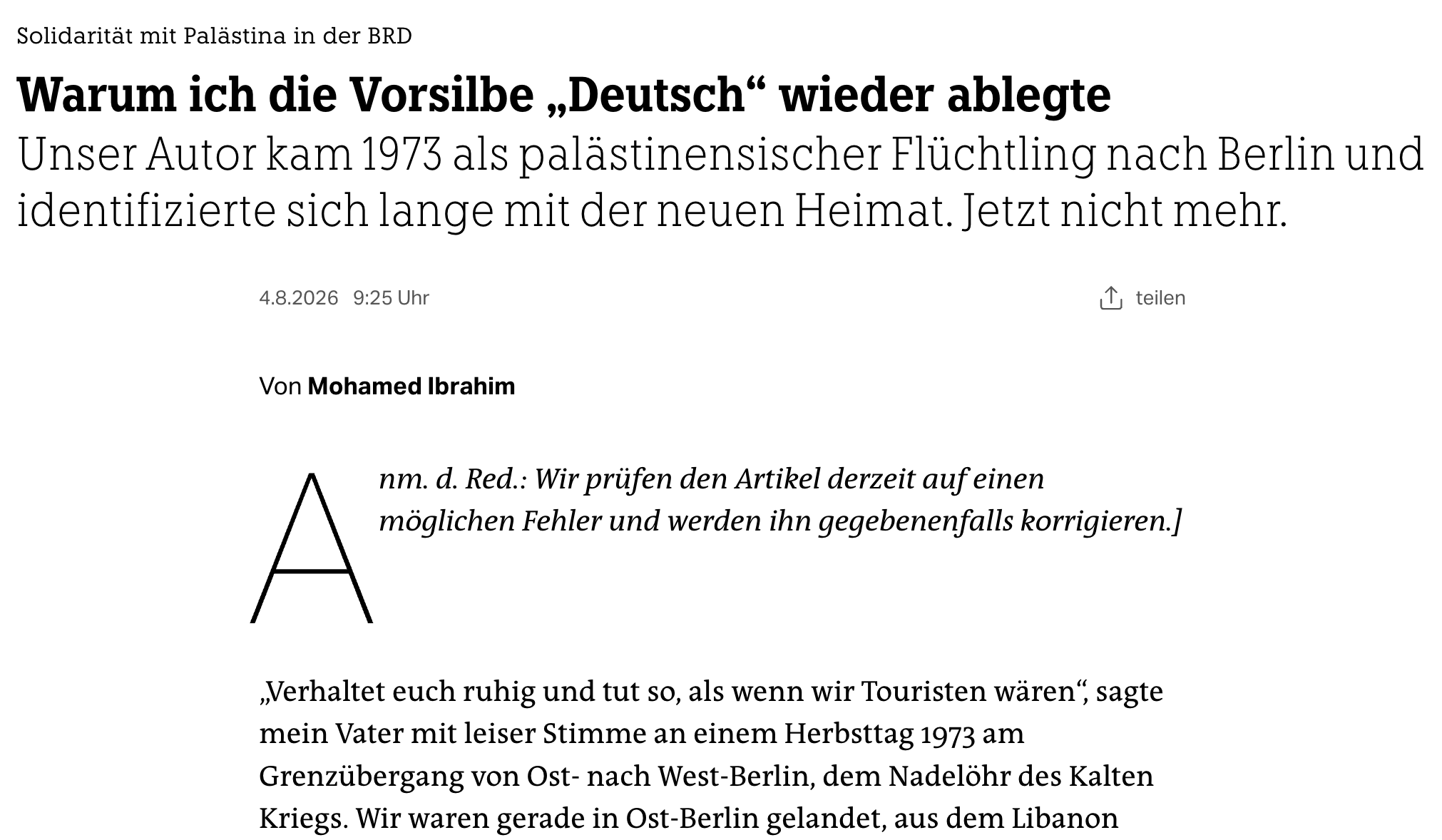
Nearly two weeks later, on Monday, August 17, the correction finally appeared in an editorial note at the end of the article. The note acknowledged that an earlier version had claimed the author’s father was not vaccinated against polio in time due to his displacement, but admitted that the polio vaccine has only existed since 1955. The publication conceded that no connection between the displacement and the illness could therefore have existed, expressing regret for the error and asking readers to excuse it.
Pattern of Anti-Israel Narratives
The incident raises questions about editorial standards at Taz and the willingness of some outlets to publish unverified claims when they align with particular political narratives. The fact that such a basic historical error—easily confirmed through rudimentary fact-checking—made it through to publication suggests either insufficient editorial oversight or a predetermined agenda that superseded accuracy.
The case also illustrates how contemporary media discourse around Israel often incorporates claims that collapse under minimal scrutiny, yet are presented with emotional weight designed to bypass critical examination. By framing the false allegation as personal family history, the author appeared to seek immunity from factual verification through an appeal to victimhood.
Taz’s eventual correction, while necessary, came only after sustained public pressure exposed the fabrication. The delay in acknowledging such an obvious factual error further undermines confidence in the publication’s commitment to journalistic standards when covering Israeli-Palestinian issues.
With information from Nius





