
Colombian Rebels Injure 11, Kill Dog in Terror Attack
Colombia's government blamed the National Liberation Army rebel group for a Saturday bombing outside a Cucuta police facility that wounded 11 officers and killed a police dog.
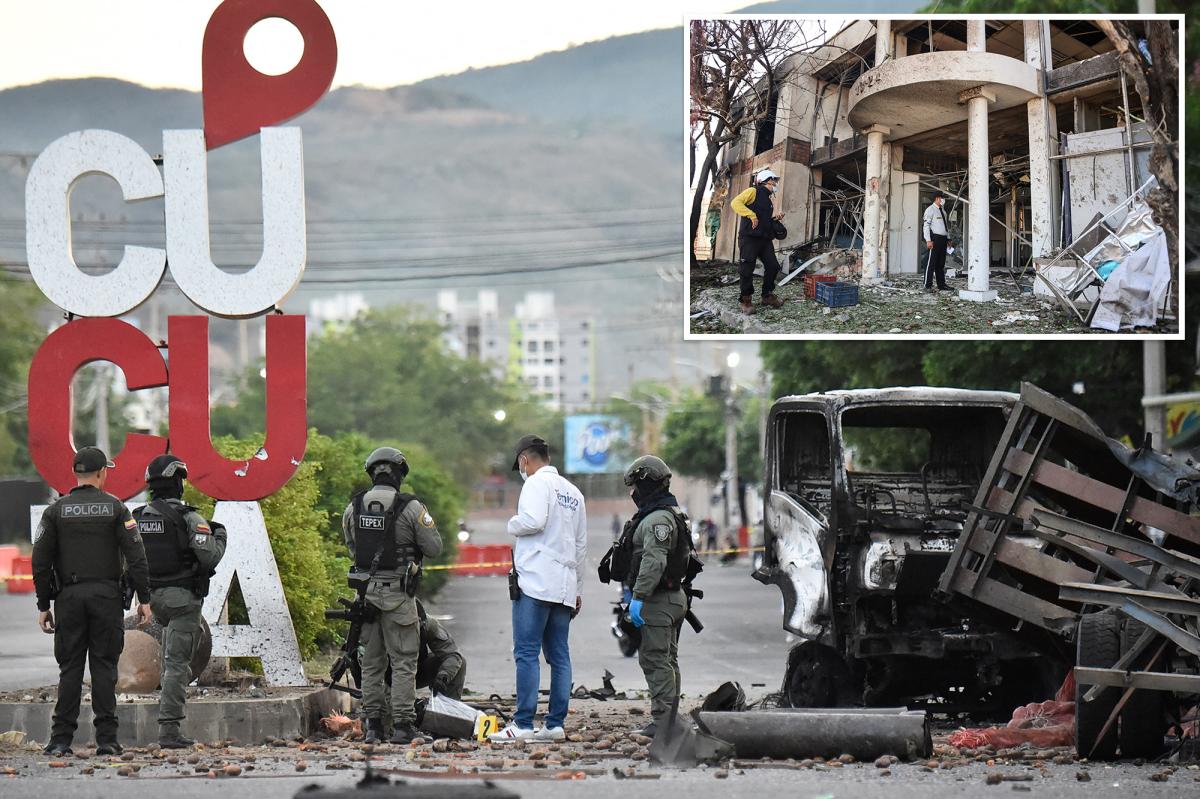

The attack occurred in the early hours of Saturday morning in Cucuta, a strategic border city where drug cartels and insurgent forces have battled for years over control of lucrative smuggling corridors, according to New York Post.
General William Rincon, director of Colombia’s national police force, reported that the explosion originated from a truck abandoned outside the building housing the police headquarters for Norte de Santander Province. The pre-dawn blast tore through much of the structure’s roof and blew out windows throughout the facility.
Rincon condemned what he called a vile terrorist attack, vowing that authorities would pursue those responsible until they face prosecution.
Colombian Defense Minister Pedro Sanchez directly accused the National Liberation Army of orchestrating the car bombing in a statement posted to X, announcing a $60,000 reward for intelligence leading to the perpetrators.
Timing Ahead of Presidential Transition
The bombing comes as Colombia stands on the brink of a major political shift. Next Friday, Abelardo de la Espriella, an ultra-conservative who has pledged to abandon peace negotiations with remaining rebel factions, will take the oath of office in Cali, another Colombian city recently targeted by insurgent violence.
The National Liberation Army, commonly known as ELN, has waged war against the Colombian state for decades and currently commands an estimated 6,000 combatants operating across Colombia and neighboring Venezuela, as New York Post reports.
From Ideological Movement to Criminal Enterprise
Founded in the 1960s by union organizers, university students and rural peasants advocating for social justice, the ELN has largely devolved into a criminal enterprise profiting from illegal gold extraction and narcotics trafficking, according to Colombian government assessments. Outgoing President Gustavo Petro has repeatedly characterized ELN leadership as drug traffickers masquerading as revolutionary guerrillas.
Petro, who assumed office in 2022, initiated peace negotiations with the ELN during his tenure. Those talks collapsed early last year following ELN assaults in the countryside north of Cucuta that claimed approximately 78 lives and forced at least 56,000 residents to abandon their homes.
Incoming Administration Promises Harder Line
President-elect de la Espriella has committed to confronting the ELN and other criminal organizations with escalated military action and plans to reinstate aerial spraying of coca plantations, the base ingredient for cocaine production.
Petro’s strategy during his presidency, branded as Total Peace, sought dialogue with multiple armed factions. Critics contend that numerous groups exploited government-granted ceasefires to reorganize, rearm and tighten their control over rural populations.
A 2016 peace agreement between Colombia’s government and the Revolutionary Armed Forces of Colombia resulted in the demobilization of over 13,000 guerrilla combatants. However, the accord created a power vacuum in remote regions that smaller organizations like the ELN have attempted to exploit.
With information from New York Post





