
Colombia Earthquake Deaths Near 300, Scores Missing
Colombia's earthquake death toll has reached 289 with 143 missing and €8 billion in damages, though forensic officials report higher casualty figures than the government acknowledges.
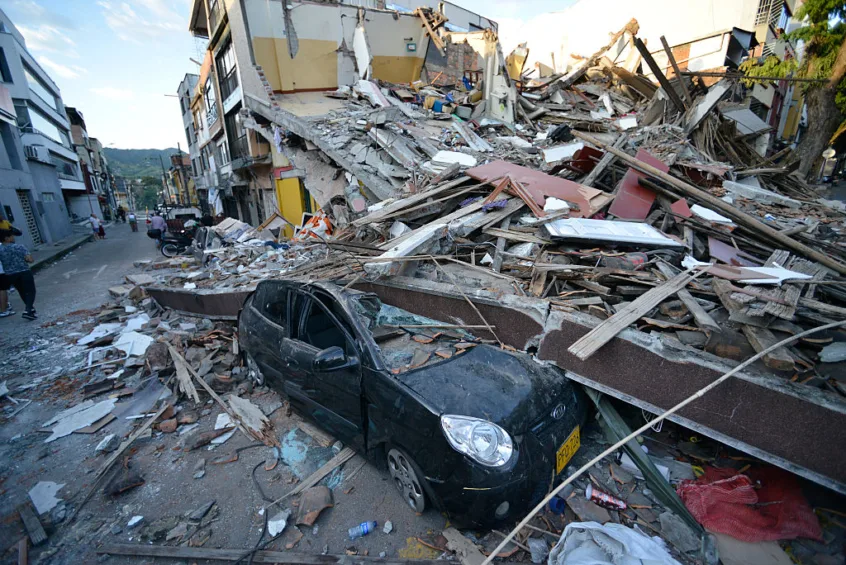

The death toll from the devastating earthquake that struck western Colombia last week has climbed to 289, while 143 people remain missing and economic losses are estimated at €8 billion, according to government officials.
Colombian President Abelardo de la Espriella provided the updated casualty figures during a televised address on August 17, one week after the magnitude 7.4 earthquake hit the country’s western regions. He also reported that 4,187 people had been injured and 120,328 families were registered as affected by the disaster, according to Brussels Signal.
The presidential count appeared to contradict figures released earlier the same day by the National Institute of Legal Medicine and Forensic Sciences, which stated it had received 304 bodies and identified 300 of them, including 22 children. The forensic institute also listed 348 people as missing, more than double the number acknowledged by de la Espriella.
The President defended the discrepancy by stating his administration would only release consolidated data out of respect for victims and their families, as ground teams continued verification work.
The identified dead came predominantly from Cali and Pereira, the two largest cities affected by the August 10 quake. Additional bodies were sent from Chocó, Caldas, Risaralda and Valle del Cauca.
€8 Billion in Physical Damage
De la Espriella presented the first technical assessment of economic damage, revealing that a private firm had calculated direct physical losses at approximately 30 trillion pesos (€8.2 billion) across the affected departments of Chocó, Valle del Cauca, Risaralda, Quindío and Caldas.
Buildings accounted for roughly 24.5 trillion pesos (€6.7 billion) of the damage, while infrastructure losses totalled 5.5 trillion pesos (€1.5 billion). The President noted these figures would be adjusted as additional information became available.
The proportional impact proved most severe in Chocó, despite lower absolute losses there. De la Espriella called for a “Marshall Plan” for the historically neglected department and announced that Housing Minister Jaime Andrés Beltrán would lead the reconstruction programme, to be financed through a newly established state fund.
Widespread Destruction Across Third of Nation
The earthquake affected 450 municipalities across 15 departments, encompassing approximately one-third of Colombian territory. Presidential data showed 26,945 homes were destroyed completely, with an additional 127,557 sustaining damage.
International rescue efforts have brought 138 foreign workers to Colombia, including 82 Israelis, 32 Ecuadoreans and 24 Americans, de la Espriella reported.
EU Mobilises Emergency Response
Colombia has activated the EU civil protection mechanism, with Sweden, Germany and Luxembourg providing tents, blankets, kitchen sets and water filters. The European Commission has committed €2.1 million in emergency humanitarian assistance and deployed a rapid response coordinator.
European Commission President Ursula von der Leyen stated the EU was supporting Colombia wherever possible, while Brussels has activated its Copernicus satellite service to assist rescue teams on the ground.
Spain reported on August 11 that it had been unable to trace 164 of its nationals in Colombia following the earthquake, though no Spanish deaths or injuries had been recorded at that time.
With information from Brussels Signal





