Necessary Cookies

Required for the site to function. Cannot be disabled.

Analytics Cookies

Help us understand how visitors interact with our site (Google Analytics via GTM).

Marketing Cookies

Used to track visitors and deliver personalised advertisements.

We use cookies to enhance your browsing experience and analyse site traffic. By clicking Accept All, you consent to our use of cookies. Privacy Policy
NewsFire Global
Home News Europe World Christianity Culture Wars Opinion Video
Information
About Us Authors Advertising Terms & Conditions Privacy Policy Contact
R2B Media
R2B NEWSFIRE.GR PAPAFOTIS.GR THRACTION HELLENIC CONSERVATIVES RIGHT2THEBONE YT
Opinion World

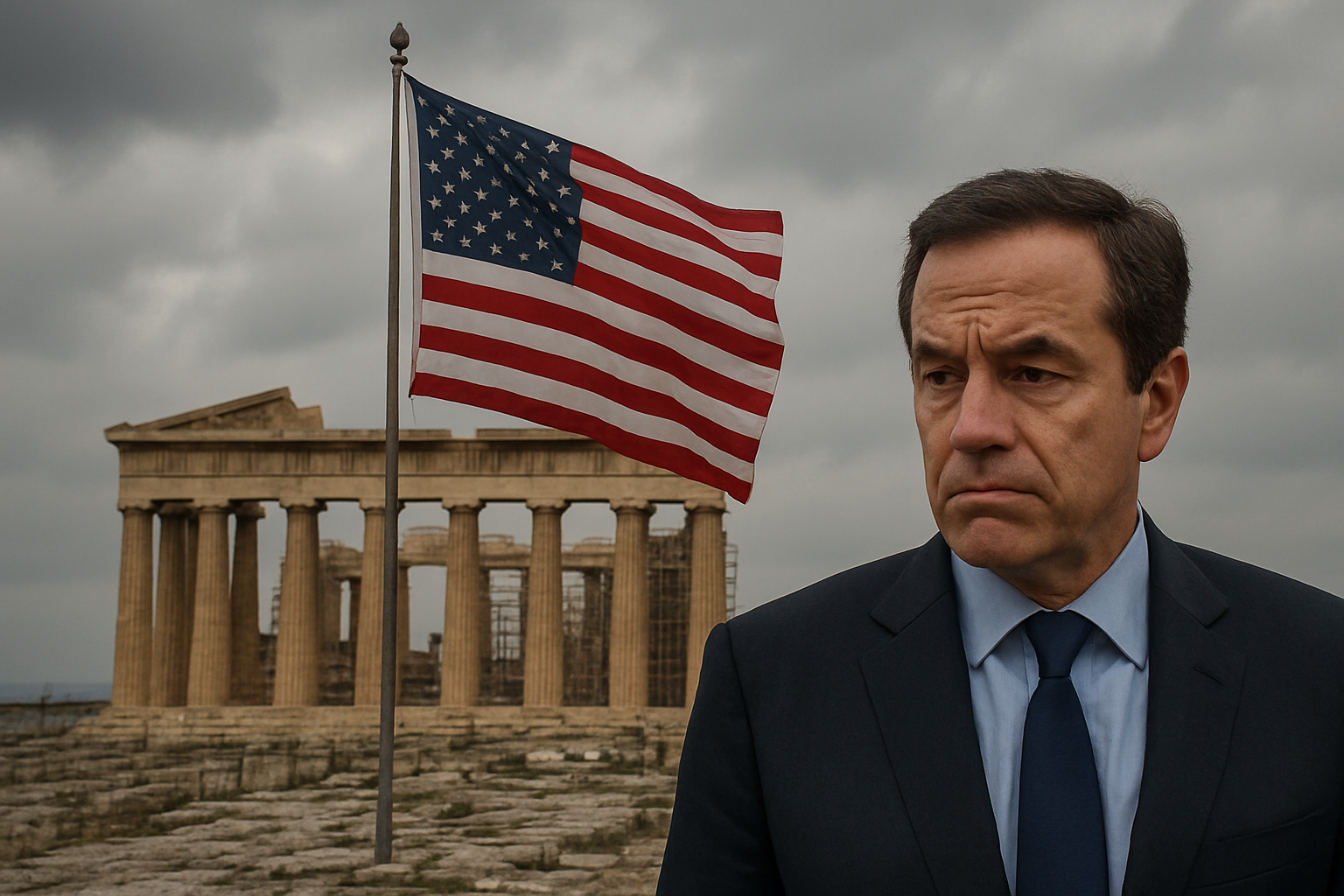
United States faces trust crisis… By Andreas Andrianopoulos

Gulf Arab states are diversifying security partnerships beyond the U.S. toward Turkey, China, and India amid doubts about American reliability following the Iran agreement.
JULY 30, 2026 AT 4:01 PM

The tentative United States–Iran agreement, especially after recent negative developments, may or may not evolve into a permanent settlement. If it does, it could very well accelerate new alignments and alliances already taking shape due to doubts about American credibility. The discussion is not only about whether the U.S. is powerful, but whether it is a predictable and stable guarantor of security. In the Gulf, there will be efforts toward multi-dimensional security instead of exclusive dependence on the United States.

The greatest change will likely appear in the Arab monarchies of the Gulf. The experience of the war showed that even close allies of Washington can find themselves exposed to attacks and economic damage. As a result, countries such as Saudi Arabia, the United Arab Emirates, and Qatar are increasingly seeking to maintain relations simultaneously with the United States, China, India, and—of concern to us—regional powers such as Turkey.

New geographic configurations will begin to form without American leadership. Already under analysis is the possibility of closer cooperation between Turkey, Pakistan, Saudi Arabia, and Egypt on regional security, with less dependence on American military guarantees. Europe is also moving toward greater strategic autonomy. The war and the uncertainty surrounding American policy are strengthening voices calling for European defense autonomy. The idea that Europe must be able to function even if the United States changes priorities has gained greater resonance. This does not mean dissolution of NATO, but possibly greater European defense spending, European deterrence initiatives, and less political dependence on Washington. Something that was evident, moreover, at the recent Summit in Ankara.

China is the great beneficiary. China is appearing more and more as an alternative economic and diplomatic partner. The Gulf countries do not wish to replace the United States with China, but they want to have options. This increases Beijing’s geopolitical influence. The paradoxical final result is a trust crisis but not abandonment of the United States. There is, of course, the opposite reading. Some allies may conclude that, despite the mistakes and contradictions, only the United States possesses the military power to intervene on such a large scale. Therefore they may seek more American guarantees, not fewer. The most likely development is not the abandonment of the United States by its allies, but rather the transition to a more multipolar world where even Washington’s traditional allies will avoid depending exclusively on it. The war with Iran and the unstable subsequent agreement appear to be accelerating this process.


Share:
Andreas Andrianopoulos

Andreas Andrianopoulos (Piraeus, 1946) is a Greek politician, former minister, and member of parliament for New Democracy, with studies in Political Science in Athens and Comparative Politics at the Universities of Kent, Cambridge, and Oslo. He served as Minister of Commerce (1990-1991), Minister of Industry, Energy and Technology (1991-1992), and Minister of Culture (1992-1993), while also holding the position of Mayor of Piraeus (1982-1990). As the son of Giannis Andrianopoulos, one of the founders of Olympiacos, he is connected to the history of the club. He is also an author and columnist, with a significant contribution to public discourse.

The tentative United States–Iran agreement, especially after recent negative developments, may or may not evolve into a permanent settlement. If it does, it could very well accelerate new alignments and alliances already taking shape due to doubts about American credibility. The discussion is not only about whether the U.S. is powerful, but whether it is a predictable and stable guarantor of security. In the Gulf, there will be efforts toward multi-dimensional security instead of exclusive dependence on the United States.

The greatest change will likely appear in the Arab monarchies of the Gulf. The experience of the war showed that even close allies of Washington can find themselves exposed to attacks and economic damage. As a result, countries such as Saudi Arabia, the United Arab Emirates, and Qatar are increasingly seeking to maintain relations simultaneously with the United States, China, India, and—of concern to us—regional powers such as Turkey.

New geographic configurations will begin to form without American leadership. Already under analysis is the possibility of closer cooperation between Turkey, Pakistan, Saudi Arabia, and Egypt on regional security, with less dependence on American military guarantees. Europe is also moving toward greater strategic autonomy. The war and the uncertainty surrounding American policy are strengthening voices calling for European defense autonomy. The idea that Europe must be able to function even if the United States changes priorities has gained greater resonance. This does not mean dissolution of NATO, but possibly greater European defense spending, European deterrence initiatives, and less political dependence on Washington. Something that was evident, moreover, at the recent Summit in Ankara.

China is the great beneficiary. China is appearing more and more as an alternative economic and diplomatic partner. The Gulf countries do not wish to replace the United States with China, but they want to have options. This increases Beijing’s geopolitical influence. The paradoxical final result is a trust crisis but not abandonment of the United States. There is, of course, the opposite reading. Some allies may conclude that, despite the mistakes and contradictions, only the United States possesses the military power to intervene on such a large scale. Therefore they may seek more American guarantees, not fewer. The most likely development is not the abandonment of the United States by its allies, but rather the transition to a more multipolar world where even Washington’s traditional allies will avoid depending exclusively on it. The war with Iran and the unstable subsequent agreement appear to be accelerating this process.
