Reagan Was Right About Daniel Ortega All Along
Nicaragua's abandonment of democratic elections under Daniel Ortega exemplifies how socialism breeds authoritarianism and economic collapse, with GDP per capita plummeting 60% during his earlier rule.
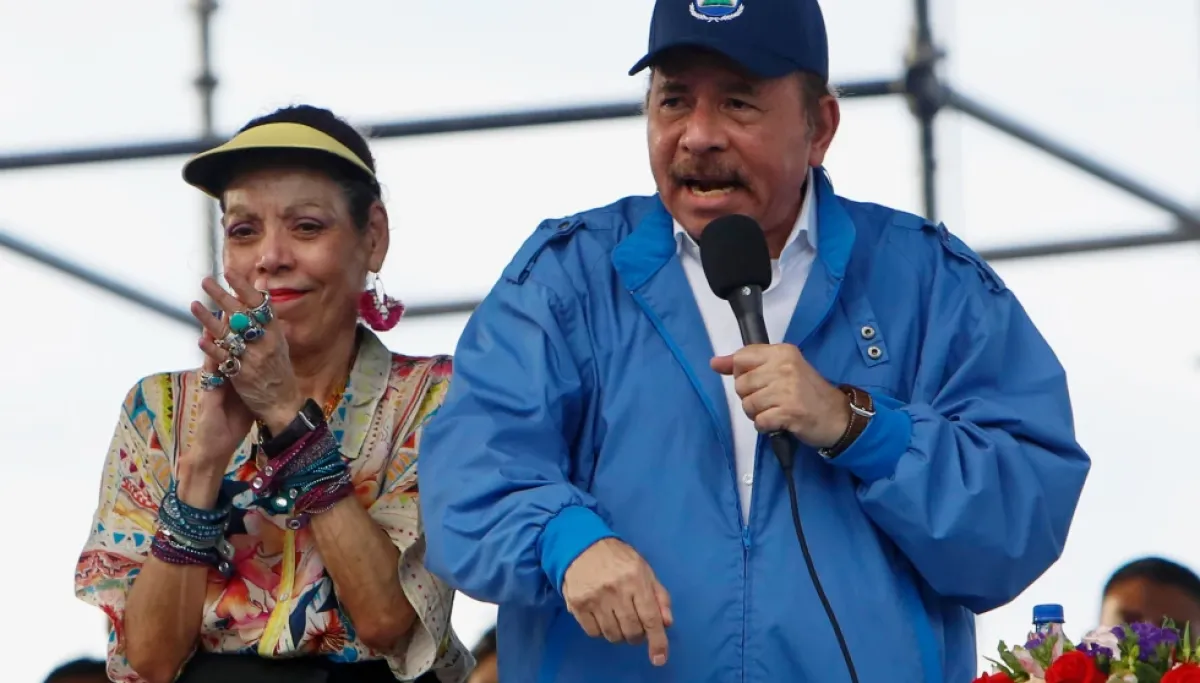

Earlier this week, Ortega announced that Nicaragua would abandon democratic elections altogether, marking the final stage of a descent from Marxist revolutionary to entrenched autocrat that has played out over decades.
The Nicaraguan leader first seized power in 1979 after abandoning law school to join the Sandinista National Liberation Front, a socialist revolutionary movement. The son of a shoemaker, Ortega openly embraced both Karl Marx and Vladimir Lenin as his ideological heroes, telling the Los Angeles Times in the 1980s that he admired and respected both men.
Following the Bolshevik playbook, Ortega wasted no time seizing private property, including the luxurious mansion of a wealthy banker. Throughout the 1980s, he pursued standard socialist policies: nationalizing industries, confiscating and redistributing wealth, and radically reallocating land holdings.
President Ronald Reagan dismissed him as a dictator in designer glasses, though many at the time insisted Ortega was a genuine reformer with no personal ambitions for power. One diplomat assured the Los Angeles Times in 1986 that Ortega was totally dedicated to his cause and not motivated by personal benefit.
The economic results told a different story. When the Sandinista government began implementing its reforms in 1980, Nicaragua’s per capita GDP stood at $659 in current U.S. dollars, according to World Bank data. By the time voters removed him from office in 1990, that figure had plummeted to $242.50 — a catastrophic 60% decline.
This economic devastation kept Ortega out of power for 16 years, as he lost elections in 1995 and 2001. During this period, the former revolutionary underwent a calculated transformation, abandoning Marxist slogans and olive green uniforms in favor of rhetoric about unity, reconciliation, aid to the poor, and healthcare. He even rebranded himself as a social conservative.
The strategy worked. Ortega returned to power in 2007 and won reelection in 2011 after changing the constitution to circumvent term limits. He was sworn in for a third time in 2017, installing his wife as vice president.
If Ortega’s first stint in power demonstrated socialism’s core economic failure — making people poorer — his return revealed its political inevitability: a slide toward authoritarianism.
In spring 2018, attempts to reform Nicaragua’s pension system sparked riots, which Ortega’s forces brutally suppressed. Hundreds died in the crackdown, including many university students.
Following the bloodshed, Ortega abandoned any remaining pretense of political freedom. His 2021 reelection — his fourth consecutive electoral victory — was widely condemned as fraudulent after his government imprisoned or barred opposition candidates. A 2024 United Nations report documented that the regime continues to persecute not only dissenting voices but anyone who does not fall directly under government control.
Nicaragua’s trajectory mirrors the pattern established by every major socialist experiment of the 20th century. Cuba’s economy stagnated after Castro seized power. Vietnam became the world’s poorest country after Saigon fell and socialist policies were imposed. By the 1980s, Soviet reformers expressed amazement at the abundance found in ordinary American grocery stores.
Margaret Thatcher captured one dimension of socialism’s failure when she observed that you eventually run out of other people’s money. But Nicaragua demonstrates that socialism’s tendency to concentrate power in the state makes tyranny not just possible but inevitable.
Ortega joins a long line of socialist leaders who claimed to champion the working class yet became the very oppressors they once claimed to oppose.
With information from Washington Examiner