
Poland’s President Vetoes Backdoor Same-Sex Marriage Bill
Poland's President Karol Nawrocki vetoed legislation that would have granted legal recognition to unmarried couples, including same-sex partnerships, calling it a threat to traditional marriage.
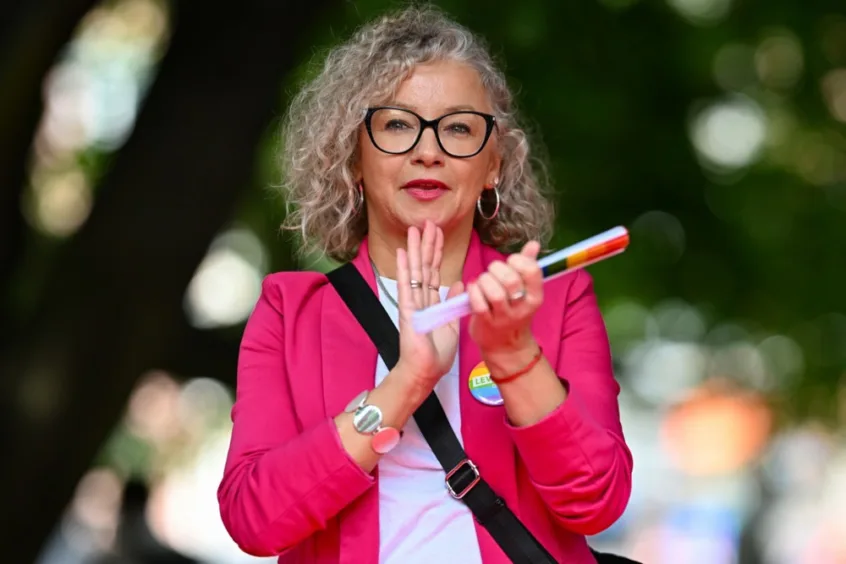

According to Brussels Signal, the proposed law—which passed both chambers of Poland’s parliament with support from Prime Minister Donald Tusk’s coalition government—would have allowed any two adults to register a cohabitation agreement through a notary and civil registry office, granting them a range of legal rights previously reserved for married couples.
Had it taken effect, the legislation would have represented the first time Poland officially recognised same-sex relationships under domestic law. The measure passed with backing from Tusk’s coalition, which spans left-wing to centre-right parties, but faced firm opposition from the two main conservative opposition parties, Law and Justice (PiS) and the Confederation.
Nawrocki, a PiS ally who had signaled his opposition in advance, formally vetoed the bill on July 17. In his veto statement, the President argued that the law would replicate the main legal benefits of marriage while imposing fewer responsibilities and allowing far easier termination than divorce.
Marriage cannot become one of many equally valid options offered by the state administration, Nawrocki stated, adding that the family remains fundamental to the survival of the nation.
Rights Without Responsibilities
The vetoed legislation would have granted registered couples significant benefits including joint tax returns, inheritance and gift tax exemptions, access to medical information, health insurance coverage, survivor’s pensions, and burial arrangement rights. Partners could also have attached joint wills to their agreements. Notably, the law excluded joint child adoption or stepchild adoption rights.
Nawrocki raised particular concern about the scope of the accompanying changes, noting that the bill would have amended 238 other statutes—a scale he deemed disproportionate for what was presented as a modest technical reform.
Conservative legal organization Ordo Iuris challenged the government’s framing of the law as merely filling a “legal gap.” The think tank pointed out that unmarried couples already have access to most practical rights through existing mechanisms: they can authorize medical information access, draft wills, hold joint bank accounts, take loans together, designate insurance beneficiaries, inherit tenancies, and refuse to testify against partners.
Constitutional Protection of Marriage
Poland’s constitution explicitly defines marriage as a union between a man and a woman. Nawrocki emphasized that marriage holds a special constitutional status that warrants protection from being reduced to merely one option among several equivalent alternatives.
The President indicated he remains open to more targeted legislation addressing specific practical issues such as hospital visitation rights and medical representation, without creating a parallel institution to marriage.
Political Backlash
Tusk condemned the veto as an expression of contempt toward people and their right to happiness, claiming the legislation represented the absolute minimum his coalition had worked to achieve.
Katarzyna Kotula, the government’s plenipotentiary for equality and one of the bill’s authors, accused Nawrocki of turning his back on approximately two million Poles living in unmarried relationships. She pledged to continue efforts to expand rights for same-sex couples married abroad, whose marriages receive recognition in Poland but do not currently grant full benefits.
Kotula suggested the veto would only delay, not prevent, changes to Polish law, citing what she characterized as growing public support for civil partnerships and same-sex marriage.
With information from Brussels Signal





