Necessary Cookies

Required for the site to function. Cannot be disabled.

Analytics Cookies

Help us understand how visitors interact with our site (Google Analytics via GTM).

Marketing Cookies

Used to track visitors and deliver personalised advertisements.

We use cookies to enhance your browsing experience and analyse site traffic. By clicking Accept All, you consent to our use of cookies. Privacy Policy
NewsFire Global
Home News Europe World Christianity Culture Wars Opinion Video
Information
About Us Authors Advertising Terms & Conditions Privacy Policy Contact
R2B Media
R2B NEWSFIRE.GR PAPAFOTIS.GR THRACTION HELLENIC CONSERVATIVES RIGHT2THEBONE YT
News Europe

Germany Proposes EU Force to Replace UN Mission in Lebanon

Germany is pushing for an EU stabilization force in southern Lebanon to prevent Hezbollah from regaining control after UN peacekeepers withdraw in 2026.

Dimitris Papafotis
Dimitris Papafotis Editor in Chief
JULY 17, 2026 AT 10:28 PM

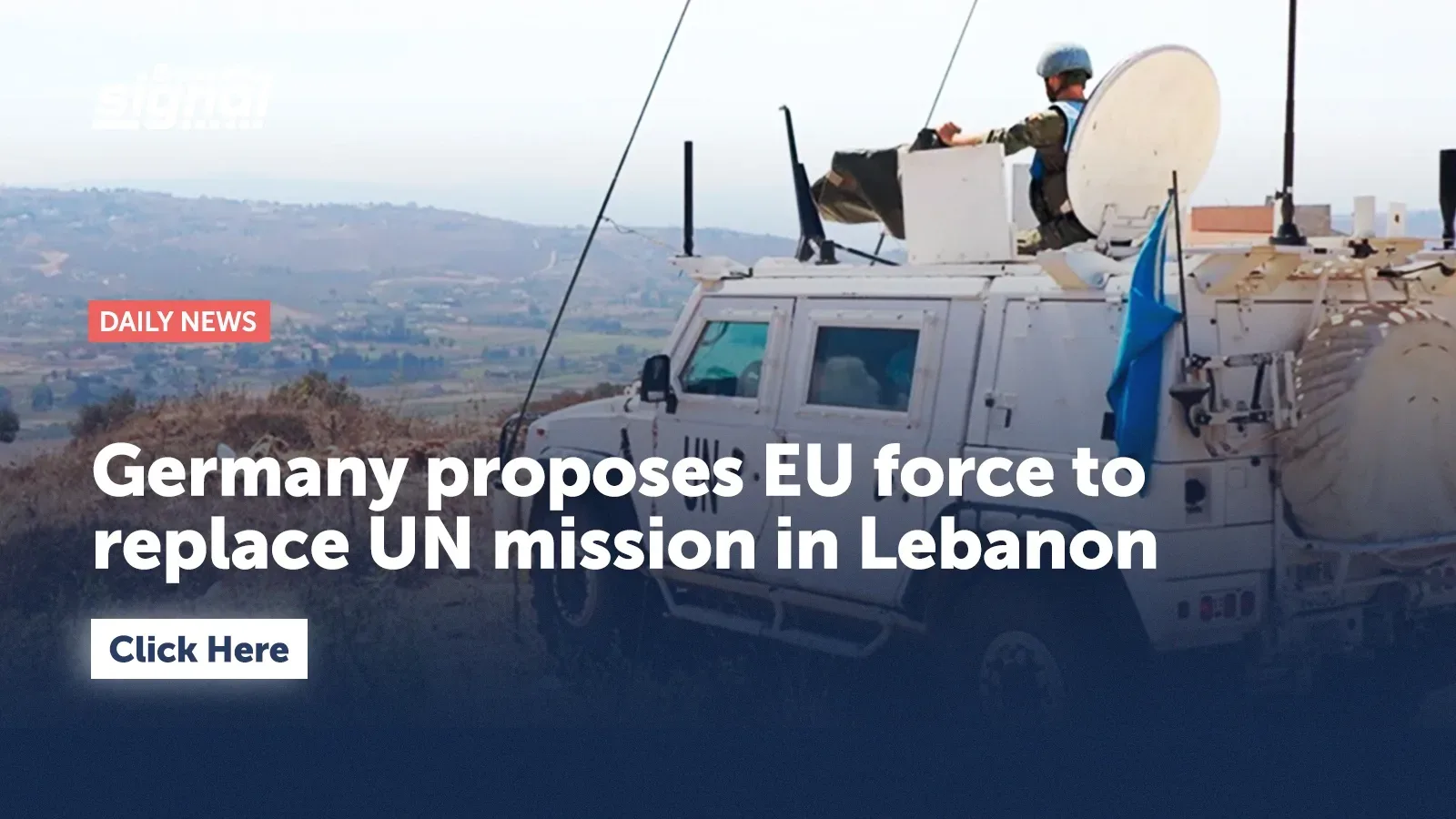
According to Brussels Signal, German officials have proposed establishing an EU-led mission focused on training and capacity-building for Lebanese Armed Forces rather than a direct replacement of the United Nations Interim Force in Lebanon (UNIFIL), whose mandate expires on December 31, 2026.

The German initiative comes as the Bundeswehr prepares to conclude its own involvement in UNIFIL by December 2026, with a complete withdrawal scheduled for mid-2027. Foreign Minister Johann Wadephul of the Christian Democratic Union outlined the rationale behind the proposal in remarks to RedaktionsNetzwerk Deutschland.

We should examine in the EU whether we can continue to do so in the wake of the mission with a European mandate to ensure that no security vacuum is created, Wadephul stated, emphasising that such a force could establish conditions for Israeli military withdrawal without allowing Hezbollah to return with its terrorist operations.

European Powers Coordinate Post-UNIFIL Strategy

The German proposal aligns with broader discussions among EU member states, particularly Italy and France, regarding security arrangements along the Blue Line separating Lebanon from Israel once the UN mission concludes. EU foreign policy chief Kaja Kallas has publicly acknowledged the necessity for a complementary initiative to succeed UNIFIL.

Unlike traditional peacekeeping operations, the proposed EU mission would emphasise advisory and training roles rather than large-scale troop deployments south of the Litani River. Potential components include border security and maritime security training for Lebanese security services.

Any such deployment would require unanimous approval from all 27 EU member states and would operate under a non-executive framework, avoiding the operational risks that have plagued UNIFIL in recent years.

Rising Casualties Underscore Mission Dangers

The urgency of transition planning has been underscored by continuing violence in the region. At least seven UN peacekeepers serving with UNIFIL have been killed in 2026 amid renewed hostilities between Israel and Hezbollah that escalated in early March.

Germany’s parliament extended the country’s participation in the UN mission for a final time just weeks ago, as Brussels Signal reports, marking the definitive end of Berlin’s long-standing contribution to the force.

Berlin views the proposed EU initiative as a means to strengthen Lebanese state institutions and support the 2024 ceasefire agreement while reducing exposure to the dangers that have made UNIFIL operations increasingly untenable.

Wadephul characterised the current situation in Lebanon as representing one of the most hopeful developments in the region, suggesting that proper international support could enable a sustainable security transition.

Discussions remain at an early stage, with formal decisions expected in the coming months as the UN drawdown accelerates and European capitals finalise their post-UNIFIL strategy for the volatile border region.

With information from Brussels Signal

Share:
Dimitris Papafotis
Dimitris Papafotis

Dimitris Papafotis is the editor-in-chief of NewsFire.GR. He was born and raised in Athens. He studied at the Journalism Workshop (1991-1993). He currently lives in Pyrgos, Ilia, where he has been active in radio and various newspapers, while also maintaining his personal blog, Papafotis.gr.

According to Brussels Signal, German officials have proposed establishing an EU-led mission focused on training and capacity-building for Lebanese Armed Forces rather than a direct replacement of the United Nations Interim Force in Lebanon (UNIFIL), whose mandate expires on December 31, 2026.

The German initiative comes as the Bundeswehr prepares to conclude its own involvement in UNIFIL by December 2026, with a complete withdrawal scheduled for mid-2027. Foreign Minister Johann Wadephul of the Christian Democratic Union outlined the rationale behind the proposal in remarks to RedaktionsNetzwerk Deutschland.

We should examine in the EU whether we can continue to do so in the wake of the mission with a European mandate to ensure that no security vacuum is created, Wadephul stated, emphasising that such a force could establish conditions for Israeli military withdrawal without allowing Hezbollah to return with its terrorist operations.

European Powers Coordinate Post-UNIFIL Strategy

The German proposal aligns with broader discussions among EU member states, particularly Italy and France, regarding security arrangements along the Blue Line separating Lebanon from Israel once the UN mission concludes. EU foreign policy chief Kaja Kallas has publicly acknowledged the necessity for a complementary initiative to succeed UNIFIL.

Unlike traditional peacekeeping operations, the proposed EU mission would emphasise advisory and training roles rather than large-scale troop deployments south of the Litani River. Potential components include border security and maritime security training for Lebanese security services.

Any such deployment would require unanimous approval from all 27 EU member states and would operate under a non-executive framework, avoiding the operational risks that have plagued UNIFIL in recent years.

Rising Casualties Underscore Mission Dangers

The urgency of transition planning has been underscored by continuing violence in the region. At least seven UN peacekeepers serving with UNIFIL have been killed in 2026 amid renewed hostilities between Israel and Hezbollah that escalated in early March.

Germany’s parliament extended the country’s participation in the UN mission for a final time just weeks ago, as Brussels Signal reports, marking the definitive end of Berlin’s long-standing contribution to the force.

Berlin views the proposed EU initiative as a means to strengthen Lebanese state institutions and support the 2024 ceasefire agreement while reducing exposure to the dangers that have made UNIFIL operations increasingly untenable.

Wadephul characterised the current situation in Lebanon as representing one of the most hopeful developments in the region, suggesting that proper international support could enable a sustainable security transition.

Discussions remain at an early stage, with formal decisions expected in the coming months as the UN drawdown accelerates and European capitals finalise their post-UNIFIL strategy for the volatile border region.

With information from Brussels Signal

