Why the Left Is No Longer in Fashion
For nearly half a century, the left imposed a moral climate across the Western world that seemed self-evident, but no cultural hegemony is eternal.

Being on the left was no longer simply a choice among others, according to Causeur. It meant belonging to the camp of History itself, the side that claimed to accompany the very movement of human emancipation. One could contest particular programs or reforms, but it seemed difficult to escape the diffuse certainty that the future spoke its language.
An Intellectual Atmosphere That Became Invisible
The right, meanwhile, appeared condemned to defend the vestiges of a world destined to disappear, protecting inheritances from which modern democracies supposedly sought to liberate themselves. Universities, much of the press, cultural institutions, the artistic world, and a large fraction of elites shared this conviction with such unanimity that it almost ceased to appear as an ideology. It became the very atmosphere of the era.
There existed a genuine leftist fashion, Causeur reports, though the word “fashion” should not be understood in any frivolous sense. It describes that strange power through which a worldview comes to impose itself as self-evident, until the presuppositions from which it proceeds become invisible. Democratic societies like to believe they reason, but they often forget they also obey intellectual climates, collective sensibilities, and forms of prestige whose existence they only recognize when these begin to dissipate.
For several decades, leftist values benefited from this silent authority. They defined not so much an opinion as respectability itself. They exempted those who shared them from having to demonstrate their legitimacy, since they seemed to merge with the very march of progress.
When Reality Stops Obeying Discourse
But no cultural hegemony is eternal. The most solid intellectual constructions do not always die under the blows of their adversaries—they crack when reality ceases to obey them. People long tolerate discourses that simplify the world, provided their daily experience continues, at least partially, to validate them. When this correspondence disappears, when facts stubbornly resist the narratives meant to explain them, weariness sets in, then mistrust, finally a tipping point. It is not just ideas that age—it is the confidence societies placed in them that becomes exhausted.
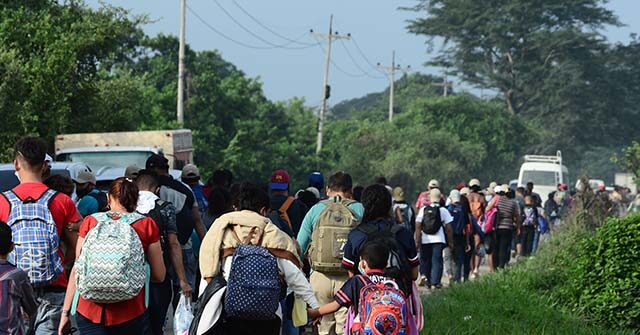
This is precisely what appears to be unfolding before our eyes. The West has entered an era few genuinely envisioned. The return of war to the European continent, the lasting irruption of Islamic terrorism, mass migration, cultural fragmentation, the weakening of institutions charged with transmitting a common memory, and ordinary violence that has become the banal horizon of so many lives—all this has resurrected questions believed definitively buried beneath the certainties of happy globalization.
Forgotten Priorities Regain Urgency
Borders, sovereignty, historical continuity, security, collective identity, and state authority—concepts once dismissed as belonging to the old vocabulary of anxious nations—now regain unexpected vigor because they respond to experiences that no discourse can erase any longer.
Priorities have been profoundly modified as a result. This is not to say that aspirations for greater social justice have disappeared. They remain, and will likely continue to inhabit modern democracies. But many are discovering that no solidarity can durably prosper if the common world in which it should operate gradually disintegrates. Before redistributing wealth, one must first preserve the political space that makes such redistribution possible. Before multiplying rights, one must maintain the institutions that give them reality. Before celebrating individual autonomy, one must conserve that discrete civilization made of rules, transmissions, habits, and loyalties, without which freedom itself ends up becoming an abstraction devoid of substance.
The Spirit of the Times Has Shifted
This is why the left is perhaps not so much rejected as it has ceased to be carried by the spirit of the times, as Causeur observes. Its influence remains considerable in places where cultural legitimacy is still manufactured, but it appears to respond with increasing difficulty to the anxieties that trouble the daily lives of a growing portion of European peoples.
Conversely, themes long marginalized or dismissed—national sovereignty, cultural continuity, protection of borders, the preservation of civilizational identity—now resonate with populations whose lived experience has diverged sharply from the utopian narratives offered by progressive elites. The moral authority the left once wielded as an unquestioned birthright has begun to evaporate, not through direct ideological defeat, but through the quiet accumulation of realities it could neither acknowledge nor address.
With information from Causeur