EPPO Issues First-Ever Reprimand to Bulgarian Prosecutor
The European Public Prosecutor's Office formally reprimanded Bulgarian prosecutor Teodora Georgieva for serious misconduct after a year-long investigation that nearly led to her dismissal.
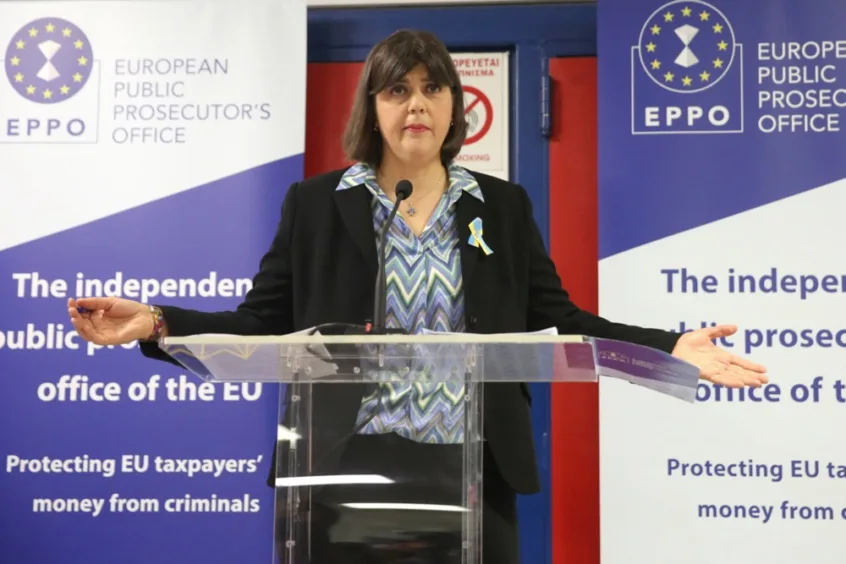


Teodora Georgieva, Bulgaria’s European Prosecutor, was sanctioned on July 15 after being found guilty of three counts of serious misconduct, according to Brussels Signal. The EPPO College, acting under EU Staff Regulations, handed down the reprimand—the second-lightest penalty available—after previously exploring whether to seek her removal from office entirely.
The College initially found Georgieva guilty on February 25 but delayed sentencing while consulting the European Parliament, the Council, and the European Commission about potentially requesting her dismissal through the Court of Justice of the European Union. Under EPPO regulations, only the EU’s top court holds the authority to remove a European Prosecutor before their term ends. None of the institutions pursued that option.
The reprimand follows a unanimous recommendation from the EPPO’s independent Disciplinary Board, which issued a reasoned opinion on January 5 concluding that Georgieva had committed the offences identified during an administrative inquiry. The Board recommended the lesser sanction rather than dismissal.
The EPPO has refused to disclose specific details of the misconduct, invoking confidentiality rules that govern disciplinary proceedings.
Gas Storage Investigation Under Scrutiny
Bulgarian media have focused attention on Georgieva’s handling of the Chiren gas storage investigation, as Brussels Signal reports. She was leading the EPPO probe into alleged corruption surrounding the expansion of Bulgaria’s Chiren facility, which involved approximately €78 million in EU funding. The grant was approved in January 2022 under the Connecting Europe Facility, with Chiren being the sole natural gas project selected for that funding round.
EPPO investigators raided offices of state-owned operator Bulgartransgaz in August 2024 over suspected procurement fraud. The Bulgarian Government halted the expansion project the next day.
On March 6, 2026—nearly a year after her suspension and nine days after the College had already declared her guilty—Georgieva told Bulgaria’s caretaker justice minister she had faced pressure from senior prosecutors and a prominent political figure sanctioned for corruption by both the United States and the United Kingdom. She also publicly questioned why the EPPO had not specified the alleged breaches.
Unprecedented Suspension
European Chief Prosecutor Laura Kövesi suspended Georgieva in March 2025, marking the first such action in the EPPO’s brief history. Her remuneration was withheld pending the investigation’s outcome, and Dimitar Belichev, who heads the office of European Delegated Prosecutors in Bulgaria, was appointed as her deputy. Formal disciplinary proceedings were launched on September 25, 2025.
The case unfolds against persistent concerns about Bulgaria’s anti-corruption efforts and commitment to rule of law standards.
EPPO’s Growing Caseload
The EPPO, headquartered in Luxembourg and led by Kövesi, is responsible for investigating and prosecuting crimes affecting EU financial interests, including fraud involving EU funds, corruption, and cross-border VAT fraud. By the end of 2025, the office had 3,602 active investigations covering an estimated €67.2 billion in damage to EU and national budgets, according to Council of the European Union data.
The Council appoints one European Prosecutor for each participating member state to serve a non-renewable six-year term. Each sits on the College, which supervises investigations carried out by European Delegated Prosecutors in their respective countries. Twenty-four of the 27 member states participate. Denmark and Ireland hold opt-outs, while Hungary notified its request to join in May 2026.
With information from Brussels Signal