Former Spy Chief Turned Turkey’s Foreign Ministry Into Global Intel Hub
Turkey's Foreign Ministry under former intelligence chief Hakan Fidan has been transformed into a security apparatus prioritizing intelligence gathering over traditional diplomacy, according to a government report.

Fidan, who ran Turkey’s National Intelligence Organization (MIT) for over thirteen years before being appointed foreign minister in June 2023, has systematically restructured the foreign service to prioritize intelligence gathering, military power projection, and national security objectives over traditional diplomatic engagement, as Nordic Monitor reports.
From Diplomacy to Intelligence Operations
The Foreign Ministry’s 2026 Performance Program reveals a striking departure from conventional diplomatic doctrine. A comparison with the ministry’s 2025 program shows that the official language, strategic priorities, and institutional focus now closely resemble those of a national security organization rather than a diplomatic institution.
Under Fidan’s leadership, intelligence officers have been placed in key positions throughout the ministry. Turkish envoys, diplomats, and consular officers have been instructed to engage in intelligence gathering operations abroad, while recruitment efforts have expanded among the Turkish diaspora and Muslim communities in foreign countries.
The transformation is particularly significant given Fidan’s background. During his thirteen-year tenure at MIT, he expanded the agency’s overseas operational capabilities, sanctioned torture sessions, approved assassinations and kidnappings in foreign countries, and established heavily armed special force units comprising former military and police officers.
Strategic Rhetoric Reflects Security Priorities
The most dramatic shift appears in the opening policy statement signed by Fidan in the 2026 report. While the 2025 Performance Program framed Turkish diplomacy around conflict resolution, mediation, humanitarian assistance, and regional stability—emphasizing ceasefires in Gaza, negotiations between Russia and Ukraine, and Turkey’s European Union accession process—the 2026 program adopts markedly different language.
The new document repeatedly characterizes the international environment as one of geopolitical competition, strategic uncertainty, and existential threats. It presents pursuing an independent, strong, and determined foreign policy as a matter of state survival, using the Turkish term “beka meselesi.”
Diplomacy is now explicitly portrayed as an extension of national power rather than a mechanism for peaceful engagement. The ministry describes Turkey as a “rule-making” regional power whose diplomats are expected to defend the country’s interests through a comprehensive combination of diplomatic, military, economic, and strategic instruments.
Military Power Takes Center Stage
Perhaps the clearest indication of this conceptual shift is the growing prominence given to military power in a foreign ministry planning document. The 2026 program highlights Turkey’s armed forces, modern military capabilities, and advanced defense industry, describing the country as a security provider extending from Europe and North Africa to the Asia-Pacific region.
Such references are largely absent from the 2025 document, which concentrated on diplomatic initiatives and conflict mediation. The new program repeatedly links diplomacy with strategic transportation corridors, defense cooperation, and NATO security architecture.
Physical Infrastructure Reflects Intelligence Integration
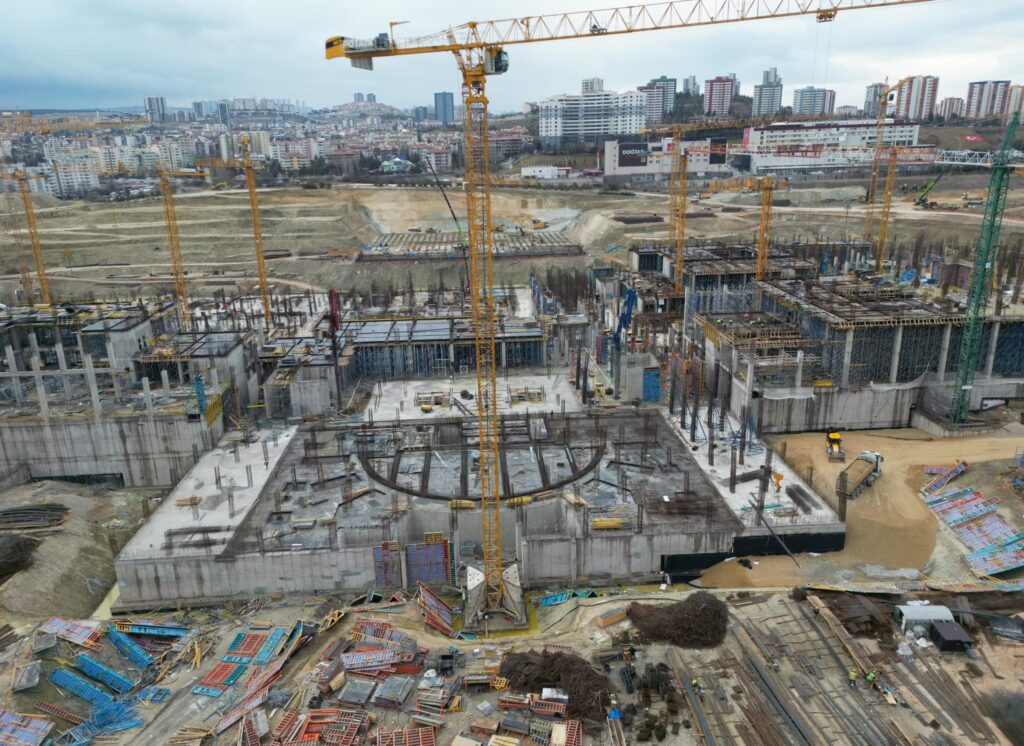
The transformation is also reflected in physical infrastructure. A new and significantly larger Foreign Ministry headquarters is currently under construction in the Turkish capital Ankara, positioned next to the MIT complex. The project covers 548,000 square meters with an initial estimated cost of approximately 15 billion lira.
Implications for Regional Security
The restructuring of Turkey’s diplomatic service into an intelligence platform carries significant implications for regional security, particularly for Greece and Cyprus. With Turkish diplomatic missions worldwide now functioning as intelligence collection nodes, and with diaspora communities being systematically recruited for intelligence purposes, Western allies face growing concerns about Turkish espionage operations conducted under diplomatic cover.
The integration of intelligence, military, and diplomatic functions under a former spy chief represents a fundamental departure from traditional diplomatic norms and raises questions about the boundaries between legitimate diplomatic activity and covert intelligence operations.
With information from Nordic Monitor