Necessary Cookies

Required for the site to function. Cannot be disabled.

Analytics Cookies

Help us understand how visitors interact with our site (Google Analytics via GTM).

Marketing Cookies

Used to track visitors and deliver personalised advertisements.

We use cookies to enhance your browsing experience and analyse site traffic. By clicking Accept All, you consent to our use of cookies. Privacy Policy
NewsFire Global
Home News Europe World Christianity Culture Wars Opinion Video
Information
About Us Authors Advertising Terms & Conditions Privacy Policy Contact
R2B Media
R2B NEWSFIRE.GR PAPAFOTIS.GR THRACTION HELLENIC CONSERVATIVES RIGHT2THEBONE YT
News Europe

Germany’s Anti-Fascist Identity Crumbles Into Bitterness

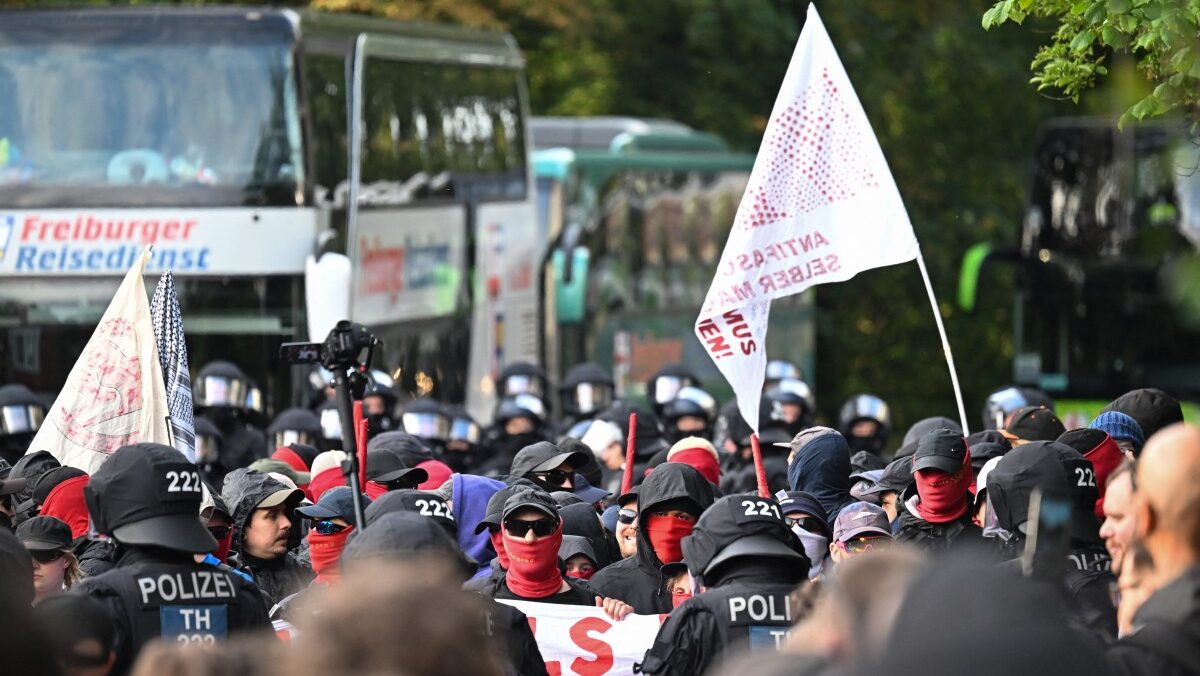
A journalist covering anti-AfD protests in Erfurt was violently assaulted by demonstrators, prompting concerns about state-funded activism after organizers refused to condemn the attack.

Dimitris Papafotis
Dimitris Papafotis Editor in Chief
JULY 9, 2026 AT 11:38 AM

According to The European Conservative, the reporter from Apollo News sustained a bloody wound during the attack. When representatives of the anti-AfD coalition Widersetzen were confronted about the incident the following day and asked repeatedly to condemn the violence, they initially refused outright. One activist eventually responded by declaring that fascists with a press pass are still fascists, effectively justifying the assault.

The Erfurt demonstration was no marginal extremist gathering. Tens of thousands attended the protest, many mobilized through organizations receiving direct or indirect state funding. The German Trade Union Confederation deployed its resources alongside a sprawling network of unions and civil society organizations.

An official Bundestag response documented substantial federal grants to several groups involved in the mobilization. MOBIT, a prominent civil society organization fighting what it defines as right-wing extremism, racism, and antisemitism, received approximately 1.1 million euros during the listed period. NaturFreunde Thüringen collected over 2 million euros across various programs.

While the German government denies directly funding Widersetzen’s Erfurt campaign, the broader issue remains clear. The respectable face of the anti-AfD movement operates within an ecosystem of unions, NGOs, and campaign groups that benefit substantially from public funding. The state is not paying thugs to kick journalists in the head, but it is financing the institutional infrastructure that provides political cover and moral justification for such violence.

Anti-Fascism as Middle-Class Identity

Political violence by extremist groups is hardly novel in European politics. What distinguishes the current situation in Germany is the social context and ideological framework legitimizing such thuggery. Anti-fascism has evolved from a militant fringe concern into the moral foundation of Germany’s educated middle classes. The consequence is stark: labeling someone a fascist now serves to make violence against them socially acceptable, even morally justifiable.

Germany’s postwar anti-fascism once had genuine historical substance. The 1968 generation confronted real Nazi continuities in institutions, families, and public life. Former Nazi functionaries had returned to positions of authority across politics, administration, business, the military, police, and judiciary. The generational reckoning with parental silence and institutional complicity reflected actual historical conditions.

Yet while those historical circumstances gradually receded, the moral imperative did not. Never again transformed from a specific historical warning into the defining characteristic of German identity itself. In Germany’s peculiar identity politics, the most powerful identity became the anti-fascist one.

The educated classes increasingly defined themselves through rejection of the national past. Being a good German came to mean being the German who learned the correct lesson. Europeanism, multiculturalism, suspicion of national identity, and progressive positions on migration and minority rights were elevated beyond mere political preferences into markers of democratic virtue, precisely because they represented the most deliberate counterpoint to fascist values.

Even President Frank-Walter Steinmeier has cautioned that Germany cannot explain itself solely through negation, only through never again.

Constitutional Patriotism and Class Politics

Jürgen Habermas developed the concept of constitutional patriotism as an answer to Germany’s postwar dilemma: how could Germans develop political attachment without returning to compromised nationalism? His solution directed loyalty toward democratic constitutional principles rather than ethnic inheritance.

Over time, however, the distinction between loyalty to a constitution and loyalty to a particular worldview became blurred. Constitutional patriotism morphed into allegiance to the post-national establishment’s political vision.

What often goes unexamined in this history is the class dimension. Much of Germany’s nominal Left no longer opposes a dominant political class but instead provides its personnel. The old Left focused on wages, ownership, labor conditions, and class power. The new educated Left dominates universities, media, cultural institutions, NGOs, trade union bureaucracies, and the public sector. It has exchanged material conflict for moral management.

Anti-fascism has become one of the primary mechanisms through which this managerial class recognizes and justifies itself.

The Educational Divide

Research into the large anti-right protests of 2024 revealed that participants were disproportionately highly educated, left of center, and identified with the middle or upper-middle class. Electoral data tells the same story.

In the 2025 federal election, the AfD captured 29 percent among voters with lower educational qualifications but only 13 percent among the highly educated. For the Greens, the figures were reversed: 4 percent and 18 percent respectively.

This divide reflects not merely educational attainment but rival forms of national belonging. The educated institutional class has learned to identify with Germany through repudiating traditional German identity. Its patriotism is constitutional, post-national, and European—fundamentally at odds with the national attachments still felt by millions of ordinary German citizens.

The violence in Erfurt represents the logical endpoint of this moral framework: when opposing the wrong kind of German becomes the highest form of patriotism, attacking those Germans becomes defensible.

With information from The European Conservative

Share:
Dimitris Papafotis
Dimitris Papafotis

Dimitris Papafotis is the editor-in-chief of NewsFire.GR. He was born and raised in Athens. He studied at the Journalism Workshop (1991-1993). He currently lives in Pyrgos, Ilia, where he has been active in radio and various newspapers, while also maintaining his personal blog, Papafotis.gr.

According to The European Conservative, the reporter from Apollo News sustained a bloody wound during the attack. When representatives of the anti-AfD coalition Widersetzen were confronted about the incident the following day and asked repeatedly to condemn the violence, they initially refused outright. One activist eventually responded by declaring that fascists with a press pass are still fascists, effectively justifying the assault.

The Erfurt demonstration was no marginal extremist gathering. Tens of thousands attended the protest, many mobilized through organizations receiving direct or indirect state funding. The German Trade Union Confederation deployed its resources alongside a sprawling network of unions and civil society organizations.

An official Bundestag response documented substantial federal grants to several groups involved in the mobilization. MOBIT, a prominent civil society organization fighting what it defines as right-wing extremism, racism, and antisemitism, received approximately 1.1 million euros during the listed period. NaturFreunde Thüringen collected over 2 million euros across various programs.

While the German government denies directly funding Widersetzen’s Erfurt campaign, the broader issue remains clear. The respectable face of the anti-AfD movement operates within an ecosystem of unions, NGOs, and campaign groups that benefit substantially from public funding. The state is not paying thugs to kick journalists in the head, but it is financing the institutional infrastructure that provides political cover and moral justification for such violence.

Anti-Fascism as Middle-Class Identity

Political violence by extremist groups is hardly novel in European politics. What distinguishes the current situation in Germany is the social context and ideological framework legitimizing such thuggery. Anti-fascism has evolved from a militant fringe concern into the moral foundation of Germany’s educated middle classes. The consequence is stark: labeling someone a fascist now serves to make violence against them socially acceptable, even morally justifiable.

Germany’s postwar anti-fascism once had genuine historical substance. The 1968 generation confronted real Nazi continuities in institutions, families, and public life. Former Nazi functionaries had returned to positions of authority across politics, administration, business, the military, police, and judiciary. The generational reckoning with parental silence and institutional complicity reflected actual historical conditions.

Yet while those historical circumstances gradually receded, the moral imperative did not. Never again transformed from a specific historical warning into the defining characteristic of German identity itself. In Germany’s peculiar identity politics, the most powerful identity became the anti-fascist one.

The educated classes increasingly defined themselves through rejection of the national past. Being a good German came to mean being the German who learned the correct lesson. Europeanism, multiculturalism, suspicion of national identity, and progressive positions on migration and minority rights were elevated beyond mere political preferences into markers of democratic virtue, precisely because they represented the most deliberate counterpoint to fascist values.

Even President Frank-Walter Steinmeier has cautioned that Germany cannot explain itself solely through negation, only through never again.

Constitutional Patriotism and Class Politics

Jürgen Habermas developed the concept of constitutional patriotism as an answer to Germany’s postwar dilemma: how could Germans develop political attachment without returning to compromised nationalism? His solution directed loyalty toward democratic constitutional principles rather than ethnic inheritance.

Over time, however, the distinction between loyalty to a constitution and loyalty to a particular worldview became blurred. Constitutional patriotism morphed into allegiance to the post-national establishment’s political vision.

What often goes unexamined in this history is the class dimension. Much of Germany’s nominal Left no longer opposes a dominant political class but instead provides its personnel. The old Left focused on wages, ownership, labor conditions, and class power. The new educated Left dominates universities, media, cultural institutions, NGOs, trade union bureaucracies, and the public sector. It has exchanged material conflict for moral management.

Anti-fascism has become one of the primary mechanisms through which this managerial class recognizes and justifies itself.

The Educational Divide

Research into the large anti-right protests of 2024 revealed that participants were disproportionately highly educated, left of center, and identified with the middle or upper-middle class. Electoral data tells the same story.

In the 2025 federal election, the AfD captured 29 percent among voters with lower educational qualifications but only 13 percent among the highly educated. For the Greens, the figures were reversed: 4 percent and 18 percent respectively.

This divide reflects not merely educational attainment but rival forms of national belonging. The educated institutional class has learned to identify with Germany through repudiating traditional German identity. Its patriotism is constitutional, post-national, and European—fundamentally at odds with the national attachments still felt by millions of ordinary German citizens.

The violence in Erfurt represents the logical endpoint of this moral framework: when opposing the wrong kind of German becomes the highest form of patriotism, attacking those Germans becomes defensible.

With information from The European Conservative

