
Zelensky Snubs Poland Over Ukraine Recovery Conference
Ukrainian President Volodymyr Zelensky will skip a reconstruction conference in Poland, deepening a diplomatic rift over Ukraine's honoring of a nationalist force implicated in atrocities against Poles.
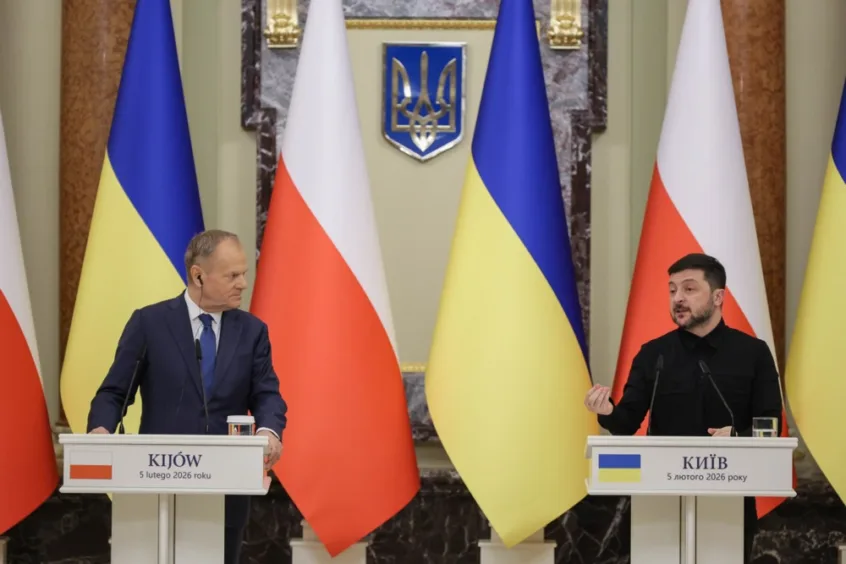

The Ukraine Recovery Conference, scheduled for June 25–26 and co-hosted by Poland and Kiev, was intended to rally international investment and support for Ukrainian reconstruction efforts. Instead, according to Brussels Signal, the event has become the latest casualty in an escalating dispute between the two nations over Ukraine’s decision to honor a nationalist military force implicated in mass atrocities against Polish civilians.
Yulia Svyrydenko, Ukraine’s Prime Minister, confirmed on June 24 that she would lead her country’s delegation in place of Zelensky. Writing on social media, she stated that Ukraine builds cooperation on the principle of mutual respect, though she made no direct mention of the diplomatic crisis now engulfing Polish-Ukrainian relations.
Svyrydenko expressed hope that the conference would secure concrete agreements to strengthen Ukraine’s defense capabilities and expand economic cooperation with partner nations.
A Snub to Tusk and Warsaw
The decision represents a significant embarrassment for Polish Prime Minister Donald Tusk, who leads the country’s center-left government. Tusk had met with Zelensky in Brussels the previous week and deliberately excluded Polish President Karol Nawrocki from the conference invitation list, hoping this gesture would be sufficient to persuade the Ukrainian leader to attend.
Poland has served as the primary logistical hub for Western military and humanitarian assistance to Ukraine since Russia’s 2022 invasion. Warsaw has positioned itself to play a major role in Ukrainian reconstruction efforts once hostilities cease, making Zelensky’s absence particularly damaging to Polish interests.
The UPA Controversy
The core dispute centers on Ukraine’s recent decision to name a top military unit in honor of the Ukrainian Liberation Army, known by its Ukrainian acronym UPA. For Poles, the UPA is inseparably linked to the Volhynia massacres, in which the military wing of the Ukrainian nationalist movement slaughtered more than 100,000 ethnic Polish civilians during World War II, predominantly women and children.
Poland formally recognizes these killings as genocide. Ukraine rejects that characterization and insists on honoring UPA fighters as heroes who resisted Soviet occupation.
President Nawrocki warned Zelensky that he would consider stripping him of Poland’s highest state honor, the Order of the White Eagle, if the Ukrainian leader proceeded with the UPA commemoration. When Zelensky refused to reconsider three weeks later, Nawrocki followed through on his threat.
The move triggered an angry response in Kiev. Multiple senior Ukrainian officials and three former presidents returned their own Polish honors in solidarity with Zelensky.
Zelensky Blames Polish Domestic Politics
Zelensky has rejected any suggestion that the diplomatic crisis stems from Ukrainian actions. Speaking to Ukraine’s TSN news program on Sunday, he characterized Nawrocki’s decision as purely electoral maneuvering with no genuine connection to bilateral relations.
The Ukrainian president claimed Kiev had attempted to ease tensions through proposals for bilateral meetings and by dispatching senior officials to Warsaw for talks, but concluded that Nawrocki intended to revoke the honor regardless of Ukrainian gestures.
Nawrocki’s chancellery disputes this interpretation, maintaining that it had expected Zelensky to take meaningful steps to address Polish concerns before any final decision was made.
Growing Polish-Ukrainian Tensions
The conference snub represents only the latest in a growing series of disagreements between Warsaw and Kiev. While Poland remains committed to supporting Ukraine against Russian aggression, the historical dispute over the UPA and the Volhynia massacres continues to poison relations at the highest levels.
The Ukraine Recovery Conference has been held annually since Russia’s full-scale invasion in 2022, with previous editions hosted in London, Berlin, and Rome. Poland was designated as the 2026 host in July of last year, a role that was meant to underscore Warsaw’s central importance to Ukraine’s future.
With Zelensky’s absence, that message has been significantly undermined, and the likelihood of major Polish involvement in Ukrainian reconstruction efforts appears increasingly uncertain.
With information from Brussels Signal





