
US Strategic National Interest to Recognize Pontic Greek Genocide
Greek Prime Minister Kyriakos Mitsotakis commemorated the Pontic Greek genocide on May 19, 2026, provoking Turkish denial despite Greece's 1994 parliamentary recognition of the massacre of 353,000 Greeks.

By Christos Constantinidis, Middle East Forum
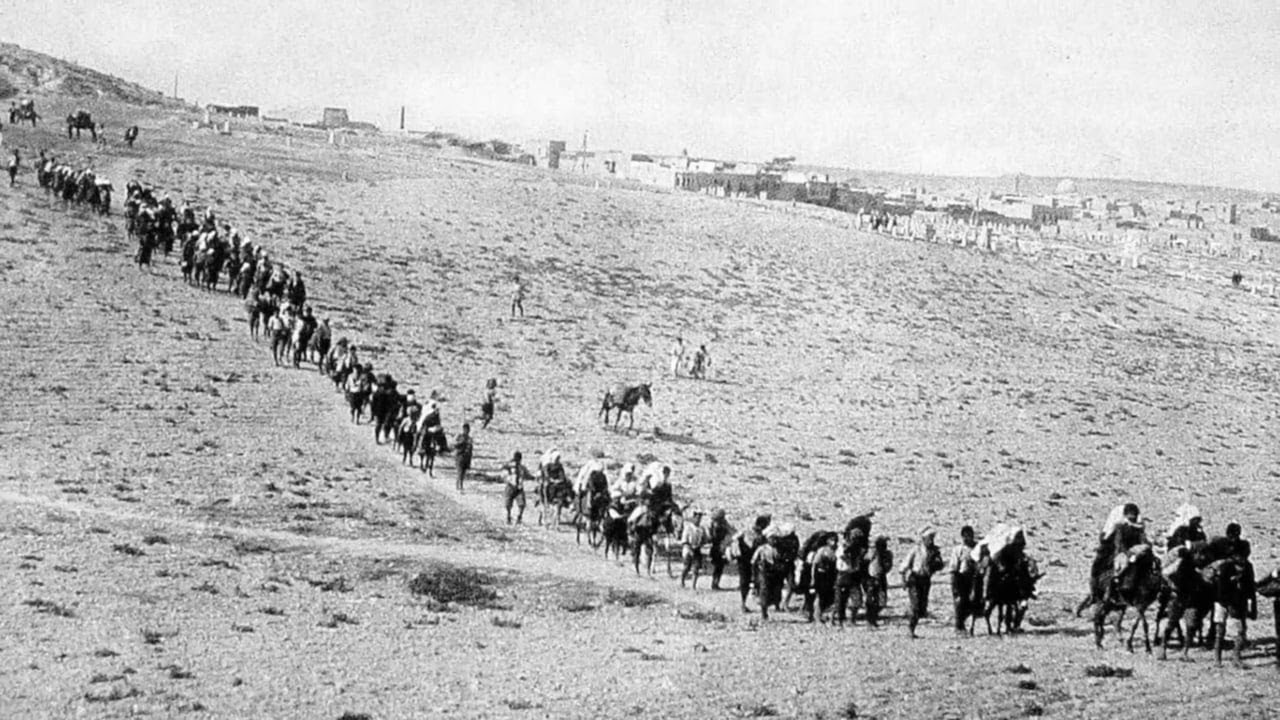
On May 19, 2026, Greek Prime Minister Kyriakos Mitsotakis sent a message referring to the massacre of 353,000 Greeks as “one of the most tragic chapters of modern history.” The events he invoked, Turkey continues to deny: the genocide of the Pontic Greeks. Yet even this careful and measured statement was enough to provoke Ankara’s reaction. In a statement from its Foreign Ministry, Turkey presented itself as unjustly accused, and attempted to shift responsibility and reconstruct the past in order to distort the historical identity of the Black Sea region. But history does not simply vanish because a state chooses to erase it.
Silence has long been a Greek weakness. For decades, the logic of “let’s not provoke Turkey” functioned as a veil over the truth, particularly within the context of NATO’s southeastern flank and the Cold War. Historian Polychronis Enepekidis (1917–2014), for example, recounted that in 1958 Greek politicians obstructed his research for fear of harming Greek-Turkish relations. In 1994, after years of struggle by Pontic associations and the efforts of figures such as Panhellenic Socialist Movement MP Michalis Charalambidis, the Greek Parliament officially recognized the Pontic Greek Genocide and established May 19th as a Day of Remembrance for its victims.
The date coincided with the landing of Turkish military leader and later president Mustafa Kemal at Samsun on May 19, 1919, marking what historians identify as the second and bloodiest phase of the genocide. Herein lies the contradiction. The same day that for Hellenism represents mourning and memory, Turkey celebrates as a national holiday. For Tom Barrack, the U.S. ambassador to Turkey, to praise Mustafa Kemal Atatürk on that day undermines the reconciliation that should constitute a U.S. national interest. For the peoples who suffered under Kemalist nationalism, the founder of the Turkish Republic remains a controversial figure and, in Pontic historical memory, the man guilty of genocide.
States possess memory and reproduce it through political culture. When a state is never held accountable for its crimes, those crimes become embedded in its strategic identity. Germany, after World War II, acknowledged its crimes and rejected Nazism, breaking the shame that surrounded the Holocaust. Because many in Washington and Europe viewed Turkey as a useful ally, diplomats deflected pressures for historical accountability, allowing the same ideologies that fueled the genocide to be cultivated and developed, while Turkish officials believed they could act in the region with impunity.
From the anti-Greek pogrom in Constantinople in 1955 and the expulsions of Greeks from Constantinople in 1964, to the eradication of Hellenism from Imbros and Tenedos, the invasion of Cyprus in 1974 and the continuing occupation of more than a third of the island, the behavior of the Turkish state reveals a consistent conception of power. Demographic alteration, settlement policies, suppression of minorities, and systematic challenges to sovereign rights are all links in the same chain. When a genocidal state escapes punishment, it repeats its crimes in new forms.
Today’s Turkey challenges Greek sovereign rights in the Aegean, raises claims to Thrace, reinforces its presence in Cyprus, and suppresses Kurds, Alevi, and other minorities within its borders. It supported Azerbaijan during the war against the Armenians in Nagorno-Karabakh. Simultaneously, it maintains military presence in Syria, Iraq, Libya, Qatar, and Somalia, while supporting terrorist organizations such as Hamas, former Al Qaeda affiliates in Syria, and a multitude of jihadist groups in Pakistan and Libya. Turkey seeks to exploit the geopolitical fluidity of the current era. It projects itself as an autonomous regional power, cultivates neo-Ottoman ambitions, and plays a balancing game between Moscow and Washington. Such behavior is not indicative of reliability for an alliance.
The only real prospect for peace in the region lies in Turkey’s transformation into a democratic state that respects human rights, ethnic minorities, languages, religions, traditions, and the cultures of the peoples living within and around its borders. Without such a transformation, the region will remain hostage to historical denial and geopolitical instability. Recognition of the Pontic Greek Genocide is not an act of revenge, but an act of historical restoration. Temporary diplomatic calculations must not subordinate the memory of the victims.
The United States and Europe cannot build peace upon a falsified version of history. This only creates the preconditions for Turkish revisionism and, possibly, renewed aggression. Official recognition of this crime by the U.S. would constitute an act of justice toward the victims and their descendants. It would support the diaspora, vindicate Greek Americans of Pontic descent, and serve Washington’s own geopolitical interests in the Eastern Mediterranean. Above all, it would send Ankara a clear message: the security of the future can only be built upon truth, and that there will be no moral equivalence in the West that legitimizes the historical revisionism and revanchist politics of President Recep Tayyip Erdoğan.





