Necessary Cookies

Required for the site to function. Cannot be disabled.

Analytics Cookies

Help us understand how visitors interact with our site (Google Analytics via GTM).

Marketing Cookies

Used to track visitors and deliver personalised advertisements.

We use cookies to enhance your browsing experience and analyse site traffic. By clicking Accept All, you consent to our use of cookies. Privacy Policy
NewsFire Global
Home News Europe World Christianity Culture Wars Opinion Video
Information
About Us Authors Advertising Terms & Conditions Privacy Policy Contact
R2B Media
R2B NEWSFIRE.GR PAPAFOTIS.GR THRACTION HELLENIC CONSERVATIVES RIGHT2THEBONE YT
News World

Turkish fighter drone struck target at 120km with missile

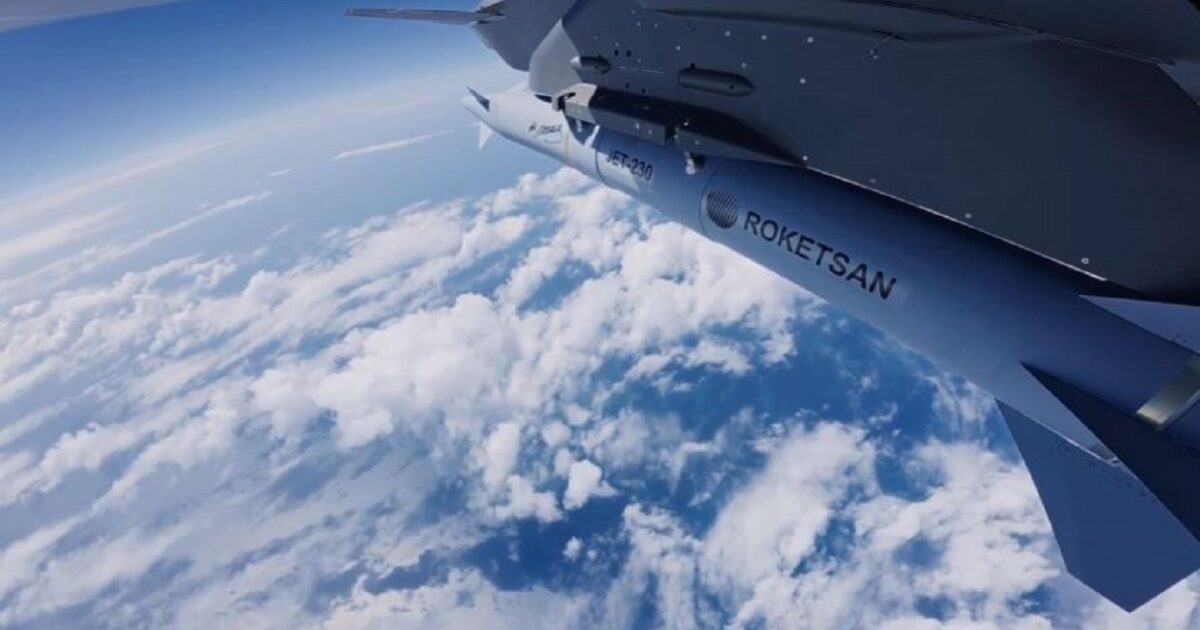
Turkey successfully tested its JET-230 supersonic missile on the Kizilelma fighter-drone, hitting a target at 120 kilometers during the unmanned aircraft's first live-fire test.
Stefanos Banos
Stefanos Banos Staff Writer
JULY 15, 2026 AT 10:00 PM

The milestone of Turkish aviation development

According to OnAlert, Baykar company announced the completion of the test conducted on July 11, with the serial production Kizilelma (tail number S2) carrying two supersonic missiles under its wings and launching the Roketsan JET-230 missile from a distance of over 120 kilometers.

The target was hit with precision, according to the Turks, demonstrating the aircraft’s capabilities in executing critical missions with supersonic air-to-surface munitions.

The fighter-drone took off from Baykar’s Akinci Flight Training and Test Center in the city of Corlu in Tekirdag province, after having been previously transferred to Merzifon for the required preparations. The test was conducted at the 5th Main Air Base Command of the same region.


Specifications and capabilities of the JET-230

According to Baykar’s announcement, the JET-230 missile has a range exceeding 200 kilometers. The greater range compared to the UAV-230 variant (which is launched from the AKINCI UCAV with a range of 150 kilometers) is attributed to the higher launch speed and operating altitude of the Kizilelma.

Ankara’s strategic priority

Turkey is accelerating the integration of domestically developed munitions into its unmanned combat aircraft.

In recent months, the Kizilelma has completed test firings with the Gokdogan air-to-air missile, as well as with the Tolun, TEBER-82 KGK and LGK-82 guided munitions, demonstrating Ankara’s particular effort to make its own weapons systems independent of external supplies.

Turkey aims to integrate the Kizilelma into its arsenal within 2026, marking substantial progress in developing lethal technology on the aerodynamic platform.

Implications for Greek air defense

The successful integration of a supersonic missile on the Kizilelma necessitates serious strategic initiatives and actions for the Greek air force and for the country’s overall defense capabilities.

The range of 200+ kilometers combined with the capability of an unmanned system to operate in sensitive areas creates new threats that will require enhanced anti-aircraft systems and modern defense strategies.

Source: OnAlert

Share:
Stefanos Banos
Stefanos Banos

Stefanos Banos was born in Piraeus and is an editor at NewsFire.GR, specializing in political analysis and international relations. He graduated from the Department of Communication and Media at the University of Bremen in Germany, where he also completed his Master of Arts in Communication and Media Studies. Married to Zoi, he is a proud father of three boys.

The milestone of Turkish aviation development

According to OnAlert, Baykar company announced the completion of the test conducted on July 11, with the serial production Kizilelma (tail number S2) carrying two supersonic missiles under its wings and launching the Roketsan JET-230 missile from a distance of over 120 kilometers.

The target was hit with precision, according to the Turks, demonstrating the aircraft’s capabilities in executing critical missions with supersonic air-to-surface munitions.

The fighter-drone took off from Baykar’s Akinci Flight Training and Test Center in the city of Corlu in Tekirdag province, after having been previously transferred to Merzifon for the required preparations. The test was conducted at the 5th Main Air Base Command of the same region.

Bayraktar #KIZILELMA ✈️

✅ JET-230 Balistik Süpersonik Füze Atış Testi
✅ JET-230 Ballistic Supersonic Missile Firing Test

Tam İsabet | Bull’s Eye 120 km
Menzil | Range: 200+ km#Baykar @Roketsan#MilliTeknolojiHamlesi pic.twitter.com/L6UE4J2NDQ

— BAYKAR (@BaykarTech) July 13, 2026


Specifications and capabilities of the JET-230

According to Baykar’s announcement, the JET-230 missile has a range exceeding 200 kilometers. The greater range compared to the UAV-230 variant (which is launched from the AKINCI UCAV with a range of 150 kilometers) is attributed to the higher launch speed and operating altitude of the Kizilelma.

Ankara’s strategic priority

Turkey is accelerating the integration of domestically developed munitions into its unmanned combat aircraft.

In recent months, the Kizilelma has completed test firings with the Gokdogan air-to-air missile, as well as with the Tolun, TEBER-82 KGK and LGK-82 guided munitions, demonstrating Ankara’s particular effort to make its own weapons systems independent of external supplies.

Turkey aims to integrate the Kizilelma into its arsenal within 2026, marking substantial progress in developing lethal technology on the aerodynamic platform.

Implications for Greek air defense

The successful integration of a supersonic missile on the Kizilelma necessitates serious strategic initiatives and actions for the Greek air force and for the country’s overall defense capabilities.

The range of 200+ kilometers combined with the capability of an unmanned system to operate in sensitive areas creates new threats that will require enhanced anti-aircraft systems and modern defense strategies.

Source: OnAlert

