
Turkey Attempts to Lure Lebanon Away from Cyprus Alliance
Turkey is attempting to pull Lebanon away from its maritime cooperation agreement with Cyprus following Lebanese President Joseph Aoun's first visit to Ankara in nearly two decades.
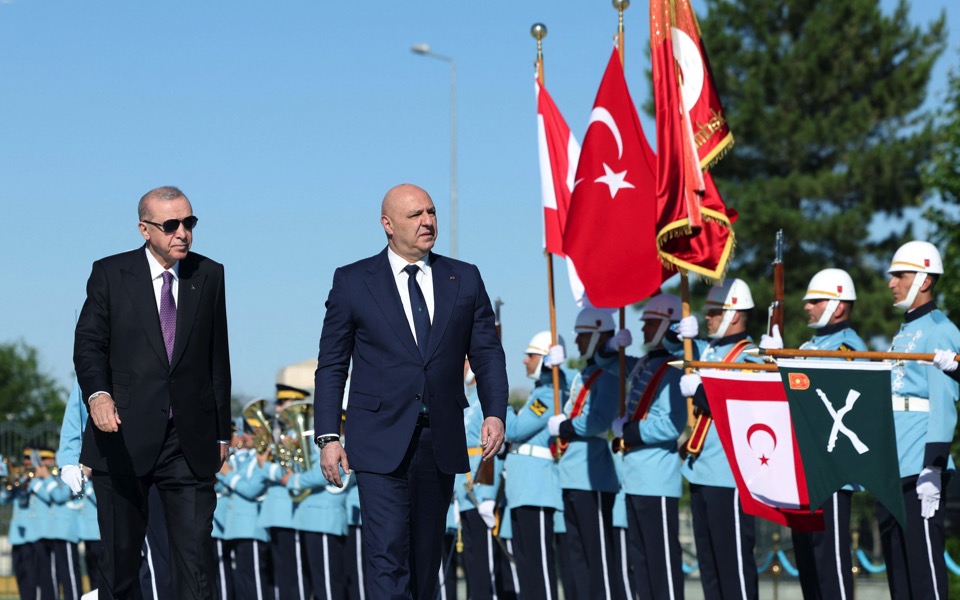

According to Vassilis Nedos writing in Kathimerini (EN), Joseph Aoun, the Lebanese president, met with Turkish President Recep Tayyip Erdogan on July 30 in what observers interpret primarily as an attempt by Ankara to secure Lebanon’s neutral posture in the escalating Israel-Turkey conflict.
But Turkey’s diplomatic engagement with Lebanon carries a secondary objective that has raised concerns in Nicosia: undermining the maritime agreement signed between Cyprus and Lebanon at the close of last year, which established boundaries for their Exclusive Maritime Zones.
Ankara’s Maritime Doctrine Challenged
Turkey has consistently rejected the notion that islands possess rights to exclusive maritime zones, a position that puts Ankara at odds with international law and multiple bilateral agreements in the Eastern Mediterranean. The Cyprus-Lebanon deal directly contradicts this Turkish position by recognizing such zones without Turkish input or approval.
Cyprus has concluded similar maritime boundary agreements with Israel, Egypt, and Greece, all of which have drawn Turkish criticism. Turkey’s own memorandum of understanding with Libya on maritime boundaries has been widely dismissed by regional powers and legal experts as lacking legitimacy.
Cyprus Turns to Israel for Defense Modernization
The deepening security relationship between Cyprus and Israel has manifested in military procurement decisions that further illustrate the strategic alignments taking shape in the region. Cyprus is currently in advanced negotiations to acquire two modern Israeli tank models for its armed forces.
Notably, Nicosia declined an offer from Greece to receive older Leopard tanks, opting instead for more technologically advanced Israeli armor systems that would enhance the island nation’s defensive capabilities.
The convergence of maritime disputes, regional security arrangements, and Turkey’s diplomatic outreach to Lebanon underscores the complex geopolitical competition unfolding across the Eastern Mediterranean, where energy resources and maritime jurisdiction remain flashpoints for international friction.
With information from Kathimerini (EN)





