Necessary Cookies

Required for the site to function. Cannot be disabled.

Analytics Cookies

Help us understand how visitors interact with our site (Google Analytics via GTM).

Marketing Cookies

Used to track visitors and deliver personalised advertisements.

We use cookies to enhance your browsing experience and analyse site traffic. By clicking Accept All, you consent to our use of cookies. Privacy Policy
NewsFire Global
Home News Europe World Christianity Culture Wars Opinion Video
Information
About Us Authors Advertising Terms & Conditions Privacy Policy Contact
R2B Media
R2B NEWSFIRE.GR PAPAFOTIS.GR THRACTION HELLENIC CONSERVATIVES RIGHT2THEBONE YT
News World

Trump Undecided on Turkey F-35 Sale as Erdoğan Dodges S-400 Query

Trump said he has not decided on restoring Turkey's F-35 access while Erdoğan refused to clarify plans for Russian S-400 missiles blocking any sale resumption.

JULY 9, 2026 AT 10:42 PM

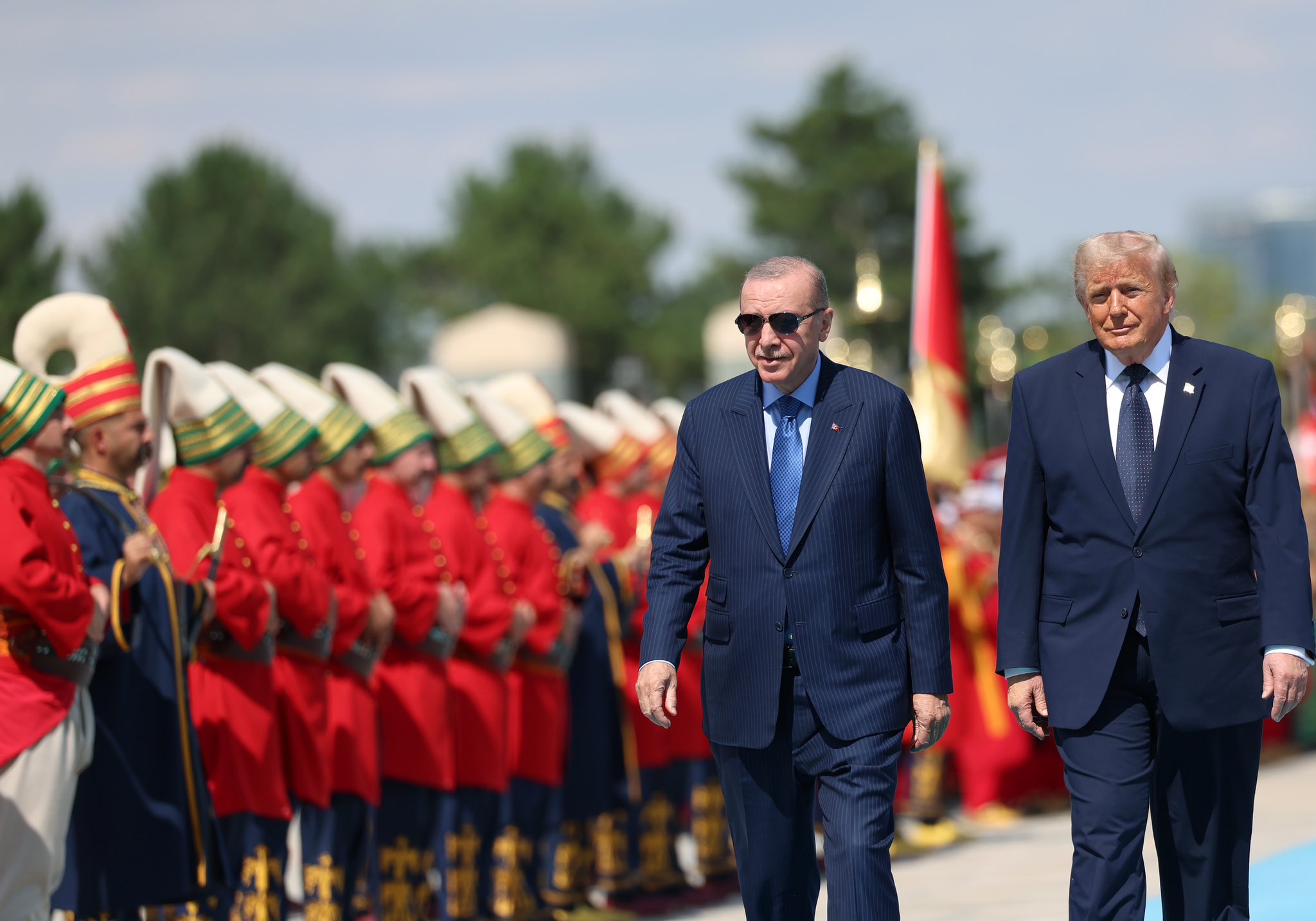
The exchange occurred during a NATO summit press conference in Ankara, according to Turkish Minute, where Erdoğan was asked directly what commitments Turkey would make regarding the S-400 batteries currently deployed on Turkish soil. His response to Reuters correspondent Hümeyra Pamuk was terse and evasive: Stay tuned.

Trump’s remarks followed his announcement one day earlier that his administration would move to lift sanctions imposed on Turkey over its acquisition of the Russian air defense system. When pressed on whether he had committed to readmitting Turkey to the Joint Strike Fighter program, Trump said he had not yet made up his mind, though he praised Erdoğan for having assisted the United States in various unspecified matters.

Turkey Presses for Full Reinstatement

Turkey’s Defense Ministry issued a statement Thursday welcoming Trump’s pledge to remove sanctions, while demanding the elimination of all Countering America’s Adversaries Through Sanctions Act (CAATSA) measures and what it described as indirect restrictions on the Turkish defense industry. Ankara characterized these limitations as inconsistent with alliance solidarity.

Turkey was expelled from the F-35 program in 2019 after accepting delivery of the S-400 system despite repeated warnings from Washington that the Russian technology posed a risk of exposing classified stealth aircraft data to Moscow. The United States imposed sanctions under CAATSA in 2020, targeting Turkey’s Presidency of Defense Industry.

Congressional Roadblock Remains

Sanctions relief alone will not restore Turkey’s program access. A provision in the fiscal year 2020 National Defense Authorization Act explicitly bars the transfer of F-35 aircraft to Turkey unless the administration certifies to Congress that Ankara no longer possesses the S-400 system, associated equipment, or personnel, and has pledged not to acquire any comparable platform that could compromise the stealth fighter.

That statutory requirement means Trump cannot unilaterally reverse Turkey’s exclusion. Bipartisan opposition on Capitol Hill remains strong, with lawmakers from both parties signaling they will resist any F-35 sale as long as the S-400 issue is unresolved.

Israel and Greece Object

The potential sale has also drawn sharp criticism from regional allies. Israeli Prime Minister Benjamin Netanyahu warned in a CNN interview that arming the Erdoğan government with advanced fifth-generation fighters would encourage aggression. Greek officials have similarly pointed to both the unresolved legal constraints and the implications for the military balance in the eastern Mediterranean.

Turkey now finds itself with a diplomatic opening but no viable path forward. Trump has indicated willingness to ease sanctions and explore a sale, but Erdoğan’s non-answer on the fate of the S-400 highlights the central obstacle that continues to prevent Turkey’s return to the F-35 consortium.

With information from Turkish Minute
Share:
Eleni Papadaki-Van Der Merwe

She was born in 1986 in Johannesburg, South Africa. She is the granddaughter of an immigrant from Crete who settled in the Greek community of Johannesburg (one of the largest in Africa). She holds a bachelor’s degree in International Relations and Political Science from the University of the Witwatersrand (Wits) in Johannesburg and a master’s degree in Journalism from Rhodes University in Grahamstown. She began her career at English-language media outlets in Johannesburg, covering politics and economics, with a focus on issues related to migration and the diaspora. She moved to Athens in 2015 to “return to her roots,” initially to pursue graduate studies, and has remained there permanently. She is married to an Afrikaner; they have two children and live in the southern suburbs of Athens.

The exchange occurred during a NATO summit press conference in Ankara, according to Turkish Minute, where Erdoğan was asked directly what commitments Turkey would make regarding the S-400 batteries currently deployed on Turkish soil. His response to Reuters correspondent Hümeyra Pamuk was terse and evasive: Stay tuned.

Trump’s remarks followed his announcement one day earlier that his administration would move to lift sanctions imposed on Turkey over its acquisition of the Russian air defense system. When pressed on whether he had committed to readmitting Turkey to the Joint Strike Fighter program, Trump said he had not yet made up his mind, though he praised Erdoğan for having assisted the United States in various unspecified matters.

Turkey Presses for Full Reinstatement

Turkey’s Defense Ministry issued a statement Thursday welcoming Trump’s pledge to remove sanctions, while demanding the elimination of all Countering America’s Adversaries Through Sanctions Act (CAATSA) measures and what it described as indirect restrictions on the Turkish defense industry. Ankara characterized these limitations as inconsistent with alliance solidarity.

Turkey was expelled from the F-35 program in 2019 after accepting delivery of the S-400 system despite repeated warnings from Washington that the Russian technology posed a risk of exposing classified stealth aircraft data to Moscow. The United States imposed sanctions under CAATSA in 2020, targeting Turkey’s Presidency of Defense Industry.

Congressional Roadblock Remains

Sanctions relief alone will not restore Turkey’s program access. A provision in the fiscal year 2020 National Defense Authorization Act explicitly bars the transfer of F-35 aircraft to Turkey unless the administration certifies to Congress that Ankara no longer possesses the S-400 system, associated equipment, or personnel, and has pledged not to acquire any comparable platform that could compromise the stealth fighter.

That statutory requirement means Trump cannot unilaterally reverse Turkey’s exclusion. Bipartisan opposition on Capitol Hill remains strong, with lawmakers from both parties signaling they will resist any F-35 sale as long as the S-400 issue is unresolved.

Israel and Greece Object

The potential sale has also drawn sharp criticism from regional allies. Israeli Prime Minister Benjamin Netanyahu warned in a CNN interview that arming the Erdoğan government with advanced fifth-generation fighters would encourage aggression. Greek officials have similarly pointed to both the unresolved legal constraints and the implications for the military balance in the eastern Mediterranean.

Turkey now finds itself with a diplomatic opening but no viable path forward. Trump has indicated willingness to ease sanctions and explore a sale, but Erdoğan’s non-answer on the fate of the S-400 highlights the central obstacle that continues to prevent Turkey’s return to the F-35 consortium.

With information from Turkish Minute