Necessary Cookies

Required for the site to function. Cannot be disabled.

Analytics Cookies

Help us understand how visitors interact with our site (Google Analytics via GTM).

Marketing Cookies

Used to track visitors and deliver personalised advertisements.

We use cookies to enhance your browsing experience and analyse site traffic. By clicking Accept All, you consent to our use of cookies. Privacy Policy
NewsFire Global
Home News Europe World Christianity Culture Wars Opinion
Information
About Us Authors Advertising Terms & Conditions Privacy Policy Contact
R2B Media
R2B NEWSFIRE.GR PAPAFOTIS.GR THRACTION HELLENIC CONSERVATIVES RIGHT2THEBONE YT
News World

Trump and Xi Jinping Ensure Open Strait of Hormuz

Trump and Xi agreed the Strait of Hormuz must stay open and demilitarized, with both condemning Iran’s nuclear ambitions amid escalating regional tensions and fragile US-Iran ceasefire prospects.
Stefanos Banos
Stefanos Banos Staff Writer
MAY 15, 2026 AT 10:36 PM Updated: May 21, 2026 1:49 PM

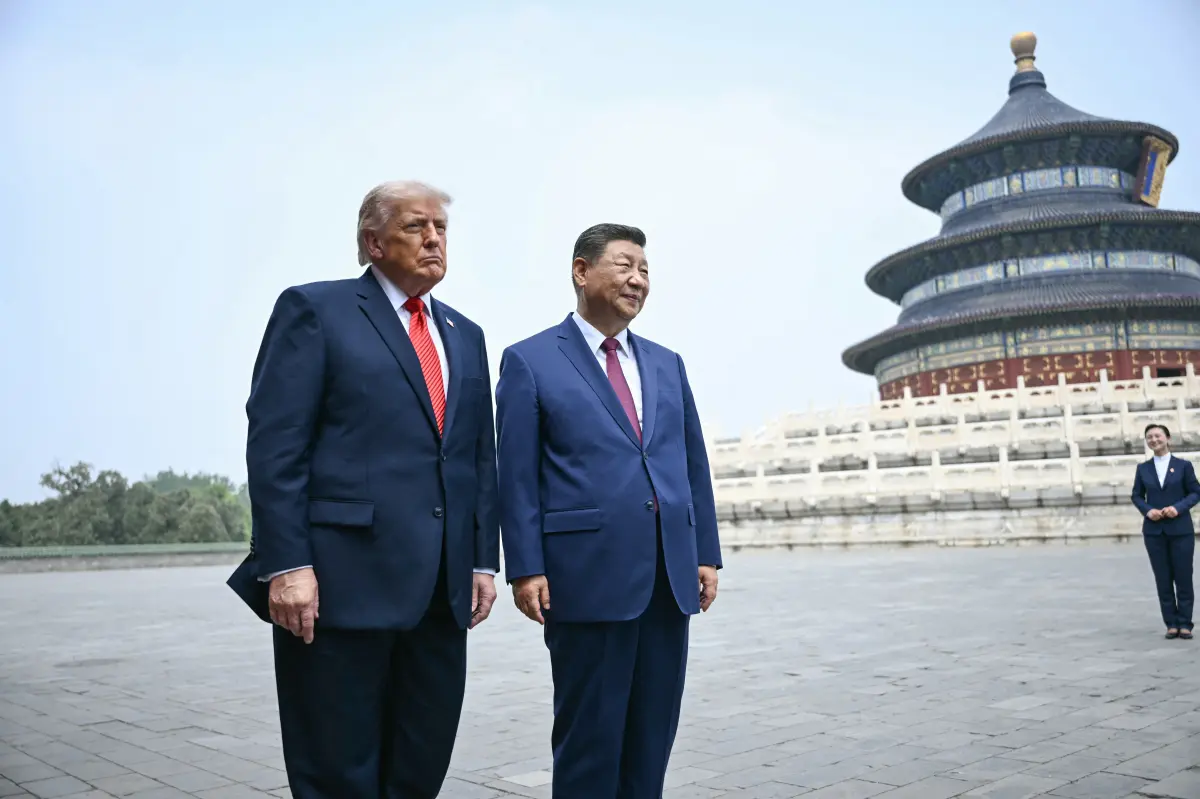
President Donald Trump and Chinese leader Xi Jinping agreed on Thursday that the Strait of Hormuz must remain open and free from any militarization, according to the White House.

“President Xi also clarified China’s opposition to the militarization of the strait and any attempts to impose tolls for its use, and expressed interest in buying more American oil in order to reduce China’s future dependence on the Strait,” the White House said.

This vital maritime route was just one of the issues discussed during Trump’s meeting with his Chinese counterpart in Beijing, which the White House described as “good.”

“Both countries agreed that Iran can never obtain a nuclear weapon,” the meeting statement said.

The Strait—a crucial passage for about 25% of the world’s oil supply—has been effectively closed since the United States and Israel launched Operation Epic Fury on February 28.

Tehran has intensified its control over the shipping route—with more than 300 fast boats spotted on Wednesday, according to Windward AI.

This represented a decrease from 454 boats reported on Tuesday, according to the organization.

Washington claims that about 90% of the Iranian navy has either been destroyed or severely weakened—but reports from U.S. intelligence appear to paint a different picture, the New York Times reported.

One assessment indicates that Iran has regained operational access to 30 of the 33 missile facilities along the strait.

In a fiery message on Truth Social, President Trump strongly reacted to media claims that “the Iranian enemy is doing well.”

“Iran had 159 ships in its navy—each one of them now rests at the bottom of the sea. They have no navy, their air force is gone, all their technology is lost, their ‘leaders’ are no longer with us, and the country is an economic disaster,” Trump said.

Meanwhile, the U.S.-Iran ceasefire, in effect since April 8, is hanging by a thread.

Earlier this week, Trump stated that the truce is “on life support” and told reporters he is “considering” his own red line to end the ceasefire.

Iran has threatened to “teach Washington a lesson” if attacks resume.

“Our armed forces are ready to respond and teach a lesson for any aggression,” wrote the regime’s parliament speaker, Mohammad Bagher Ghalibaf, on X.

“Wrong strategies and wrong decisions will always lead to wrong outcomes—the entire world has already understood this. We are prepared for all possibilities; they will be surprised.”

 

Share:
Stefanos Banos
Stefanos Banos

Stefanos Banos was born in Piraeus and is an editor at NewsFire.GR, specializing in political analysis and international relations. He graduated from the Department of Communication and Media at the University of Bremen in Germany, where he also completed his Master of Arts in Communication and Media Studies. Married to Zoi, he is a proud father of three boys.

President Donald Trump and Chinese leader Xi Jinping agreed on Thursday that the Strait of Hormuz must remain open and free from any militarization, according to the White House.

“President Xi also clarified China’s opposition to the militarization of the strait and any attempts to impose tolls for its use, and expressed interest in buying more American oil in order to reduce China’s future dependence on the Strait,” the White House said.

This vital maritime route was just one of the issues discussed during Trump’s meeting with his Chinese counterpart in Beijing, which the White House described as “good.”

“Both countries agreed that Iran can never obtain a nuclear weapon,” the meeting statement said.

The Strait—a crucial passage for about 25% of the world’s oil supply—has been effectively closed since the United States and Israel launched Operation Epic Fury on February 28.

Tehran has intensified its control over the shipping route—with more than 300 fast boats spotted on Wednesday, according to Windward AI.

This represented a decrease from 454 boats reported on Tuesday, according to the organization.

Washington claims that about 90% of the Iranian navy has either been destroyed or severely weakened—but reports from U.S. intelligence appear to paint a different picture, the New York Times reported.

One assessment indicates that Iran has regained operational access to 30 of the 33 missile facilities along the strait.

In a fiery message on Truth Social, President Trump strongly reacted to media claims that “the Iranian enemy is doing well.”

“Iran had 159 ships in its navy—each one of them now rests at the bottom of the sea. They have no navy, their air force is gone, all their technology is lost, their ‘leaders’ are no longer with us, and the country is an economic disaster,” Trump said.

Meanwhile, the U.S.-Iran ceasefire, in effect since April 8, is hanging by a thread.

Earlier this week, Trump stated that the truce is “on life support” and told reporters he is “considering” his own red line to end the ceasefire.

Iran has threatened to “teach Washington a lesson” if attacks resume.

“Our armed forces are ready to respond and teach a lesson for any aggression,” wrote the regime’s parliament speaker, Mohammad Bagher Ghalibaf, on X.

“Wrong strategies and wrong decisions will always lead to wrong outcomes—the entire world has already understood this. We are prepared for all possibilities; they will be surprised.”