
Three Firefighters Die in Greek Wildfires Spreading East
Three firefighters died battling wildfires in Greece as the EU reports the fire danger zone is shifting eastward from Iberia toward Greece and Central Europe.
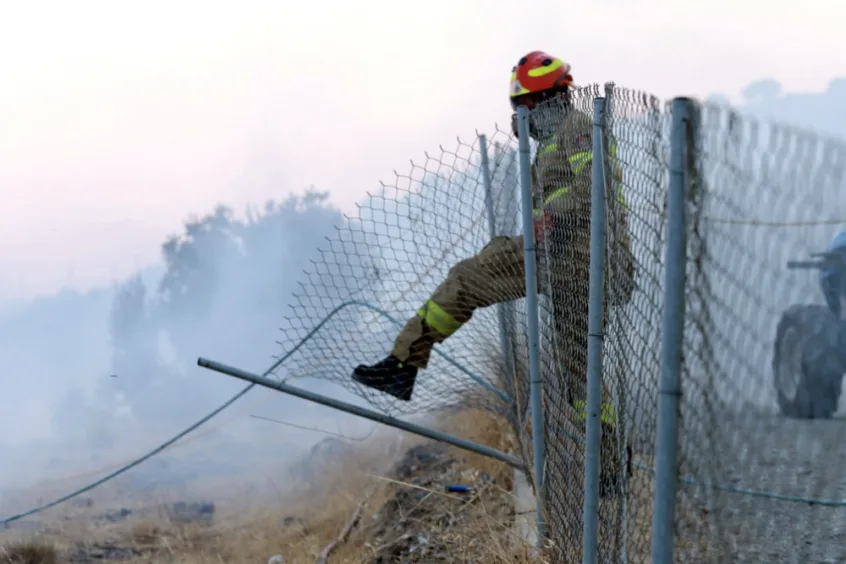

The Hellenic Fire Service confirmed the deaths on July 29, with two firefighters trapped in their vehicle near the village of Krya Vrysi in the Rethymno regional unit of central Crete, according to Brussels Signal. The men became trapped while moving between active fire fronts, and initial reports suggest they may have died from asphyxiation, though no official cause of death has been confirmed. Both are believed to have been volunteers.
A third firefighter was found unconscious outside the perimeter of a separate blaze near Gytheio in Laconia, in the southern Peloponnese. He was transported to a local hospital where he was pronounced dead. Two additional firefighters sustained minor injuries.
The fire service paid tribute to the fallen men, stating they “fell heroically in the line of duty” while protecting lives and property.
The Hellenic Fire Service recorded 37 separate wildfire outbreaks across Greece within a 24-hour period, as crews on Crete battled gale-force winds for a second consecutive day. Emergency evacuation orders were issued through the 112 alert system for at least eight communities on Crete, including Saktouria, Melampes, and Agia Galini. Hundreds of residents and tourists were evacuated by land and sea.
As of July 30, the Rethymno fire remained uncontained despite the deployment of 224 firefighters, 53 fire engines, and 11 specialist forest units supported by volunteers. Water-dropping aircraft were unable to operate for much of the morning due to high winds.
Maria Lioni, deputy regional governor of Rethymno, described the situation as a “nightmare night and nightmare day,” adding that the full extent of the damage could not be assessed while the fire continued to burn.
Greek authorities issued warnings of very high to extreme fire risk for July 30 across Crete, Attica, Evia, the eastern Peloponnese, the Cyclades, and the eastern Aegean islands including Lesvos, Chios, Samos, and Ikaria.
The deaths in Greece came just one day after the EU’s Emergency Response Coordination Centre indicated that the wildfire threat was moving away from Spain and Portugal. Maria Zuber, head of the centre, told reporters that the next risk is “already moving to Greece and also Central Europe.” She warned that Italy would face heightened danger beginning in August.
The EU has deployed seven aircraft and four helicopters to France, along with six aircraft and three ground teams to Spain, drawing on the rescEU reserve and assets contributed by member states.
According to the European Forest Fire Information System, 434,976 hectares had burned across the EU by July 29—significantly above the 346,836 hectares recorded by the same date in 2025, which was the worst year on record. The current total is more than double the 20-year average.
Funerals for the two firefighters killed on Crete were held on July 30.
With information from Brussels Signal





