
The Destruction of Paris
Paris erupted in widespread violence after a PSG victory, with riots, looting, and one death raising concerns about social order in France's capital.
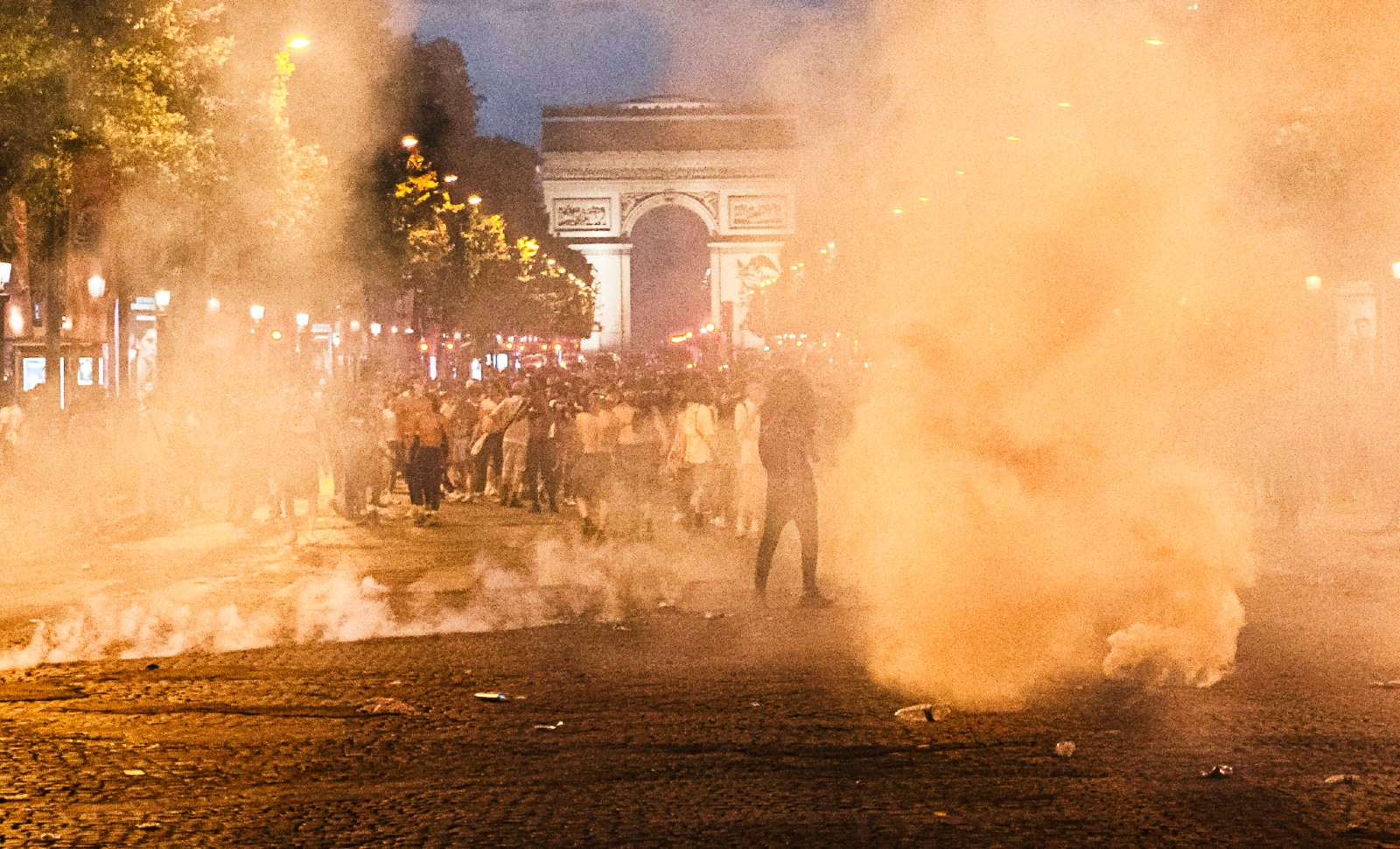

The riots erupted after the Paris Saint-Germain football match, with thousands of violent actors terrorizing the city under the pretext of celebrating their team’s win, according to Causeur. Scenes of mass rioting, serial destruction, burning vehicles, and hundreds of wounded—including members of law enforcement forces described as notably passive—culminated in one death.
Jacques Romains‘ 1913 novel “Les Copains” depicted the fictional destruction of the peaceful French town of Issoire, where social order collapsed in an instant. More than a century later, Paris itself has become the stage for such chaos, no longer confined to literary imagination.
Beyond Economic Grievance
Contrary to narratives promoted by the left, Causeur reports, this explosion of violence does not stem from suburban poverty. The young rioters clutching smartphones while looting stores for consumer goods, benefiting from extensive subsidies and various forms of state assistance, are materially better off than their parents were and significantly less deprived than most people living in rural France.
What is unfolding represents the overthrow of a civilization model based on conviviality and social cohesion by what can only be described as barbaric non-civilization. This constitutes the replacement of an established order by disorder that exists solely for its own momentum.
Conditions for Collapse
All conditions now align for a final breakdown, as Causeur observes. The barbarians welcomed over decades—much as Rome spent two centuries opening its arms to Goths to perform tasks Roman citizens no longer wished to undertake—now surge in masses that will only grow larger tomorrow. No policy of remigration will reverse this demographic reality.
Uncertain climate conditions, lurking epidemics, disruption of international trade networks that transform fuel into luxury goods and sever the supply chains ensuring product availability and replacement—including the fertilizers needed to grow food—create circumstances similar to those that precipitated rapid collapses of Bronze Age Mediterranean civilizations, the Roman Empire, and Arthurian Britain. Historians call these periods “dark ages.”
Political Class Amid Ruins
The upcoming French elections, regardless of outcome, will inaugurate a period of open civil war, according to Causeur. The electoral exercise represents merely an epiphenomenon, a pathetic attempt by a political class seeking to survive amid the rubble it has accumulated over the nation’s head.
Jean Giraudoux‘ 1937 play “Electre,” written by a senior Foreign Affairs official just before the Munich Agreement and the Second World War, posed a haunting question about moments when everything is ruined and destroyed, yet the air remains breathable, the city burns, innocents kill each other, and the guilty die in a corner as day breaks. The answer given: such moments carry a beautiful name—dawn.
The hordes currently ravaging Paris streets represent merely the vanguard of the swarms that will devastate France. What was once dismissed as the fictional center of the nation, a city that believed itself the navel of the world despite being nothing, now reveals its true emptiness through flames and broken glass.
With information from Causeur





