
Taliban Islamist Regime Caught in a Bind
Five years after seizing Kabul, the Taliban face renewed armed resistance in northeastern Afghanistan despite projecting total control and gaining recognition from Russia as the legitimate government.
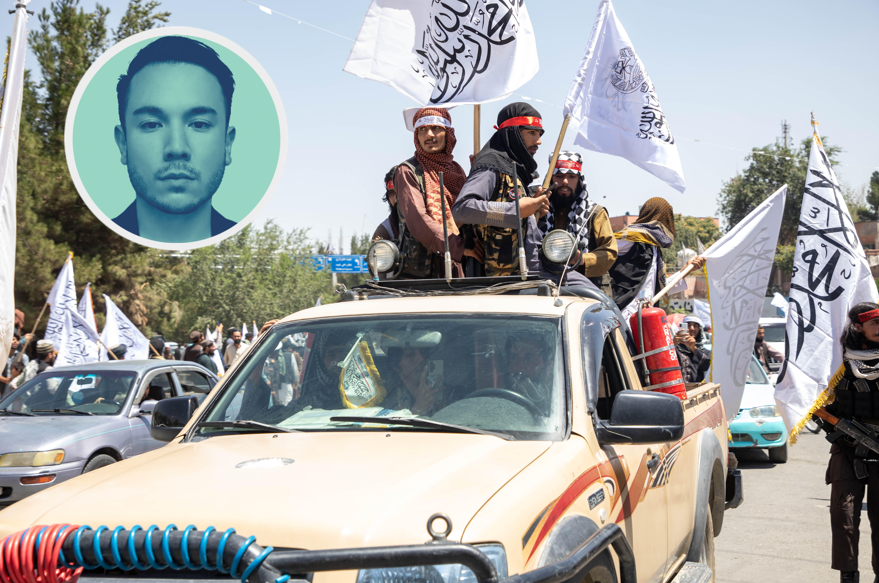

According to Junge Freiheit, the Taliban marked the anniversary of their takeover by parading armored vehicles in front of the former American embassy, with Interior Minister Sirajuddin Haqqani declaring victory over Western nations. While the regime controls nearly the entire country and is slowly breaking out of international isolation, mounting evidence suggests their military grip may be weaker than previously assumed.
Russia has become the first state to officially recognize the Taliban as Afghanistan’s legitimate government. China, India, and several Central Asian states maintain pragmatic contacts with Kabul. Even European nations find themselves forced to negotiate with the Islamists when attempting to deport rejected Afghan asylum seekers.
Armed Opposition Emerges in Badakhshan Province
The province of Badakhshan in Afghanistan’s far northeast has become particularly restless. In mid-July, a previously little-known group calling itself “Sepahian-e Mihan” (Soldiers of the Fatherland) attacked the administrative center of the Yaftal-e Payeen district, holding it for several hours before withdrawing.
Fighting continued in late July in the Zebak district, followed by renewed clashes in August between Taliban forces and the Afghanistan Freedom Front. While the Taliban are far from losing control of the northeast, armed opposition groups that had been largely driven underground after 2021 are now striking more frequently and gathering sympathy among rural populations who have not welcomed Taliban rule.
A fierce clash between commandos of the Afghanistan Freedom Front and Taliban forces began in Zebak district, at 4:00 p.m. today, 29 Asad 1405 (August 20, 2026), and continued until 7:30 p.m.
During the fighting, Freedom Front commandos used light and heavy weapons to launch… pic.twitter.com/hPZszT4KJ0— Afghanistan Freedom Front (@FREEDOMFRONTAFG) August 20, 2026
Ahmad Massoud Continues His Father’s Legacy
The most prominent Taliban opponent is Ahmad Massoud, leader of the National Resistance Front. His name carries significant symbolic weight in Afghanistan. His father, Ahmad Shah Massoud, known as the “Lion of Panjshir,” fought first against Soviet occupation and later against the Taliban as a leading figure in the Northern Alliance. He was assassinated by Al-Qaeda operatives two days before the September 11, 2001 attacks.
When Kabul fell in 2021, the NRF retreated to the Panjshir Valley. Though the Taliban eventually conquered this last stronghold of the old republic, Massoud’s fighters transitioned to guerrilla warfare, hiding in caves and mountain ranges.
Ethnic Fault Lines Shape the Conflict
The Taliban remain a predominantly Pashtun, Sunni Islamist movement. Pashtuns are estimated to comprise 40 to 50 percent of Afghanistan’s population and dominate the country’s south and east. The NRF, by contrast, recruits primarily from ethnic Tajiks, who form the second-largest population group and inhabit mainly the northeast and parts of Kabul.
This configuration partially mirrors the civil war of the 1990s, when the Northern Alliance—composed largely of Tajiks, Uzbeks, and other minorities—fought against the Taliban. However, Afghanistan’s ethnic map is more complex than simple divisions suggest. Regional loyalties, tribal affiliations, language, religion, and the political fronts of recent decades all overlap. Pashtuns can be found among Taliban opponents, while the Taliban themselves attempt to incorporate members of other ethnic groups into their structures.
The Hazara People Face Continued Persecution
The situation is particularly precarious for the Hazara people, who constitute between 9 and 18 percent of the population and are predominantly Shia Muslims in an overwhelmingly Sunni country. During the first Taliban regime, Hazara faced brutal persecution. Today they remain politically marginalized while their residential areas repeatedly become targets of jihadist attacks by Islamic State fighters, who are even more radical than the Taliban and fled to Afghanistan after IS collapsed in Iraq and Syria.
Former Military Officers Lead New Resistance Groups
Alongside Massoud’s NRF, the Afghanistan Freedom Front has emerged as the most important armed opponent of the Taliban. It is led by Yasin Zia, former Chief of Staff of the Afghan Army, former Deputy Defense Minister, and intelligence official. The AFF is composed significantly of former members of the collapsed Islamic Republic’s security forces, distinguishing it from a mere local tribal militia.
For twenty years, the United States and its NATO partners trained hundreds of thousands of Afghan soldiers and police officers. The army disintegrated within weeks in 2021, as many had warned. But its personnel did not disappear. Tens of thousands of former soldiers, officers, police, and intelligence operatives now live in Afghanistan or in exile, forming a reservoir of military experience that groups like the AFF can draw upon.
Since early August, another former general has taken a more offensive stance. The Afghanistan United Front, led by Lieutenant General Sami Sadat, announced the beginning of its “Operation Muharib” against the Taliban.
With information from Junge Freiheit





