Necessary Cookies

Required for the site to function. Cannot be disabled.

Analytics Cookies

Help us understand how visitors interact with our site (Google Analytics via GTM).

Marketing Cookies

Used to track visitors and deliver personalised advertisements.

We use cookies to enhance your browsing experience and analyse site traffic. By clicking Accept All, you consent to our use of cookies. Privacy Policy
NewsFire Global
Home News Europe World Christianity Culture Wars Opinion
Information
About Us Authors Advertising Terms & Conditions Privacy Policy Contact
R2B Media
R2B NEWSFIRE.GR PAPAFOTIS.GR THRACTION HELLENIC CONSERVATIVES RIGHT2THEBONE YT
News World

States Lean More on Nuclear Arms for Power, SIPRI Warns

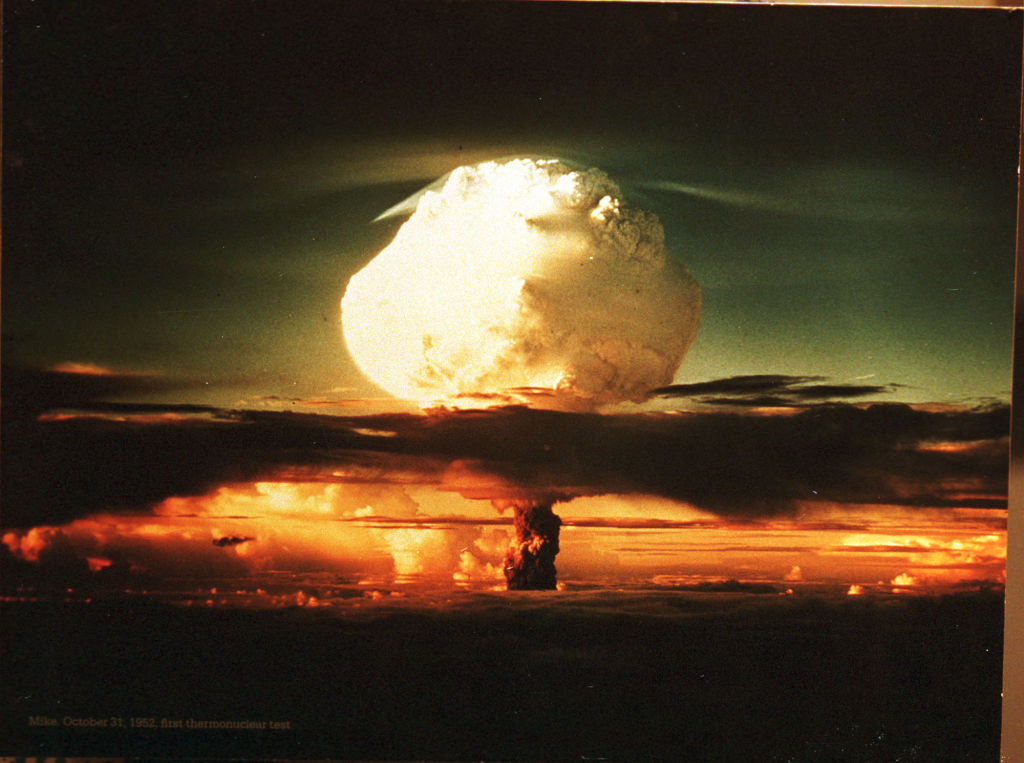
Nuclear-armed nations are treating atomic weapons as active instruments of power rather than last-resort deterrents, with all nine states modernizing arsenals amid Cold War-level tensions.

Dimitris Papafotis
Dimitris Papafotis Editor in Chief
JUNE 8, 2026 AT 2:40 PM

According to Brussels Signal, the Stockholm International Peace Research Institute has released its authoritative SIPRI Yearbook 2026, warning that all nine nuclear-armed states are now modernizing their arsenals while reversing decades of gradual disarmament.

The report, released today, documents that the United States, Russia, China, France, the United Kingdom, India, Pakistan, Israel, and North Korea are all actively expanding both the size and capabilities of their nuclear forces.

As of January 2026, the global nuclear inventory stands at an estimated 12,187 warheads. Of these, approximately 9,745 are held in military stockpiles designated for potential use. Between 2,100 and 2,200 warheads remain on high operational alert mounted on ballistic missiles, with nearly all of those belonging to Russia or the United States.

SIPRI researchers identify a fundamental change in nuclear doctrine across multiple nations. Atomic weapons are no longer viewed strictly as final-recourse deterrents but increasingly as tools for coercion and power projection in active conflicts and diplomatic standoffs.

Karim Haggag, SIPRI Director, stated in Brussels Signal that influential voices including some world leaders are now advocating nuclear weapons as guarantees against hostile states, adding that making national defense strategies more dependent on nuclear capabilities could significantly increase nuclear risks.

The institute warns that nuclear escalation risk now stands at its highest level since the Cold War ended. Ongoing conflicts in Ukraine and the Middle East, combined with intensifying strategic rivalry between Washington and Beijing, have driven nations to prioritize nuclear capabilities over arms control commitments.

The arms control architecture continues to crumble. New START remains effectively suspended, and no trilateral negotiations involving China have been initiated to establish new frameworks.

Hans M. Kristensen, Associate Senior Fellow with SIPRI’s Weapons of Mass Destruction Programme and Director of the Nuclear Information Project at the Federation of American Scientists, warned that nuclear weapon states are sidelining and even abandoning their disarmament commitments. By reaching for nuclear solutions, states are creating new risks, he noted.

He added that conflict between nuclear-armed India and Pakistan is challenging fundamental nuclear deterrence logic, as Brussels Signal reports.

European Security Calculations Shift

For Europe, the findings carry particular weight. Russia’s repeated nuclear threats throughout the Ukraine conflict, coupled with China’s rapid nuclear expansion, are forcing European governments to reassess their longstanding dependence on American extended deterrence guarantees.

The research highlights that advances in weapon technology, the breakdown of nuclear arms control agreements, and heightened geopolitical tensions are converging to create a far more dangerous nuclear environment than existed even a decade ago.

SIPRI’s evidence suggests that rather than pursuing multilateral disarmament, nuclear powers are instead flexing their nuclear capabilities and fueling arms race dynamics that had been dormant since the end of the Cold War.

The yearbook documents that global nuclear inventories are increasing for the first time in generations, reversing a post-Cold War trend toward gradual reductions in warhead numbers and operational readiness levels.

With information from Brussels Signal

Share:
Dimitris Papafotis
Dimitris Papafotis

Dimitris Papafotis is the editor-in-chief of NewsFire.GR. He was born and raised in Athens. He studied at the Journalism Workshop (1991-1993). He currently lives in Pyrgos, Ilia, where he has been active in radio and various newspapers, while also maintaining his personal blog, Papafotis.gr.

According to Brussels Signal, the Stockholm International Peace Research Institute has released its authoritative SIPRI Yearbook 2026, warning that all nine nuclear-armed states are now modernizing their arsenals while reversing decades of gradual disarmament.

The report, released today, documents that the United States, Russia, China, France, the United Kingdom, India, Pakistan, Israel, and North Korea are all actively expanding both the size and capabilities of their nuclear forces.

As of January 2026, the global nuclear inventory stands at an estimated 12,187 warheads. Of these, approximately 9,745 are held in military stockpiles designated for potential use. Between 2,100 and 2,200 warheads remain on high operational alert mounted on ballistic missiles, with nearly all of those belonging to Russia or the United States.

SIPRI researchers identify a fundamental change in nuclear doctrine across multiple nations. Atomic weapons are no longer viewed strictly as final-recourse deterrents but increasingly as tools for coercion and power projection in active conflicts and diplomatic standoffs.

Karim Haggag, SIPRI Director, stated in Brussels Signal that influential voices including some world leaders are now advocating nuclear weapons as guarantees against hostile states, adding that making national defense strategies more dependent on nuclear capabilities could significantly increase nuclear risks.

The institute warns that nuclear escalation risk now stands at its highest level since the Cold War ended. Ongoing conflicts in Ukraine and the Middle East, combined with intensifying strategic rivalry between Washington and Beijing, have driven nations to prioritize nuclear capabilities over arms control commitments.

The arms control architecture continues to crumble. New START remains effectively suspended, and no trilateral negotiations involving China have been initiated to establish new frameworks.

Hans M. Kristensen, Associate Senior Fellow with SIPRI’s Weapons of Mass Destruction Programme and Director of the Nuclear Information Project at the Federation of American Scientists, warned that nuclear weapon states are sidelining and even abandoning their disarmament commitments. By reaching for nuclear solutions, states are creating new risks, he noted.

He added that conflict between nuclear-armed India and Pakistan is challenging fundamental nuclear deterrence logic, as Brussels Signal reports.

European Security Calculations Shift

For Europe, the findings carry particular weight. Russia’s repeated nuclear threats throughout the Ukraine conflict, coupled with China’s rapid nuclear expansion, are forcing European governments to reassess their longstanding dependence on American extended deterrence guarantees.

The research highlights that advances in weapon technology, the breakdown of nuclear arms control agreements, and heightened geopolitical tensions are converging to create a far more dangerous nuclear environment than existed even a decade ago.

SIPRI’s evidence suggests that rather than pursuing multilateral disarmament, nuclear powers are instead flexing their nuclear capabilities and fueling arms race dynamics that had been dormant since the end of the Cold War.

The yearbook documents that global nuclear inventories are increasing for the first time in generations, reversing a post-Cold War trend toward gradual reductions in warhead numbers and operational readiness levels.

With information from Brussels Signal