
Spanish judge weighs charging Sánchez’s Socialists as criminal org
A Spanish judge is considering indicting the ruling Socialist party as a criminal organization over allegations it operated a covert network to obstruct judicial proceedings.
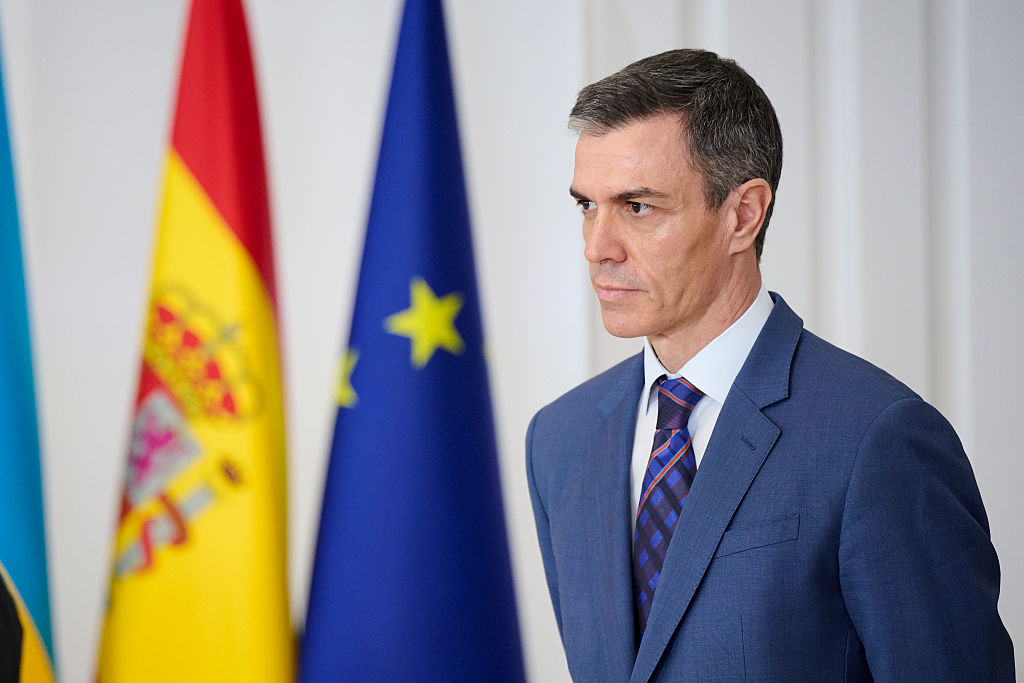

Santiago Pedraz, an investigating magistrate at Spain’s National Court, is examining whether the Spanish Socialist Workers’ Party (PSOE) can be held criminally liable as a legal person in what has become known as the Ferraz cloacas — or “sewers” — case. The probe centers on allegations that a covert network operated to obstruct judicial proceedings that threatened the party or Prime Minister Pedro Sánchez‘s government.
On May 27, Spain’s Civil Guard raided the PSOE’s national headquarters on Calle Ferraz in Madrid and seized internal documents. Officers also searched the homes of former party organization secretary Santos Cerdán in Milagro, northern Spain, and veteran Andalusian Socialist Gaspar Zarrías.
Compliance Documents Seized Ahead of Potential Charges
During the operation, the Civil Guard’s Central Operative Unit took the party’s regulatory compliance program covering 2024 and 2025 and requested details on who had supervised it. Legal sources quoted by Libertad Digital said the move was the standard preliminary step before charging a legal entity with criminal conduct.
The investigation grew from the broader corruption scandal surrounding Sánchez’s former inner circle. Cerdán, once the party’s number three official, resigned his parliamentary seat in June 2025 and spent nearly five months in pre-trial detention in the related Koldo case before being conditionally released last November.
Monthly Payments to Party ‘Fixer’
At the center of the allegations are monthly payments of €4,000 allegedly made to Leire Díez, a former Socialist official described as the party’s “fixer.” Investigators believe the payments were concealed through fraudulent invoices issued by Ana María Fuentes, who managed the organization secretariat.
As reported by Brussels Signal, Pedraz partially lifted the secrecy order on the case on June 1. His account alleges that the PSOE financed the network with at least €188,000, funds purportedly used to collect compromising material on prosecutors, Civil Guard officers, and judges.
Among the reported targets were chief anti-corruption prosecutor Alejandro Luzón and judges handling cases directly touching Sánchez, including proceedings against his wife, Begoña Gómez, and his brother, David Sánchez. Investigators documented 22 meetings between Díez and Cerdán at the party’s Madrid headquarters.
Party Infrastructure Used for Alleged Criminal Activity
In his ruling, Pedraz wrote that Cerdán, in his capacity as organization secretary, would have put the party’s own structure at the disposal of the alleged criminal group, which relied on PSOE premises, personnel, and logistics from the beginning.
Pedraz is investigating Cerdán, Díez, Zarrías, businessman Javier Pérez Dolset, and lawyer Ismael Oliver on suspicion of criminal organization, bribery, revealing secrets, influence peddling, falsifying commercial documents, and crimes against State institutions, among other charges.
Cerdán has denied all accusations, claiming the investigation is designed to destroy individuals whom the authorities find inconvenient.
Second Legal Front Opens
The PSOE could face additional jeopardy. Another National Court judge, Ismael Moreno, is examining suspected illegal party financing, opening the possibility of separate criminal proceedings against the Socialists.
Under Spanish criminal law, legal entities can be held criminally responsible when offenses are committed on their behalf and for their benefit. Penalties range from fines to suspension of activities for up to five years, exclusion from public contracts and subsidies, and in the most severe cases, dissolution.
While Spanish courts have previously considered the question of party criminal liability, no governing party in Spain has ever been dissolved on such grounds.
European Silence as Sánchez Faces Domestic Crisis
The expanding legal troubles have begun to weaken Sánchez’s position among Europe’s center-left, where he leads one of the few remaining progressive governments on the European Council. Iratxe García, who heads the Socialists and Democrats group in the European Parliament, has so far remained silent on the affair, Brussels Signal reports.
At home, the scandal has escalated into a confrontation over the judiciary itself. Spain’s judicial council protested last week after government officials accused investigating judges of mounting a “judicial coup.”
The PSOE has denied all wrongdoing and characterized the investigations as politically motivated. Party spokeswoman Montse Mínguez said the party was not afraid of the probes, though her full statement was not completed in available reporting.
With information from Brussels Signal





