
Silver Prime Minister in 2027… by Apostolos Kritikopoulos
A minority government could form after Greece's 2027 elections if the first party lacks a majority, with the second-place leader potentially becoming prime minister.
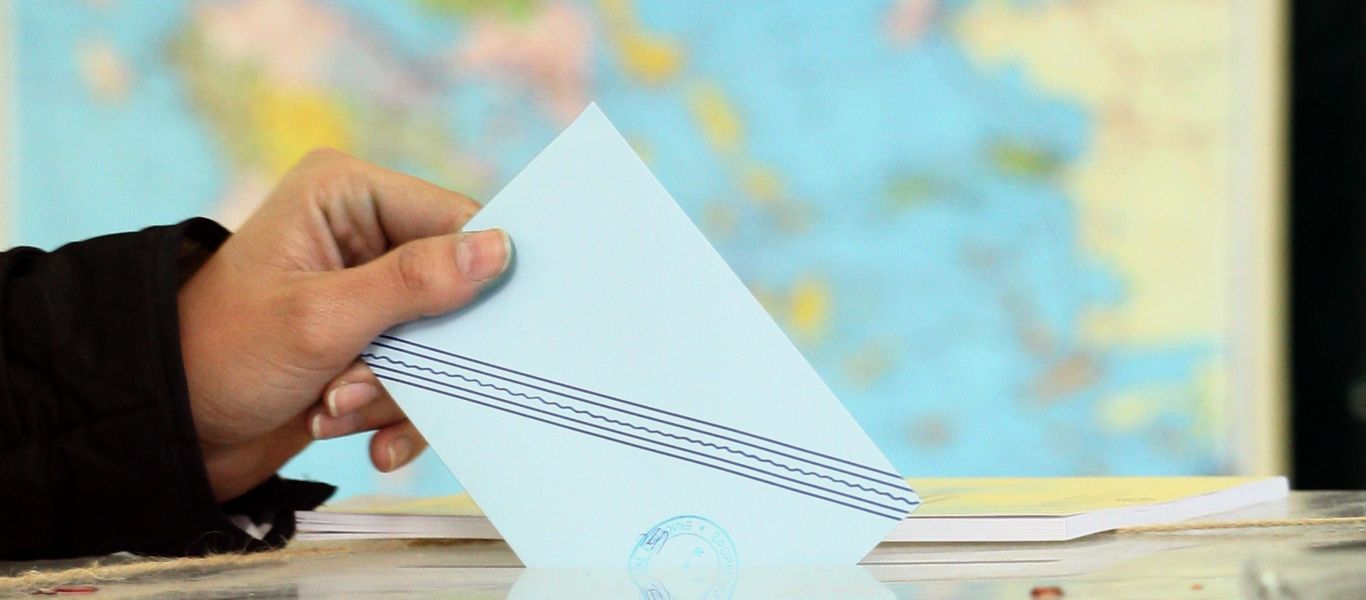

Something unprecedented for our democracy could happen in the upcoming parliamentary elections scheduled for 2027: a government could be formed without the first party. In this case, a “minority” government is formed with the MPs of the second, third, fourth, or even other parties.
Does this seem like science fiction to you? Yet in the last 10 years in Europe, this has happened in exactly five cases in countries such as Portugal, Spain, Belgium (twice), and Latvia. “Democracy has no dead ends” many demagogues have thundered in recent years in Greece, trying to exploit the concept of democracy, but perhaps in these elections they will be strongly surprised and understand—even in a mathematical way—that democracy cannot be trapped according to their own willfulness, and that sometimes developments can be unpredictable.
But how can a minority government be technically created? In the event that New Democracy, which will most likely be the first party, does not achieve an absolute majority and cannot cooperate with other parties such as PASOK (with which it has very bad relations at every level, making such a scenario difficult), then with a checkmate and surprise move, the leader of the second party could gather forces from the other parties, cumulatively reach the necessary number of 151 MPs, so that a government can be formed. Who will be prime minister in such a case?
From the examples of the European countries I mentioned earlier where something like this occurred, the prime minister is usually the leader of the second party. There is of course also the possibility that the prime minister could be the head of the third or a smaller party, or some technocrat and person of common acceptance (but I consider this extremely unlikely).
In a minority government, it will not be the leader who won “gold” in the election race who will govern, but the one who won the “silver” medal. This means that the main race in this case focuses on who will undisputedly finish second. The persons currently prevailing according to the latest polls are Tsipras, Androulakis, and Karystianou.
The competition between them will intensify in the coming months, as we have already seen from the fire being exchanged recently from their camps. It will be subversive that they may all cooperate after the elections, but as I wrote, democracy has no dead ends, and the passion for power in politics is very sweet.





