Necessary Cookies

Required for the site to function. Cannot be disabled.

Analytics Cookies

Help us understand how visitors interact with our site (Google Analytics via GTM).

Marketing Cookies

Used to track visitors and deliver personalised advertisements.

We use cookies to enhance your browsing experience and analyse site traffic. By clicking Accept All, you consent to our use of cookies. Privacy Policy
NewsFire Global
Home News Europe World Christianity Culture Wars Opinion Video
Information
About Us Authors Advertising Terms & Conditions Privacy Policy Contact
R2B Media
R2B NEWSFIRE.GR PAPAFOTIS.GR THRACTION HELLENIC CONSERVATIVES RIGHT2THEBONE YT
News Europe

Russia’s Deep Crimea Crisis Will Only Get Worse

Russia's control of Crimea is deteriorating due to fuel shortages and Ukrainian strikes, exposing strategic failures as Moscow suffers over 350,000 combat deaths since 2022.

Dimitris Papafotis
Dimitris Papafotis Editor in Chief
JUNE 23, 2026 AT 11:42 PM

The crisis gripping the peninsula reflects a broader strategic catastrophe for the Kremlin, according to Washington Examiner. Despite Putin’s public assertions of steady military progress, the reality on the ground tells a drastically different story of mounting casualties and operational failures.

Russian forces have suffered more than 350,000 combat deaths since the invasion began in February 2022, securing only minor territorial gains in exchange for devastating losses. Meanwhile, Ukrainian drone operations now strike deep into northwestern and western Russia with increasing impunity.

Ukrainian Strikes Penetrate Deep into Russian Territory

Recent weeks have witnessed extraordinary attacks on strategically sensitive targets across Russia. Ukrainian drones hit St. Petersburg, Putin’s hometown, even as a major international conference convened there. Strikes on Russian fuel depots and military production facilities have escalated sharply. Black smoke from attacks on energy infrastructure has blanketed Moscow’s skyline, visible across the Russian capital.


Crimea, however, faces the most acute pressure. Occupied by Russia since 2014, the peninsula now suffers critically depleted fuel reserves as Ukraine systematically degrades Russian air defenses throughout the region.

Supply Lines Crumble Under Ukrainian Assault

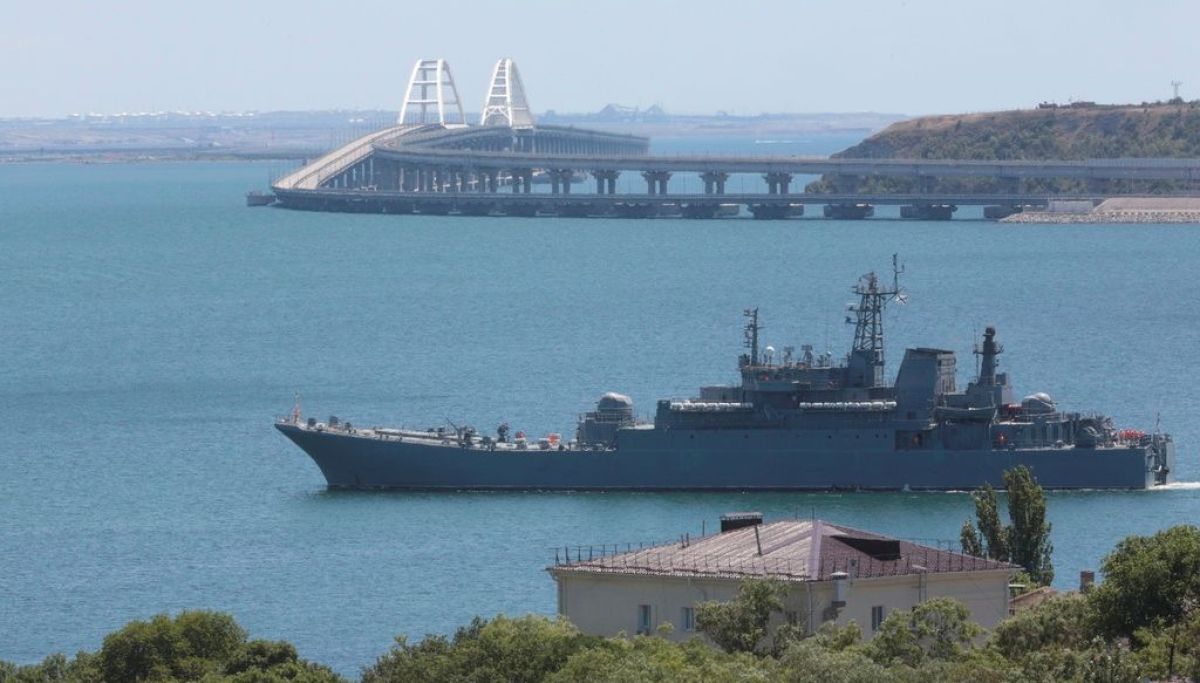
The improved capabilities of Ukrainian drones and missiles allow strikes at will across Crimea. Fearing catastrophic secondary explosions, Russian forces have largely abandoned using the Kerch Bridge connection between Crimea and Russia’s Taman Peninsula for large-scale fuel and goods transport.

Instead, Moscow has been forced to route most supplies through the dangerous southern Ukrainian mainland highways. Ukrainian drones intercept many of these convoys before they reach their destination. Fuel ferries crossing the Black Sea face similar threats—three were destroyed in a single week recently.

Civilian Crisis Deepens as Resources Evaporate

The consequences for Putin’s prestige peninsula are severe. Russian tourists are canceling planned vacations to Crimea as basic foodstuffs grow scarce and rolling power cuts ration dwindling energy supplies.

As Ukraine tightens its operational grip around the territory, Putin confronts an impossible choice between evacuating the civilian population or enduring increasingly visible blows to his credibility. This strikes at the core of the Russian president’s justification for the entire war.

Vladimir Putin launched the invasion claiming Ukraine posed growing threats to the Russian mainland that required regime change in Kyiv. Now he faces defeat in what was once presented as an impenetrable fortress. The Kerch Bridge would never have been constructed if Putin anticipated the current vulnerability, as Washington Examiner notes.

Putin’s Victory Narrative Crumbles at Home

For Russian citizens in Moscow, St. Petersburg, Voronezh, Sevastopol, and throughout the country, more than four years into what was supposed to be a swift operation measured in weeks, victory appears increasingly distant. As attacks continue and time passes, Putin will face mounting pressure to either escalate dramatically or accept his losses.

The United States and its allies must ensure Putin cannot pursue the escalation option successfully.

With information from Washington Examiner

Share:
Dimitris Papafotis
Dimitris Papafotis

Dimitris Papafotis is the editor-in-chief of NewsFire.GR. He was born and raised in Athens. He studied at the Journalism Workshop (1991-1993). He currently lives in Pyrgos, Ilia, where he has been active in radio and various newspapers, while also maintaining his personal blog, Papafotis.gr.

The crisis gripping the peninsula reflects a broader strategic catastrophe for the Kremlin, according to Washington Examiner. Despite Putin’s public assertions of steady military progress, the reality on the ground tells a drastically different story of mounting casualties and operational failures.

Russian forces have suffered more than 350,000 combat deaths since the invasion began in February 2022, securing only minor territorial gains in exchange for devastating losses. Meanwhile, Ukrainian drone operations now strike deep into northwestern and western Russia with increasing impunity.

Ukrainian Strikes Penetrate Deep into Russian Territory

Recent weeks have witnessed extraordinary attacks on strategically sensitive targets across Russia. Ukrainian drones hit St. Petersburg, Putin’s hometown, even as a major international conference convened there. Strikes on Russian fuel depots and military production facilities have escalated sharply. Black smoke from attacks on energy infrastructure has blanketed Moscow’s skyline, visible across the Russian capital.

Crimea, however, faces the most acute pressure. Occupied by Russia since 2014, the peninsula now suffers critically depleted fuel reserves as Ukraine systematically degrades Russian air defenses throughout the region.

Supply Lines Crumble Under Ukrainian Assault

The improved capabilities of Ukrainian drones and missiles allow strikes at will across Crimea. Fearing catastrophic secondary explosions, Russian forces have largely abandoned using the Kerch Bridge connection between Crimea and Russia’s Taman Peninsula for large-scale fuel and goods transport.

Instead, Moscow has been forced to route most supplies through the dangerous southern Ukrainian mainland highways. Ukrainian drones intercept many of these convoys before they reach their destination. Fuel ferries crossing the Black Sea face similar threats—three were destroyed in a single week recently.

Civilian Crisis Deepens as Resources Evaporate

The consequences for Putin’s prestige peninsula are severe. Russian tourists are canceling planned vacations to Crimea as basic foodstuffs grow scarce and rolling power cuts ration dwindling energy supplies.

As Ukraine tightens its operational grip around the territory, Putin confronts an impossible choice between evacuating the civilian population or enduring increasingly visible blows to his credibility. This strikes at the core of the Russian president’s justification for the entire war.

Vladimir Putin launched the invasion claiming Ukraine posed growing threats to the Russian mainland that required regime change in Kyiv. Now he faces defeat in what was once presented as an impenetrable fortress. The Kerch Bridge would never have been constructed if Putin anticipated the current vulnerability, as Washington Examiner notes.

Putin’s Victory Narrative Crumbles at Home

For Russian citizens in Moscow, St. Petersburg, Voronezh, Sevastopol, and throughout the country, more than four years into what was supposed to be a swift operation measured in weeks, victory appears increasingly distant. As attacks continue and time passes, Putin will face mounting pressure to either escalate dramatically or accept his losses.

The United States and its allies must ensure Putin cannot pursue the escalation option successfully.

With information from Washington Examiner


