Necessary Cookies

Required for the site to function. Cannot be disabled.

Analytics Cookies

Help us understand how visitors interact with our site (Google Analytics via GTM).

Marketing Cookies

Used to track visitors and deliver personalised advertisements.

We use cookies to enhance your browsing experience and analyse site traffic. By clicking Accept All, you consent to our use of cookies. Privacy Policy
NewsFire Global
Home News Europe World Christianity Culture Wars Opinion Video
Information
About Us Authors Advertising Terms & Conditions Privacy Policy Contact
R2B Media
R2B NEWSFIRE.GR PAPAFOTIS.GR THRACTION HELLENIC CONSERVATIVES RIGHT2THEBONE YT
News World

Real leadership can save Penn Station from homeless plague

Penn Station's vagrant problems persist due to fragmented management, while Grand Central's successful cleanup proved unified authority can restore order to troubled transit hubs.
Stefanos Banos
Stefanos Banos Staff Writer
JUNE 15, 2026 AT 4:08 PM

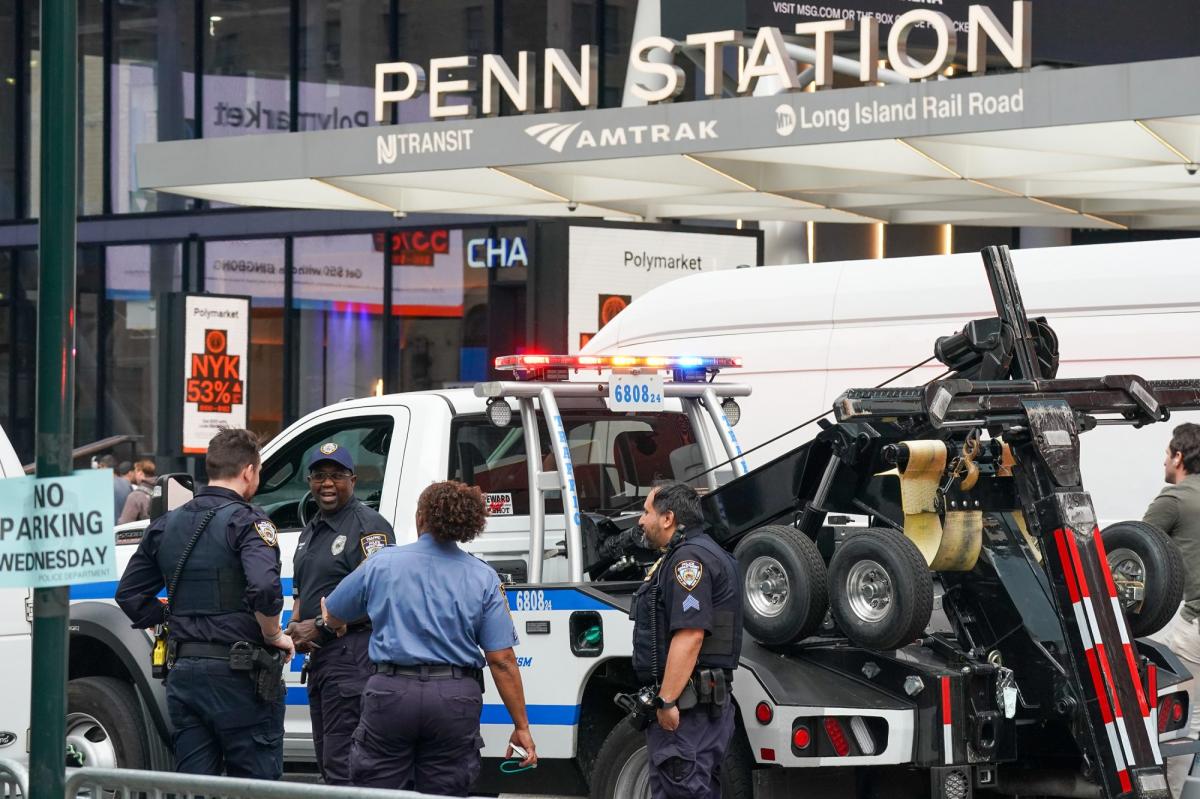
The issue gained renewed urgency following a stabbing rampage by a vagrant at Penn Station just one week ago, according to New York Post. Yet local leaders have consistently dismissed concerns from commuters and residents who question why the city’s busiest train station has become a de facto shelter for the mentally ill and homeless.

Grand Central Terminal faced similar challenges several years ago when its lower-level food court became overrun with vagrants who camped at tables and washed their clothing in restrooms. Restaurant owners at the facility threatened to withhold rent payments unless management addressed the deteriorating conditions.

The Metropolitan Transportation Authority, which owns Grand Central, responded decisively by reorganizing the food court. The area now maintains an orderly and respectable atmosphere, demonstrating that transformation is achievable even within New York’s restrictive legal framework that prevents outright removal of vagrants from public property.

Management Structure Makes the Difference

Two critical factors enabled Grand Central’s turnaround. First, the station began closing for several hours each night, forcing all occupants to leave the premises. Second, unified management under the MTA created clear accountability, as the authority both owns the terminal and operates nearly all train lines serving it.

Penn Station suffers from the opposite problem. Amtrak owns the station itself, while the Long Island Rail Road and New Jersey Transit maintain separate control over their respective concourses. This fragmented authority structure allows each entity to shift blame when problems arise, as New York Post reports.

The station’s confusing physical layout compounds these administrative failures. Its labyrinthine corridors provide numerous hiding spots where vagrants can congregate away from public view and security oversight.

Trump Takes Control of Penn Station Overhaul

President Donald Trump has now assumed control of the massive reconstruction project planned for Penn Station. The rebuild presents an opportunity not only to redesign interior spaces that currently enable vagrant encampments but also to restructure the station’s dysfunctional management system.

Proposed solutions include establishing a single central authority responsible for policing the entire facility and implementing overnight closure periods lasting at least one to three hours. Such measures mirror the successful strategy deployed at Grand Central Terminal.

The report suggests that Trump need not wait for final reconstruction plans to begin implementing changes. Immediate management reforms and enforcement measures could start addressing Penn Station’s problems right away, restoring basic order and safety to a facility that serves hundreds of thousands of daily commuters from New York and New Jersey.

With information from New York Post

Share:
Stefanos Banos
Stefanos Banos

Stefanos Banos was born in Piraeus and is an editor at NewsFire.GR, specializing in political analysis and international relations. He graduated from the Department of Communication and Media at the University of Bremen in Germany, where he also completed his Master of Arts in Communication and Media Studies. Married to Zoi, he is a proud father of three boys.

The issue gained renewed urgency following a stabbing rampage by a vagrant at Penn Station just one week ago, according to New York Post. Yet local leaders have consistently dismissed concerns from commuters and residents who question why the city’s busiest train station has become a de facto shelter for the mentally ill and homeless.

Grand Central Terminal faced similar challenges several years ago when its lower-level food court became overrun with vagrants who camped at tables and washed their clothing in restrooms. Restaurant owners at the facility threatened to withhold rent payments unless management addressed the deteriorating conditions.

The Metropolitan Transportation Authority, which owns Grand Central, responded decisively by reorganizing the food court. The area now maintains an orderly and respectable atmosphere, demonstrating that transformation is achievable even within New York’s restrictive legal framework that prevents outright removal of vagrants from public property.

Management Structure Makes the Difference

Two critical factors enabled Grand Central’s turnaround. First, the station began closing for several hours each night, forcing all occupants to leave the premises. Second, unified management under the MTA created clear accountability, as the authority both owns the terminal and operates nearly all train lines serving it.

Penn Station suffers from the opposite problem. Amtrak owns the station itself, while the Long Island Rail Road and New Jersey Transit maintain separate control over their respective concourses. This fragmented authority structure allows each entity to shift blame when problems arise, as New York Post reports.

The station’s confusing physical layout compounds these administrative failures. Its labyrinthine corridors provide numerous hiding spots where vagrants can congregate away from public view and security oversight.

Trump Takes Control of Penn Station Overhaul

President Donald Trump has now assumed control of the massive reconstruction project planned for Penn Station. The rebuild presents an opportunity not only to redesign interior spaces that currently enable vagrant encampments but also to restructure the station’s dysfunctional management system.

Proposed solutions include establishing a single central authority responsible for policing the entire facility and implementing overnight closure periods lasting at least one to three hours. Such measures mirror the successful strategy deployed at Grand Central Terminal.

The report suggests that Trump need not wait for final reconstruction plans to begin implementing changes. Immediate management reforms and enforcement measures could start addressing Penn Station’s problems right away, restoring basic order and safety to a facility that serves hundreds of thousands of daily commuters from New York and New Jersey.

With information from New York Post

