
Putin Accuses NATO of Preparing for War on Russia
Russian President Vladimir Putin accused NATO of openly preparing for war with Moscow while using a fabricated Russian threat to justify increased defense spending.
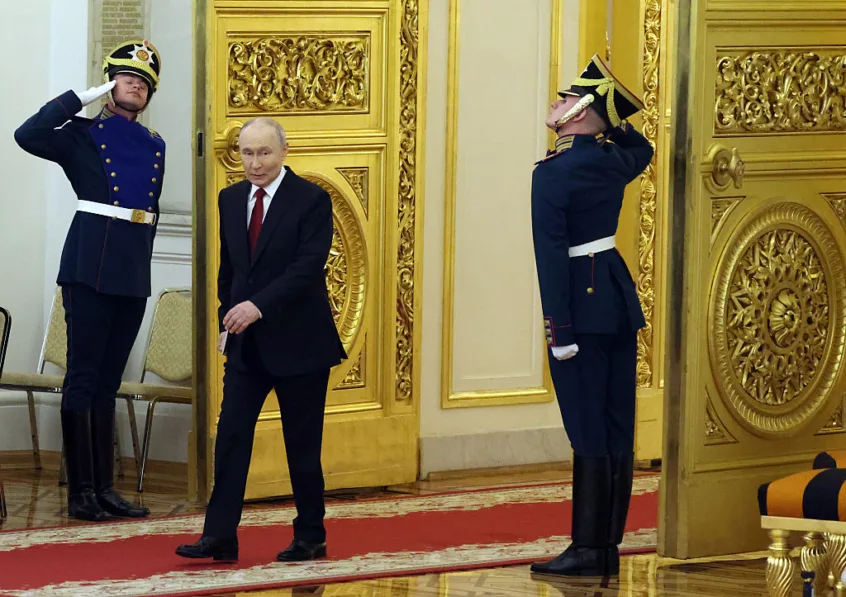

Speaking to graduates of Russian military academies at the Kremlin yesterday, Putin said NATO had moved beyond simply supporting Ukraine and was now readying itself for war with Russia, according to Brussels Signal.
The Russian leader told the assembled officers that Western capitals were now engaged in open discussion about preparing for conflict with his country. He claimed this followed a familiar pattern in which the West manufactures threats, forces Russia to respond defensively, then reframes that defense as aggression.
Putin argued that the risk of armed conflict had risen significantly across multiple regions, including Europe. His remarks were carried by the state news agency TASS.
Ukraine and Donetsk Offensive
Turning to Ukraine, which Russia invaded in February 2022, Putin praised his armed forces and said they had all but captured the town of Konstantinovka in the occupied Donetsk region. The area has become one of the most heavily contested battlegrounds in recent months.
He went on to accuse Ukrainian President Volodymyr Zelensky of having no genuine interest in peace negotiations, and vowed that Russian forces would continue operations until all strategic objectives were achieved.
Deputy Foreign Minister Alexander Grushko echoed the combative tone, telling journalists that the risk of military confrontation was rising. He claimed Western governments aimed to achieve full combat readiness by 2030 and therefore had no incentive to pursue peace in Ukraine, as Brussels Signal reports.
European Rearmament and 2030 Timeline
The Russian allegations directly mirror—and invert—assessments from European intelligence services. Several NATO-aligned agencies have warned that Russia could be prepared to attack a member state by 2030, a timeline that has driven the European Union’s Readiness 2030 initiative and the accompanying ReArm Europe defense plan.
That program envisions up to €800 billion in additional military spending across EU member states by the end of the decade. At NATO’s summit in The Hague in June 2025, all members except Spain committed to raising core defense expenditure to 3.5 percent of GDP, with an additional 1.5 percent allocated to broader security measures.
In an article published earlier this month, Russian Foreign Minister Sergei Lavrov made a similar argument, writing that European states were working toward combat readiness against Russia by 2030 and were using the interim years to prepare.
The dueling narratives underscore the deepening strategic divide between Moscow and the West, with both sides now publicly framing the other as an active threat requiring long-term military preparation.
With information from Brussels Signal





