Necessary Cookies

Required for the site to function. Cannot be disabled.

Analytics Cookies

Help us understand how visitors interact with our site (Google Analytics via GTM).

Marketing Cookies

Used to track visitors and deliver personalised advertisements.

We use cookies to enhance your browsing experience and analyse site traffic. By clicking Accept All, you consent to our use of cookies. Privacy Policy
NewsFire Global
Home News Europe World Christianity Culture Wars Opinion Video
Information
About Us Authors Advertising Terms & Conditions Privacy Policy Contact
R2B Media
R2B NEWSFIRE.GR PAPAFOTIS.GR THRACTION HELLENIC CONSERVATIVES RIGHT2THEBONE YT
News Europe

Pakistan: Double murder but all were acquitted

Pakistan's Supreme Court acquitted the last three men sentenced to death for the 2014 lynching of a Christian couple, leaving no one accountable for the brutal mob killing.


Dimitris Papafotis
Dimitris Papafotis Editor in Chief
JULY 23, 2026 AT 4:00 PM

Writing on his personal page, Thanos Tzimeros details the chilling events and judicial failures surrounding the case.

On November 4, 2014, a Muslim mob killed Shahzad Masih and his pregnant wife, Shama Bibi, in Kot Radha Kishan, a town in the Kasur district of Punjab province. The couple, both workers at a brick kiln and parents of three young children, faced false accusations of desecrating pages of the Quran after Shama allegedly burned personal belongings of her deceased father-in-law.

Rumors spread rapidly through the area, and loudspeakers at local mosques amplified the blasphemy claims, urging the faithful to go to the brick kiln where the couple worked to lynch them. Over 100 frenzied Islamists violently dragged the couple and beat them mercilessly, showing no sign of compassion for the pregnant woman despite her desperate pleas. They then threw them into the brick kiln, burning both of them alive!

Police charged 106 people for their role in the lynching. Prosecutors argued that several men led the mob, while others actively participated in the attack or encouraged the violence. The scale of the attack and the large number of suspects made the prosecution one of Pakistan’s largest criminal cases involving religiously motivated mob violence.

In November 2016, an Anti-Terrorism Court in Lahore sentenced Hafiz Ishtiaq, Mehdi Khan, Riaz Kamboh, Muhammad Hanif, and Irfan Shakoor to death for their role in the couple’s murder. The court also sentenced eight other defendants to two years in prison for aiding the attack and acquitted 93 suspects after prosecutors failed to prove their involvement in the murders. However, the verdict proved temporary.

In 2019, the Lahore High Court acquitted two of the five men who had been sentenced to death. The court also acquitted 102 other defendants, citing lack of sufficient evidence.

And just a few days ago, the remaining defendants were also acquitted. This ended a 12-year judicial process without a single person being held responsible for the brutal lynching of the Christian couple.

The disappointing verdict underscores once again how Pakistan’s judicial system has repeatedly, perhaps deliberately, failed to protect victims and deliver justice in cases involving Muslim mob violence. Bishop Samson Shukardin, president of the Catholic Bishops’ Conference of Pakistan, and other Christian leaders warned that the decision could intensify fear among religious minorities, who already live under the constant threat of false blasphemy accusations and violent mob attacks.

Similar outbreaks of anti-Christian violence have occurred in Gojra in 2009, in Joseph Colony in Lahore in 2013, in Jaranwala in 2023, and in many other parts of the country where fanatical crowds have used false blasphemy claims as a pretext for lynchings, church burnings and entire Christian neighborhoods, forcing residents to abandon their homes.

Tzimeros concludes: “But when all these people come here, we must open our own doors and welcome them.”

Διπλή δολοφονία αλλά όλοι αθωώθηκαν
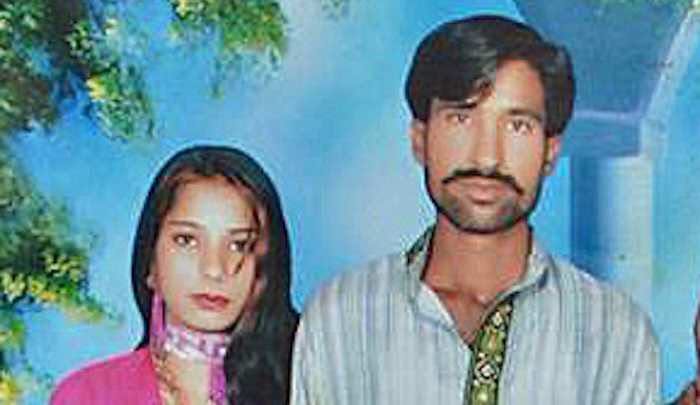
The ill-fated Christian couple who were martyred because of their Faith.
Share:
Dimitris Papafotis
Dimitris Papafotis

Dimitris Papafotis is the editor-in-chief of NewsFire.GR. He was born and raised in Athens. He studied at the Journalism Workshop (1991-1993). He currently lives in Pyrgos, Ilia, where he has been active in radio and various newspapers, while also maintaining his personal blog, Papafotis.gr.

Writing on his personal page, Thanos Tzimeros details the chilling events and judicial failures surrounding the case.

On November 4, 2014, a Muslim mob killed Shahzad Masih and his pregnant wife, Shama Bibi, in Kot Radha Kishan, a town in the Kasur district of Punjab province. The couple, both workers at a brick kiln and parents of three young children, faced false accusations of desecrating pages of the Quran after Shama allegedly burned personal belongings of her deceased father-in-law.

Rumors spread rapidly through the area, and loudspeakers at local mosques amplified the blasphemy claims, urging the faithful to go to the brick kiln where the couple worked to lynch them. Over 100 frenzied Islamists violently dragged the couple and beat them mercilessly, showing no sign of compassion for the pregnant woman despite her desperate pleas. They then threw them into the brick kiln, burning both of them alive!

Police charged 106 people for their role in the lynching. Prosecutors argued that several men led the mob, while others actively participated in the attack or encouraged the violence. The scale of the attack and the large number of suspects made the prosecution one of Pakistan’s largest criminal cases involving religiously motivated mob violence.

In November 2016, an Anti-Terrorism Court in Lahore sentenced Hafiz Ishtiaq, Mehdi Khan, Riaz Kamboh, Muhammad Hanif, and Irfan Shakoor to death for their role in the couple’s murder. The court also sentenced eight other defendants to two years in prison for aiding the attack and acquitted 93 suspects after prosecutors failed to prove their involvement in the murders. However, the verdict proved temporary.

In 2019, the Lahore High Court acquitted two of the five men who had been sentenced to death. The court also acquitted 102 other defendants, citing lack of sufficient evidence.

And just a few days ago, the remaining defendants were also acquitted. This ended a 12-year judicial process without a single person being held responsible for the brutal lynching of the Christian couple.

The disappointing verdict underscores once again how Pakistan’s judicial system has repeatedly, perhaps deliberately, failed to protect victims and deliver justice in cases involving Muslim mob violence. Bishop Samson Shukardin, president of the Catholic Bishops’ Conference of Pakistan, and other Christian leaders warned that the decision could intensify fear among religious minorities, who already live under the constant threat of false blasphemy accusations and violent mob attacks.

Similar outbreaks of anti-Christian violence have occurred in Gojra in 2009, in Joseph Colony in Lahore in 2013, in Jaranwala in 2023, and in many other parts of the country where fanatical crowds have used false blasphemy claims as a pretext for lynchings, church burnings and entire Christian neighborhoods, forcing residents to abandon their homes.

Tzimeros concludes: “But when all these people come here, we must open our own doors and welcome them.”

Διπλή δολοφονία αλλά όλοι αθωώθηκαν
The ill-fated Christian couple who were martyred because of their Faith.
