Necessary Cookies

Required for the site to function. Cannot be disabled.

Analytics Cookies

Help us understand how visitors interact with our site (Google Analytics via GTM).

Marketing Cookies

Used to track visitors and deliver personalised advertisements.

We use cookies to enhance your browsing experience and analyse site traffic. By clicking Accept All, you consent to our use of cookies. Privacy Policy
NewsFire Global
Home News Europe World Christianity Culture Wars Opinion Video
Information
About Us Authors Advertising Terms & Conditions Privacy Policy Contact
R2B Media
R2B NEWSFIRE.GR PAPAFOTIS.GR THRACTION HELLENIC CONSERVATIVES RIGHT2THEBONE YT
News World

New Momentum Builds for Greek Strategic Initiative

Greece's Great Sea Interconnector electricity project linking Cyprus and Israel gained investment backing but faces Turkish interference that has blocked 40% of critical seabed surveys.
Stefanos Banos
Stefanos Banos Staff Writer
AUGUST 14, 2026 AT 11:49 PM

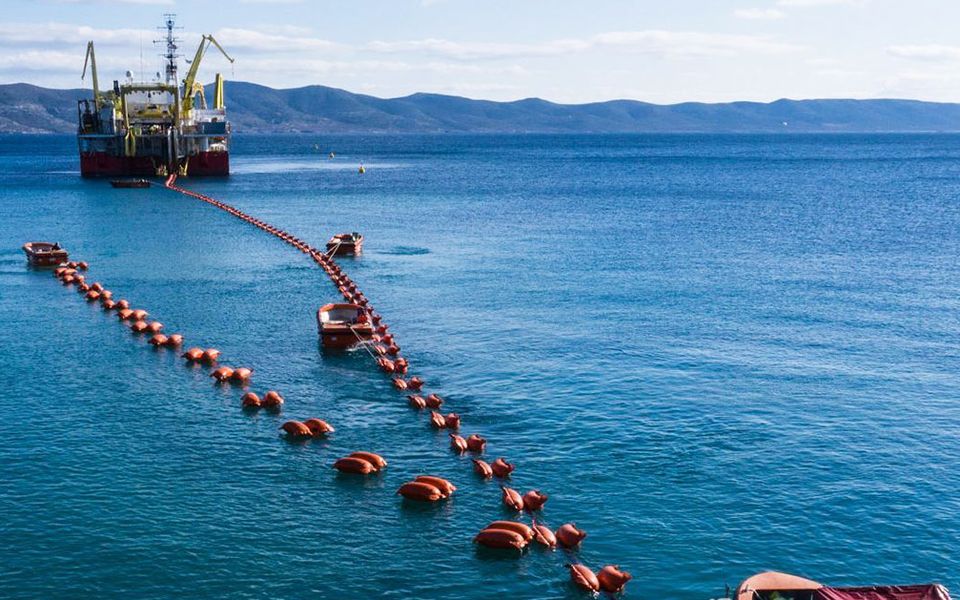
The Great Sea Interconnector (GSI) announced positive developments on August 5, marking the first constructive progress after two years marred by setbacks, diplomatic friction, and stalled technical work on the submarine cable project.

Turkish Harassment Halted Survey Work

The project has languished since July 2024, when the Italian research vessel Ievoli Relume attempted seabed surveys south of Kasos, beyond Greek territorial waters. Turkish warships harassed the vessel, effectively blocking the surveys required to chart the cable route and begin laying operations. Approximately 60% of survey work has been completed, but the crucial 40% between Karpathos and Cyprus remains unfinished due to Turkish obstruction.

Athens miscalculated Turkey’s willingness to interfere, even amid reduced bilateral tensions. The GSI directly contradicts Ankara’s expansive “Blue Homeland” doctrine, which asserts Turkish veto power over agreements and projects throughout the Aegean Sea and Eastern Mediterranean.

Turkey views every challenge to this doctrine—whether the Greece-Egypt maritime delimitation, the Cyprus-Lebanon Exclusive Economic Zone agreement in November 2025, or Chevron’s operations south of Crete—as requiring a forceful response.

Selective Turkish Aggression

Filis notes that Turkish leadership has demonstrated selective caution depending on which parties it confronts. In 2018, Turkey blocked an Italian drilling ship from operating in Cyprus’ Block 3, and in 2021 twice harassed the Maltese-flagged research ship Nautical Geo conducting surveys for the EastMed pipeline. Yet Turkey has not interfered with the ExxonMobil-QatarEnergy joint venture in Cyprus’ Block 5, despite claiming jurisdictional overlap.

The pattern suggests Turkey tests adversaries’ resolve before escalating, adjusting aggression based on the resistance encountered.

French Involvement Changes Calculation

A restructured ownership arrangement now significantly constrains Turkey’s room for provocation. France has assumed substantial involvement through the new shareholding structure, bringing considerable naval power in the Mediterranean and major energy interests it will defend. Paris and Ankara already compete for influence in the Eastern Mediterranean, the Sahel, and West Africa, giving France strong incentive to protect the project.

Meridiam, a major investment group, has taken a 66% stake in GSI, providing the financial weight and technical expertise to secure project financing. This development addresses the second major obstacle: questions about economic viability that the Cypriot government had raised, partly due to geopolitical risks that deterred earlier investors.

Cyprus Maintains Reservations

Despite welcoming Meridiam’s entry, Cyprus’ Energy Minister indicated the government awaits a European Investment Bank study before deciding on Cypriot shareholding participation and final project costs. Filis suggests that specific business interests on the island benefit from Cyprus’ current energy isolation and persistently high electricity prices, potentially influencing official hesitancy.

Strategic Significance for Europe

For the European Union, the two-way underwater interconnection represents both symbolic and substantive priorities. The project would unify the European electricity market, strengthening cohesion and competition while reducing prices and ensuring supply security through greater renewable energy integration.

The planned connection with Israel, which could utilize up to half the available electricity capacity, provides Brussels with an important tool of regional influence.

Seabed surveys are expected to resume later this year as relations between Paris and Ankara improve, and as Turkey seeks access to European defense programs requiring unanimous approval from all 27 member states—where France holds particularly significant influence.

With information from Kathimerini (EN)

Share:
Stefanos Banos
Stefanos Banos

Stefanos Banos was born in Piraeus and is an editor at NewsFire.GR, specializing in political analysis and international relations. He graduated from the Department of Communication and Media at the University of Bremen in Germany, where he also completed his Master of Arts in Communication and Media Studies. Married to Zoi, he is a proud father of three boys.

The Great Sea Interconnector (GSI) announced positive developments on August 5, marking the first constructive progress after two years marred by setbacks, diplomatic friction, and stalled technical work on the submarine cable project.

Turkish Harassment Halted Survey Work

The project has languished since July 2024, when the Italian research vessel Ievoli Relume attempted seabed surveys south of Kasos, beyond Greek territorial waters. Turkish warships harassed the vessel, effectively blocking the surveys required to chart the cable route and begin laying operations. Approximately 60% of survey work has been completed, but the crucial 40% between Karpathos and Cyprus remains unfinished due to Turkish obstruction.

Athens miscalculated Turkey’s willingness to interfere, even amid reduced bilateral tensions. The GSI directly contradicts Ankara’s expansive “Blue Homeland” doctrine, which asserts Turkish veto power over agreements and projects throughout the Aegean Sea and Eastern Mediterranean.

Turkey views every challenge to this doctrine—whether the Greece-Egypt maritime delimitation, the Cyprus-Lebanon Exclusive Economic Zone agreement in November 2025, or Chevron’s operations south of Crete—as requiring a forceful response.

Selective Turkish Aggression

Filis notes that Turkish leadership has demonstrated selective caution depending on which parties it confronts. In 2018, Turkey blocked an Italian drilling ship from operating in Cyprus’ Block 3, and in 2021 twice harassed the Maltese-flagged research ship Nautical Geo conducting surveys for the EastMed pipeline. Yet Turkey has not interfered with the ExxonMobil-QatarEnergy joint venture in Cyprus’ Block 5, despite claiming jurisdictional overlap.

The pattern suggests Turkey tests adversaries’ resolve before escalating, adjusting aggression based on the resistance encountered.

French Involvement Changes Calculation

A restructured ownership arrangement now significantly constrains Turkey’s room for provocation. France has assumed substantial involvement through the new shareholding structure, bringing considerable naval power in the Mediterranean and major energy interests it will defend. Paris and Ankara already compete for influence in the Eastern Mediterranean, the Sahel, and West Africa, giving France strong incentive to protect the project.

Meridiam, a major investment group, has taken a 66% stake in GSI, providing the financial weight and technical expertise to secure project financing. This development addresses the second major obstacle: questions about economic viability that the Cypriot government had raised, partly due to geopolitical risks that deterred earlier investors.

Cyprus Maintains Reservations

Despite welcoming Meridiam’s entry, Cyprus’ Energy Minister indicated the government awaits a European Investment Bank study before deciding on Cypriot shareholding participation and final project costs. Filis suggests that specific business interests on the island benefit from Cyprus’ current energy isolation and persistently high electricity prices, potentially influencing official hesitancy.

Strategic Significance for Europe

For the European Union, the two-way underwater interconnection represents both symbolic and substantive priorities. The project would unify the European electricity market, strengthening cohesion and competition while reducing prices and ensuring supply security through greater renewable energy integration.

The planned connection with Israel, which could utilize up to half the available electricity capacity, provides Brussels with an important tool of regional influence.

Seabed surveys are expected to resume later this year as relations between Paris and Ankara improve, and as Turkey seeks access to European defense programs requiring unanimous approval from all 27 member states—where France holds particularly significant influence.

With information from Kathimerini (EN)

