
NATO Chiefs Target Defense Spending Boost at Turkey Summit
NATO leaders meet in Ankara next week facing pressure to show surging defense budgets are becoming deployable military power after historic spending increases have yet to yield adequate firepower.
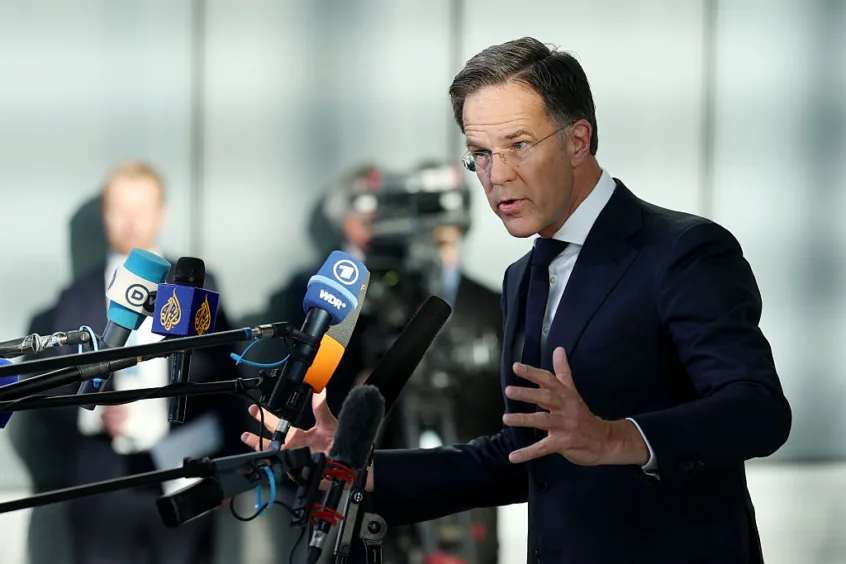


According to Brussels Signal, NATO Secretary General Mark Rutte has defined the challenge as the alliance’s foremost concern, warning that financial commitments alone cannot stop incoming threats on the battlefield. While funding remains essential, Rutte has stressed that those resources must be rapidly transformed into operational military capabilities.
The upcoming summit marks the 36th in NATO’s history and only the second time Turkey has served as host, following a 2004 gathering in Constantinople. Alliance members face intense scrutiny to present actionable strategies backing their financial pledges.
From Pledges to Performance
During last June’s summit in The Hague, NATO allies agreed to increase defence spending to 5 per cent of GDP by 2035, a dramatic rise from the 2 per cent target established in 2014. Yet the practical task of converting those budget commitments into combat-ready equipment has proven far more difficult than anticipated.
Defence budgets across the alliance have expanded substantially. European member states and Canada collectively increased their core defence investment by $139 billion, equivalent to €122 billion, during 2025 alone, based on NATO data. Despite this substantial financial injection, the corresponding boost in actual military capability has lagged considerably behind.
Industry representatives insist progress is underway following decades of chronic underinvestment. Camille Grand, secretary general of the Aerospace, Security and Defence Industries Association of Europe, stated that manufacturers are now investing in significantly expanded capacity, though he conceded the sector has probably not yet reached required levels.
Stockpiles Under Strain
Russia’s invasion of Ukraine has repeatedly exposed Europe’s industrial limitations, with extended delivery timelines and critical capability gaps becoming impossible to ignore. Recent American military operations against Iran have further depleted US munitions stockpiles, highlighting the severe pressure on defence contractors attempting to replenish inventories.
Security analysts have issued stark warnings that Europe would rapidly exhaust crucial weaponry, particularly air defence missiles, if full-scale conflict erupted today. The European Council on Foreign Relations stated that production capacity in certain critical sectors would be overwhelmed within a matter of days.
Artillery shell production has climbed from 300,000 units annually in 2022 toward a target of two million, though even that accelerated output would prove insufficient during a sustained military engagement, according to the think tank’s assessment.
Persistent Dependencies
Even a significantly enlarged arsenal would not deliver complete strategic autonomy. European military forces continue to rely heavily on American systems for command-and-control infrastructure and essential software, a dependency that could potentially be exploited against European interests, the ECFR cautioned.
The European Union has taken concrete action since 2021, establishing a defence fund, expediting ammunition production programmes, and launching a €150 billion loan facility for the defence sector.
Looking toward the future, the bloc’s proposed 2028-2034 budget would increase defence and space spending approximately fivefold, reaching €131 billion. Member states have additionally set a strategic objective of achieving readiness for major military confrontation by 2030.
Structural Fragmentation
Much of the challenge stems from fundamental structural problems. The bloc operates with 27 separate defence markets and 27 distinct regulatory frameworks, EU defence commissioner Andrius Kubilius noted, leaving European industry constrained by numerous obstacles.
Europe has demonstrated the ability to raise necessary funding, Kubilius added, but must now master effective expenditure strategies sufficient to outproduce, out-innovate, and outgun Russia.
The fragmentation manifests clearly in equipment inventories. European armies operate 12 different main battle tank models compared to a single platform deployed by the United States, and have supplied Ukraine with four times as many distinct equipment types as Washington has provided, research institute Bruegel found.
National protectionism has intensified the problem. Germany’s domestic procurement share has roughly doubled from approximately 30 per cent in 2020-2021 to 60 per cent in 2025-2026, according to Guntram Wolff of the Brussels-based think tank Bruegel.
Major defence contractors have limited incentive to invest in cross-border capacity, Wolff observed, because they anticipate preferential treatment from their home governments regardless.
Ukraine’s Industrial Model
Europe need not search far for an alternative approach. Despite enduring four years of sustained bombardment, Ukraine has constructed a defence sector now producing millions of drones annually.
Kubilius drew a sharp contrast between systems. Europe manufactures what he characterized as haute couture weaponry—technologically advanced but expensive and difficult to scale—while Ukraine’s industrial model is purpose-built for battlefield demands.
An increasing number of European firms have initiated partnerships designed to leverage Ukrainian expertise. Ukraine’s combat-tested innovations, spanning drone warfare to intelligence integration, represent capabilities Europe urgently requires, the ECFR argued.
Strategic Implications
The implications extend well beyond any single summit. Rutte has maintained that basic logic demands Europeans shoulder a greater share of the defence burden, noting that a continent of approximately 600 million people should possess the capacity to counter a Russia with a population between 120 and 140 million.
That argument has gained traction as the United States redirects military assets toward the Indo-Pacific region and intelligence warnings intensify that Russia could launch strikes against NATO territory with limited advance notice.
With information from Brussels Signal





