Necessary Cookies

Required for the site to function. Cannot be disabled.

Analytics Cookies

Help us understand how visitors interact with our site (Google Analytics via GTM).

Marketing Cookies

Used to track visitors and deliver personalised advertisements.

We use cookies to enhance your browsing experience and analyse site traffic. By clicking Accept All, you consent to our use of cookies. Privacy Policy
NewsFire Global
Home News Europe World Christianity Culture Wars Opinion
Information
About Us Authors Advertising Terms & Conditions Privacy Policy Contact
R2B Media
R2B NEWSFIRE.GR PAPAFOTIS.GR THRACTION HELLENIC CONSERVATIVES RIGHT2THEBONE YT
News World

Leftist Lawsuits Target US Energy Dominance

The Supreme Court will hear Suncor v. Boulder County, a case that could force oil and gas companies to pay hundreds of billions in climate damages and reshape U.S. energy policy.
Stefanos Banos
Stefanos Banos Staff Writer
JUNE 8, 2026 AT 4:20 PM

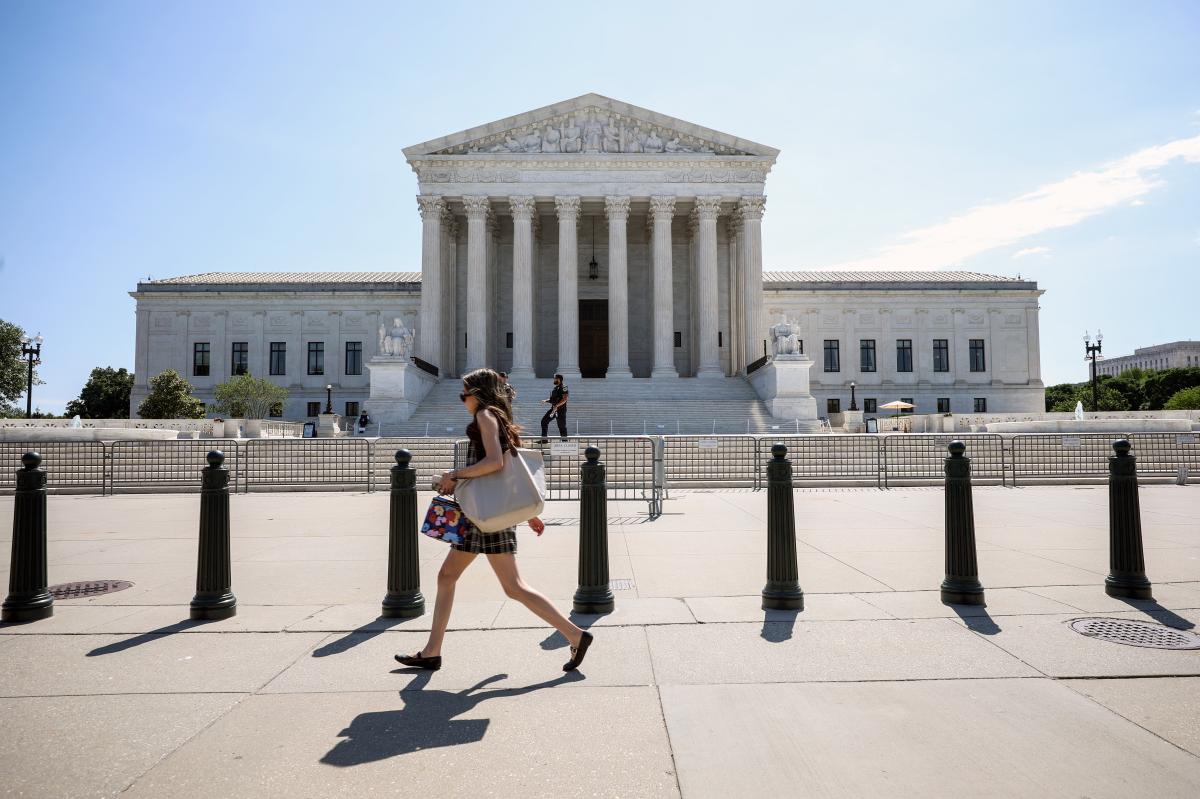
In what could become one of the most significant energy cases in decades, the United States Supreme Court is preparing to hear arguments that may determine whether America maintains its position as a global energy superpower or submits to climate litigation that could cost the industry hundreds of billions of dollars.

The case, Suncor v. Boulder County, is set to be heard in the coming months and represents one of dozens of lawsuits filed by progressive state and local governments attempting to force oil and gas companies to pay damages for global warming, according to New York Post.

At stake is far more than legal liability. The case could fundamentally reshape whether the federal government maintains control over United States energy policy, or whether a fragmented patchwork of states and localities can dictate the direction of the nation’s energy sector through the courts.

Massive Liability Threatens American Energy

The Boulder lawsuit alone cites damages in the billions of dollars, as New York Post reports. But that figure represents merely a starting point. An identical case in Oregon has seen a single county demanding more than 50 billion dollars in climate damages. Combined, these legal actions threaten to extract hundreds of billions from America’s energy sector, costs that would inevitably be transferred to consumers.

The pattern is already visible in California, New York, and Europe, where green mandates have driven gas prices and electricity bills sharply higher. If the Supreme Court greenlights Boulder’s claims, the liability costs facing the energy industry would have no ceiling.

David Bookbinder of the Environmental Integrity Project, one of the legal strategists behind the Boulder case, acknowledged the true goal last year: imposing a de facto carbon tax through the courts rather than through legislation. Since carbon-emitting fuels still comprise over 80 percent of United States energy consumption, virtually every American would bear the cost.

National Security and Economic Implications

The core question is straightforward: does the federal government set American energy policy, or can states and localities override national interests through lawsuits? The answer carries dramatic consequences for both the domestic economy and foreign policy.

Global energy demand is surging, driven by billions of people in developing nations who still consume less energy per capita than Europeans did in the nineteenth century. Their path to modern living standards requires the same products the developed world used: steel, cement, fertilizers, and plastics, all of which demand carbon-intensive production.

This reality explains why fossil fuels constituted 87 percent of global energy usage last year, the same substantial share as in the 1970s. David Sandalow, an environmental bureaucrat in both the Clinton and Obama administrations, concedes the post-oil world remains far in the future.

The critical question becomes who will supply that energy: the United States, or unstable foreign petrostates.

American Energy Independence at Risk

Europe’s recent experience illustrates the stakes clearly. Once dependent on natural gas piped from Russia, the continent now relies on American energy exports to maintain electricity supply. That transformation would have been impossible without companies like Houston-based Cheniere Energy, which shipped approximately 70 percent of its total liquefied natural gas cargoes to Europe during the first year of the Ukraine war.

The Boulder-style lawsuits would effectively impose a global surcharge on American energy by forcing companies to price in massive liability for worldwide emissions. This amounts to an international carbon tax by another name, making United States exports less competitive overnight while benefiting foreign suppliers like Russia, Saudi Arabia, Qatar, Iraq, and Iran, all of which would eagerly undercut American energy exports.

For decades, the federal government has prevented environmental policy from requiring American energy self-surrender. The Senate unanimously rejected the 1997 Kyoto Protocol’s carbon emissions targets over concerns that uneven global obligations would force American businesses to carry an unfair share of costs. Even President Barack Obama opposed schemes to impose international climate liability on the United States.

Supreme Court Must Defend National Energy Policy

The Supreme Court now faces the responsibility of shutting down Boulder’s constitutional end-run and reaffirming the fundamental principle that national energy policy cannot be dictated by local lawsuits. The decision will determine whether the United States maintains energy independence or surrenders that strategic advantage to foreign rivals through judicial activism.

Sarah Harbison, general counsel for the Pelican Institute for Public Policy, and Michael Toth, director of research at the Civitas Institute at the University of Texas at Austin, authored the analysis highlighting these critical concerns.

With information from New York Post

Share:
Stefanos Banos
Stefanos Banos

Stefanos Banos was born in Piraeus and is an editor at NewsFire.GR, specializing in political analysis and international relations. He graduated from the Department of Communication and Media at the University of Bremen in Germany, where he also completed his Master of Arts in Communication and Media Studies. Married to Zoi, he is a proud father of three boys.

In what could become one of the most significant energy cases in decades, the United States Supreme Court is preparing to hear arguments that may determine whether America maintains its position as a global energy superpower or submits to climate litigation that could cost the industry hundreds of billions of dollars.

The case, Suncor v. Boulder County, is set to be heard in the coming months and represents one of dozens of lawsuits filed by progressive state and local governments attempting to force oil and gas companies to pay damages for global warming, according to New York Post.

At stake is far more than legal liability. The case could fundamentally reshape whether the federal government maintains control over United States energy policy, or whether a fragmented patchwork of states and localities can dictate the direction of the nation’s energy sector through the courts.

Massive Liability Threatens American Energy

The Boulder lawsuit alone cites damages in the billions of dollars, as New York Post reports. But that figure represents merely a starting point. An identical case in Oregon has seen a single county demanding more than 50 billion dollars in climate damages. Combined, these legal actions threaten to extract hundreds of billions from America’s energy sector, costs that would inevitably be transferred to consumers.

The pattern is already visible in California, New York, and Europe, where green mandates have driven gas prices and electricity bills sharply higher. If the Supreme Court greenlights Boulder’s claims, the liability costs facing the energy industry would have no ceiling.

David Bookbinder of the Environmental Integrity Project, one of the legal strategists behind the Boulder case, acknowledged the true goal last year: imposing a de facto carbon tax through the courts rather than through legislation. Since carbon-emitting fuels still comprise over 80 percent of United States energy consumption, virtually every American would bear the cost.

National Security and Economic Implications

The core question is straightforward: does the federal government set American energy policy, or can states and localities override national interests through lawsuits? The answer carries dramatic consequences for both the domestic economy and foreign policy.

Global energy demand is surging, driven by billions of people in developing nations who still consume less energy per capita than Europeans did in the nineteenth century. Their path to modern living standards requires the same products the developed world used: steel, cement, fertilizers, and plastics, all of which demand carbon-intensive production.

This reality explains why fossil fuels constituted 87 percent of global energy usage last year, the same substantial share as in the 1970s. David Sandalow, an environmental bureaucrat in both the Clinton and Obama administrations, concedes the post-oil world remains far in the future.

The critical question becomes who will supply that energy: the United States, or unstable foreign petrostates.

American Energy Independence at Risk

Europe’s recent experience illustrates the stakes clearly. Once dependent on natural gas piped from Russia, the continent now relies on American energy exports to maintain electricity supply. That transformation would have been impossible without companies like Houston-based Cheniere Energy, which shipped approximately 70 percent of its total liquefied natural gas cargoes to Europe during the first year of the Ukraine war.

The Boulder-style lawsuits would effectively impose a global surcharge on American energy by forcing companies to price in massive liability for worldwide emissions. This amounts to an international carbon tax by another name, making United States exports less competitive overnight while benefiting foreign suppliers like Russia, Saudi Arabia, Qatar, Iraq, and Iran, all of which would eagerly undercut American energy exports.

For decades, the federal government has prevented environmental policy from requiring American energy self-surrender. The Senate unanimously rejected the 1997 Kyoto Protocol’s carbon emissions targets over concerns that uneven global obligations would force American businesses to carry an unfair share of costs. Even President Barack Obama opposed schemes to impose international climate liability on the United States.

Supreme Court Must Defend National Energy Policy

The Supreme Court now faces the responsibility of shutting down Boulder’s constitutional end-run and reaffirming the fundamental principle that national energy policy cannot be dictated by local lawsuits. The decision will determine whether the United States maintains energy independence or surrenders that strategic advantage to foreign rivals through judicial activism.

Sarah Harbison, general counsel for the Pelican Institute for Public Policy, and Michael Toth, director of research at the Civitas Institute at the University of Texas at Austin, authored the analysis highlighting these critical concerns.

With information from New York Post

