Necessary Cookies

Required for the site to function. Cannot be disabled.

Analytics Cookies

Help us understand how visitors interact with our site (Google Analytics via GTM).

Marketing Cookies

Used to track visitors and deliver personalised advertisements.

We use cookies to enhance your browsing experience and analyse site traffic. By clicking Accept All, you consent to our use of cookies. Privacy Policy
NewsFire Global
Home News Europe World Christianity Culture Wars Opinion Video
Information
About Us Authors Advertising Terms & Conditions Privacy Policy Contact
R2B Media
R2B NEWSFIRE.GR PAPAFOTIS.GR THRACTION HELLENIC CONSERVATIVES RIGHT2THEBONE YT
News Europe

Kyiv Suffers Largest Ballistic Missile Barrage as Defenses Wane

Ukraine intercepted fewer than half of over 50 Russian ballistic missiles in the war's largest such attack, destroying a defense contractor's facilities amid worsening air defense shortages.

Dimitris Papafotis
Dimitris Papafotis Editor in Chief
JULY 19, 2026 AT 5:42 PM

The Russian strike package included 38 Iskander ballistic missiles and six Zircon hypersonic cruise missiles, both weapon systems notoriously difficult to defend against, according to open-source intelligence assessments. Ukrainian air force officials acknowledged their forces stopped less than half the incoming weapons, a dramatic decline from earlier periods of the conflict when Kyiv claimed the vast majority of Russian missiles were successfully intercepted.

Primary targets in the assault were warehouses, dual-use manufacturing facilities, and logistics infrastructure critical to Ukraine’s military operations.

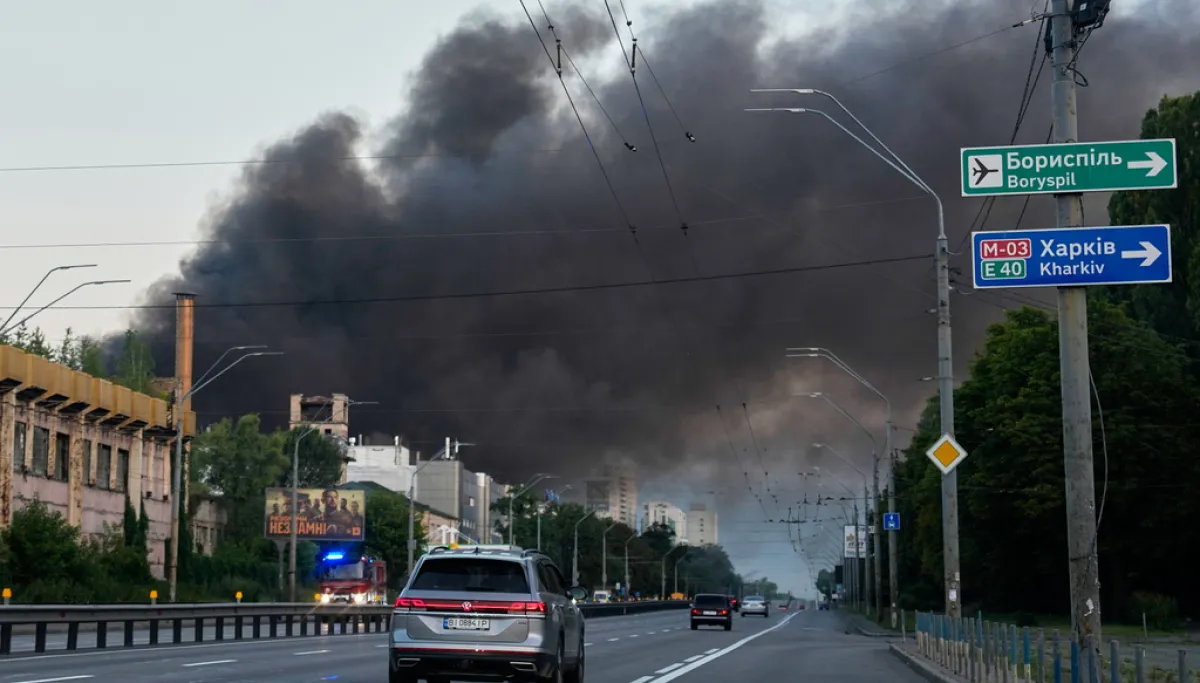
Among the most significant hits was a direct strike against UKRTAC, a Ukrainian defense contractor that produces body armor, helmets, tactical gear, and other protective equipment for Ukrainian forces.

Severion Dangadze, who founded UKRTAC and serves as its development director, confirmed direct missile impacts completely destroyed the company’s main production plant and storage facilities.

Tonight our enterprise experienced the greatest tragedy in its entire history, Dangadze stated, though he emphasized no employees were killed in the attack.


The Russian strike came just hours after Ukrainian forces hit a major warehouse operated by Wildberries, a Russian online retailer, killing several people and generating a massive smoke plume visible across Moscow.

Russia has significantly intensified missile attacks against Kyiv in recent weeks, exploiting the severe depletion of Ukraine’s interceptor missile stocks. The ammunition shortage has been worsening since last year and was further exacerbated when Western nations diverted stockpiles to the Middle East to counter Iranian ballistic missile threats, particularly as regional tensions threaten to reignite into full-scale conflict.

Despite the extensive damage inflicted on Ukrainian defense targets in recent weeks, the Russian military analysis outlet Rybar cautioned that substantially more strikes would be required to meaningfully degrade Ukraine’s defense industrial capacity.

Soviet-era enterprises that currently form the core of Ukrainian defense production are constructed in ways that make them extremely difficult to disable with limited strikes, the channel noted. To completely destroy Ukraine’s defense industrial backbone, Russia would need to conduct strikes that are more frequent, more accurate, and significantly larger in scale, according to the assessment.

Both Russia and Ukraine have escalated their respective drone and missile campaigns in parallel. Over the past year, Kyiv has for the first time inflicted substantial damage against Russia’s energy infrastructure, marking a significant shift in the conflict’s dynamics since the war’s outbreak.

With information from Washington Examiner

Share:
Dimitris Papafotis
Dimitris Papafotis

Dimitris Papafotis is the editor-in-chief of NewsFire.GR. He was born and raised in Athens. He studied at the Journalism Workshop (1991-1993). He currently lives in Pyrgos, Ilia, where he has been active in radio and various newspapers, while also maintaining his personal blog, Papafotis.gr.

The Russian strike package included 38 Iskander ballistic missiles and six Zircon hypersonic cruise missiles, both weapon systems notoriously difficult to defend against, according to open-source intelligence assessments. Ukrainian air force officials acknowledged their forces stopped less than half the incoming weapons, a dramatic decline from earlier periods of the conflict when Kyiv claimed the vast majority of Russian missiles were successfully intercepted.

Primary targets in the assault were warehouses, dual-use manufacturing facilities, and logistics infrastructure critical to Ukraine’s military operations.

Among the most significant hits was a direct strike against UKRTAC, a Ukrainian defense contractor that produces body armor, helmets, tactical gear, and other protective equipment for Ukrainian forces.

Severion Dangadze, who founded UKRTAC and serves as its development director, confirmed direct missile impacts completely destroyed the company’s main production plant and storage facilities.

Tonight our enterprise experienced the greatest tragedy in its entire history, Dangadze stated, though he emphasized no employees were killed in the attack.

The Russian strike came just hours after Ukrainian forces hit a major warehouse operated by Wildberries, a Russian online retailer, killing several people and generating a massive smoke plume visible across Moscow.

Russia has significantly intensified missile attacks against Kyiv in recent weeks, exploiting the severe depletion of Ukraine’s interceptor missile stocks. The ammunition shortage has been worsening since last year and was further exacerbated when Western nations diverted stockpiles to the Middle East to counter Iranian ballistic missile threats, particularly as regional tensions threaten to reignite into full-scale conflict.

Despite the extensive damage inflicted on Ukrainian defense targets in recent weeks, the Russian military analysis outlet Rybar cautioned that substantially more strikes would be required to meaningfully degrade Ukraine’s defense industrial capacity.

Soviet-era enterprises that currently form the core of Ukrainian defense production are constructed in ways that make them extremely difficult to disable with limited strikes, the channel noted. To completely destroy Ukraine’s defense industrial backbone, Russia would need to conduct strikes that are more frequent, more accurate, and significantly larger in scale, according to the assessment.

Both Russia and Ukraine have escalated their respective drone and missile campaigns in parallel. Over the past year, Kyiv has for the first time inflicted substantial damage against Russia’s energy infrastructure, marking a significant shift in the conflict’s dynamics since the war’s outbreak.

With information from Washington Examiner


