Necessary Cookies

Required for the site to function. Cannot be disabled.

Analytics Cookies

Help us understand how visitors interact with our site (Google Analytics via GTM).

Marketing Cookies

Used to track visitors and deliver personalised advertisements.

We use cookies to enhance your browsing experience and analyse site traffic. By clicking Accept All, you consent to our use of cookies. Privacy Policy
NewsFire Global
Home News Europe World Christianity Culture Wars Opinion Video
Information
About Us Authors Advertising Terms & Conditions Privacy Policy Contact
R2B Media
R2B NEWSFIRE.GR PAPAFOTIS.GR THRACTION HELLENIC CONSERVATIVES RIGHT2THEBONE YT
News Culture Wars

Korean Series Promotes Discipline Through Corporal Punishment

A South Korean Netflix series about a government inspector who slaps school bullies has sparked debate over its portrayal of corporal punishment as justice.
Stefanos Banos
Stefanos Banos Staff Writer
JUNE 21, 2026 AT 4:33 PM

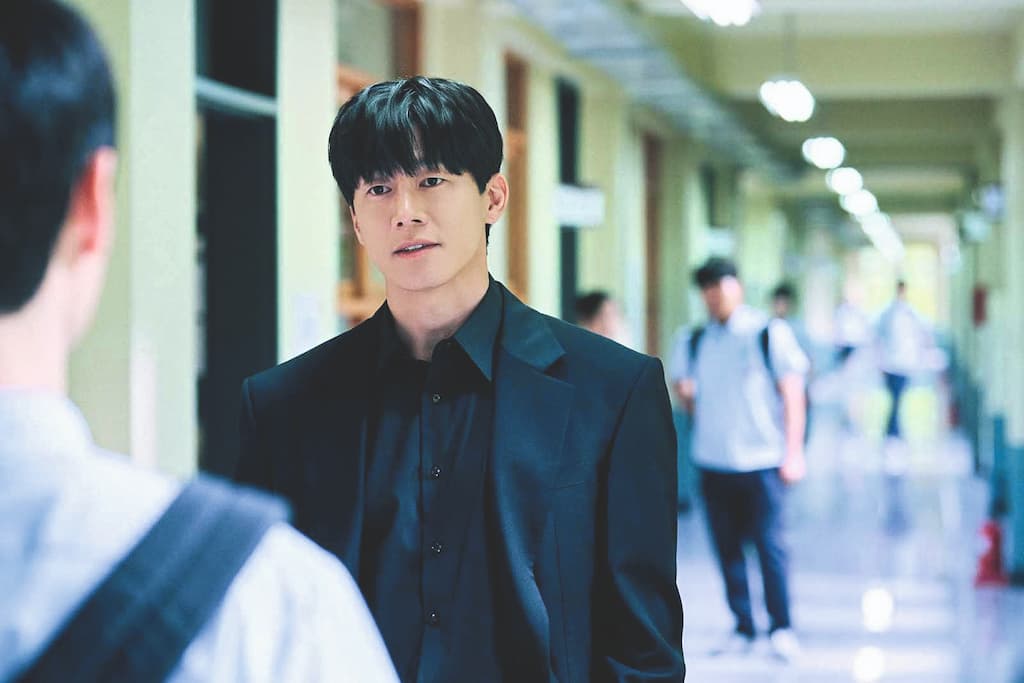
The show, titled Que ça vous serve de leçon! (or “Let That Be a Lesson to You”), follows Na Hwajin, an inspector from the Bureau of Educational Rights Protection, as he arrives at Daehan High School and begins slapping students who bullied their classmate Park Dae-seok to the point of suicide, according to Valeurs Actuelles.

The series does not hold back in its depiction of justice delivered through physical force. When viewers discover that the ringleader of the bullying campaign is the son of a member of parliament, the stakes rise dramatically. Yet Na Hwajin continues his campaign undeterred, supported by Choi Gang-seok, the Minister of Education, who pushes back against the politician attempting to shut down the bureau.

A Fantasy of Accountability

Episode after episode, the show unleashes its sardonic vigilante into schools and high schools where troublemakers reign unchecked in the face of a resigned administration. The series presents a courageous minister who stands firm against a political class unconcerned with the common good and a media establishment steeped in leftist ideology, arguing that the right to education requires places where teaching can actually occur rather than dens surrendered to wild animals who operate with impunity.

The show’s boldness lies not merely in its unapologetic, stylized depiction of corporal punishment delivered to student bullies, drug users, and thieves who exploit their minor status to escape justice. More significantly, it highlights the abdication of political elites who cling to their privileges or view societal problems merely as stepping stones for personal ambition, as Valeurs Actuelles reports.

Critical Reception Divided

Critics have been sharply divided in their response to the series. Some celebrate its immediate success as a cathartic viewing experience that is technically well-crafted, featuring a hot-button topic, well-drawn characters, subtle subplots, successful fight choreography, and sustained pacing. Others denounce it as an apology for state violence as the only conceivable solution to the savagery overtaking the educational system.

The series, directed by Hong Jong-chan, Lee Nam-kyu, and Kim Da-hee, offers what many viewers secretly desire: a fantasy where wrongdoers face immediate consequences and good students can finally smile. The spectacle is entirely unrealistic, with the inspector’s cheerful, uninhibited slaps carrying no judicial or political consequences whatsoever. The scenario is no more plausible than Superman’s superpowers.

A Cross-Cultural Daydream

Yet for the duration of an episode, watching troublemakers collapse and decent students breathe easier, viewers may find themselves imagining French high schools inspected by Na Hwajin, dispatched from South Korea as part of a fruitful intercultural exchange.

The first season consists of ten episodes ranging from 52 minutes to one hour and 12 minutes, available on Netflix. Whether viewed as dangerous propaganda or harmless escapism, the show has touched a nerve regarding the consequences of allowing disorder to flourish unchecked in educational institutions.

With information from Valeurs Actuelles

Share:
Stefanos Banos
Stefanos Banos

Stefanos Banos was born in Piraeus and is an editor at NewsFire.GR, specializing in political analysis and international relations. He graduated from the Department of Communication and Media at the University of Bremen in Germany, where he also completed his Master of Arts in Communication and Media Studies. Married to Zoi, he is a proud father of three boys.

The show, titled Que ça vous serve de leçon! (or “Let That Be a Lesson to You”), follows Na Hwajin, an inspector from the Bureau of Educational Rights Protection, as he arrives at Daehan High School and begins slapping students who bullied their classmate Park Dae-seok to the point of suicide, according to Valeurs Actuelles.

The series does not hold back in its depiction of justice delivered through physical force. When viewers discover that the ringleader of the bullying campaign is the son of a member of parliament, the stakes rise dramatically. Yet Na Hwajin continues his campaign undeterred, supported by Choi Gang-seok, the Minister of Education, who pushes back against the politician attempting to shut down the bureau.

A Fantasy of Accountability

Episode after episode, the show unleashes its sardonic vigilante into schools and high schools where troublemakers reign unchecked in the face of a resigned administration. The series presents a courageous minister who stands firm against a political class unconcerned with the common good and a media establishment steeped in leftist ideology, arguing that the right to education requires places where teaching can actually occur rather than dens surrendered to wild animals who operate with impunity.

The show’s boldness lies not merely in its unapologetic, stylized depiction of corporal punishment delivered to student bullies, drug users, and thieves who exploit their minor status to escape justice. More significantly, it highlights the abdication of political elites who cling to their privileges or view societal problems merely as stepping stones for personal ambition, as Valeurs Actuelles reports.

Critical Reception Divided

Critics have been sharply divided in their response to the series. Some celebrate its immediate success as a cathartic viewing experience that is technically well-crafted, featuring a hot-button topic, well-drawn characters, subtle subplots, successful fight choreography, and sustained pacing. Others denounce it as an apology for state violence as the only conceivable solution to the savagery overtaking the educational system.

The series, directed by Hong Jong-chan, Lee Nam-kyu, and Kim Da-hee, offers what many viewers secretly desire: a fantasy where wrongdoers face immediate consequences and good students can finally smile. The spectacle is entirely unrealistic, with the inspector’s cheerful, uninhibited slaps carrying no judicial or political consequences whatsoever. The scenario is no more plausible than Superman’s superpowers.

A Cross-Cultural Daydream

Yet for the duration of an episode, watching troublemakers collapse and decent students breathe easier, viewers may find themselves imagining French high schools inspected by Na Hwajin, dispatched from South Korea as part of a fruitful intercultural exchange.

The first season consists of ten episodes ranging from 52 minutes to one hour and 12 minutes, available on Netflix. Whether viewed as dangerous propaganda or harmless escapism, the show has touched a nerve regarding the consequences of allowing disorder to flourish unchecked in educational institutions.

With information from Valeurs Actuelles

