
Justinian’s Symphonia and Europe’s Constitutional Amnesia
Pope Leo XIV's encyclical Magnifica Humanitas condemns the commodification of persons by artificial intelligence, though it lacks binding legal force over governments or corporations.
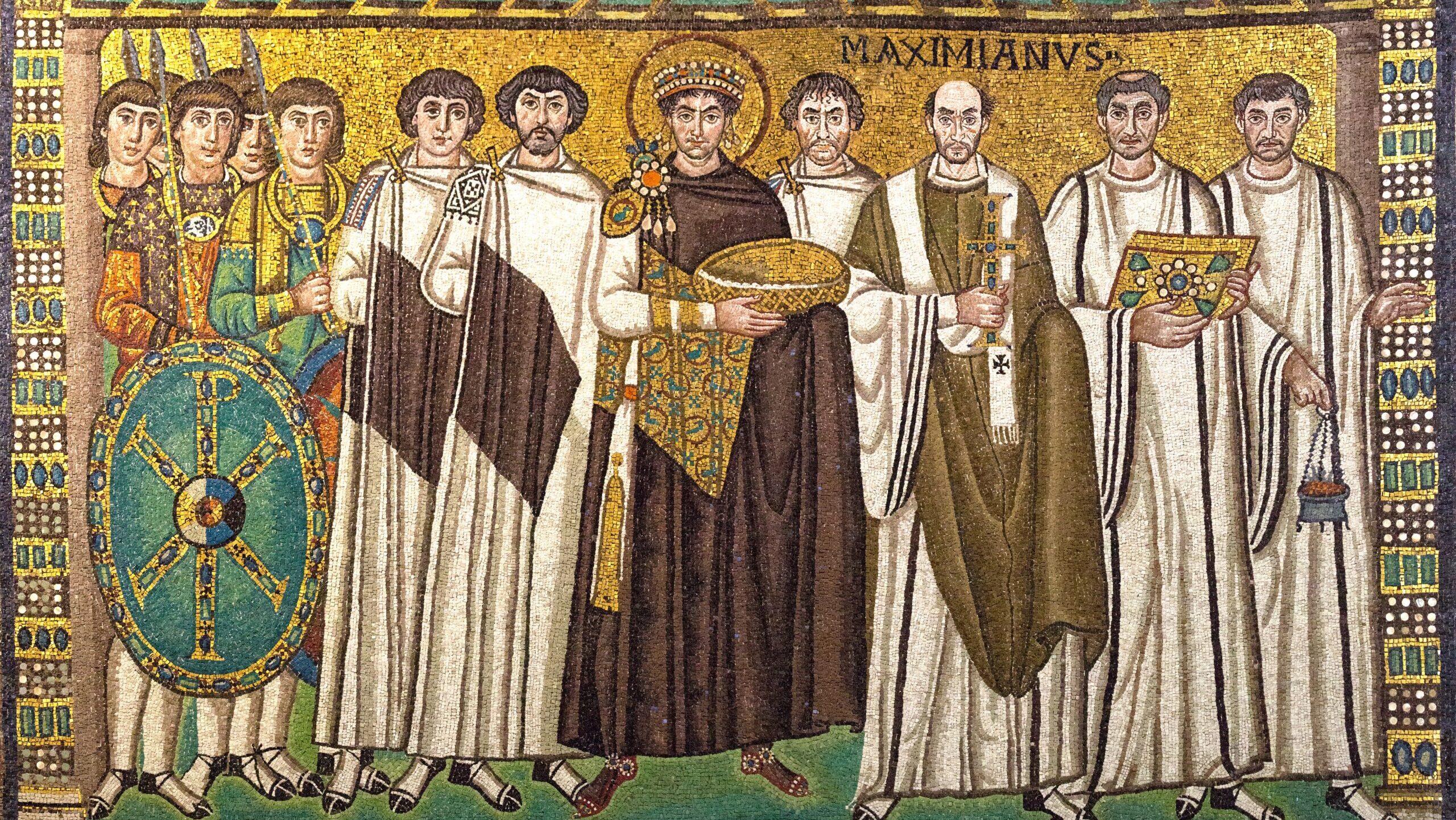

A papal encyclical, a patriarchal address to the French Academy, and a joint declaration signed in Constantinople—three events separated by weeks but united by a common constitutional question that no Western government has yet answered: who speaks for the human person when algorithms replace judgment?
On May 15, 2026, Pope Leo XIV published Magnifica Humanitas, his first encyclical and a formal intervention into the governance of artificial intelligence. Released on the 135th anniversary of Rerum Novarum, the document carries the full canonical weight of papal teaching and addresses what the pontiff describes as the reduction of humanity to data and commodities, according to The European Conservative.
The encyclical renews the Church’s condemnation of every form of commodification of the person and situates human dignity beyond algorithmic determination. It warns that artificial intelligence, when severed from ethical grounding, risks making decisions about life and death more rapid and impersonal.
Yet for all its doctrinal precision, Magnifica Humanitas cannot compel a government, bind a corporation, or amend the European Union Artificial Intelligence Act of 2024. A papal encyclical functions as the spiritual arm of governance, addressing souls and naming disorder—not as a legislative instrument.
Three Movements, One Constitutional Vision
The story of Magnifica Humanitas did not begin in May. It opened on November 29, 2025, the eve of the Feast of Saint Andrew, when Leo XIV and Ecumenical Patriarch Bartholomew signed a joint declaration in Constantinople. The declaration invoked the sacredness of the human person, the unity of the Church, and the shared obligation to peace—the Eastern and Western arms of Christian governance speaking together in the first formal common document of the new pontificate.
Six weeks before the encyclical, on March 30, 2026, Bartholomew took his seat at the Institut de France in Paris, in the chair once held by Joseph Ratzinger. French President Emmanuel Macron had signed the decree of appointment. Before the assembled membership of the Académie des Sciences Morales et Politiques, Bartholomew delivered what The European Conservative describes as a constitutional diagnosis, not a theological homily.
The crisis of contemporary society, he told the French Academy, is not primarily a moral crisis but a crisis of truth. Without that truth, liberty becomes arbitrary, equality devolves into mere leveling, and fraternity becomes a moral exhortation devoid of unifying power. He addressed the intellectual guardians of the French Republic’s founding vocabulary in their own temple and dismantled the anthropological premises on which that vocabulary rests.
Justinian’s Model: Symphonia of Priesthood and Empire
The constitutional architecture for addressing such crises was codified fifteen centuries ago. In Novella VI, the Byzantine Emperor Justinian I articulated the symphonia: the priesthood governs the soul, the imperial authority governs the city, and neither is sufficient alone. The priesthood without the temporal arm has no instrument of enforcement in the order of law. The temporal arm without the priesthood has no constitutive anthropology for the laws it enacts.
Justinian stated the reciprocal obligation with precision: the emperor’s first duty was not to the treasury but to the integrity of the priesthood, which constantly prays to God for the salvation of the realm. The symphonia was the governance model for a civilization that took the human person seriously as more than a rights-bearing unit.
A Question the Temporal Order Has Not Answered
What unites the November declaration, the March address, and the May encyclical is something no major commentary on Magnifica Humanitas has yet named: they are three movements of a concert that the temporal order has attended but not answered. The question is not whether Leo XIV has spoken well. It is whether any institutional architecture exists for a temporal authority to respond, and whether any European institution has been authorized to ask the anthropological question the encyclical raises.
The answer, as matters stand, is no.
With information from The European Conservative





