
Immediate Reinforcement of the Patriot Air Defense System
Lockheed Martin secured a $61 million U.S. Army contract to upgrade Patriot air defenses by eliminating coverage gaps with a new 360° guidance system and faster, more compact missile launcher.
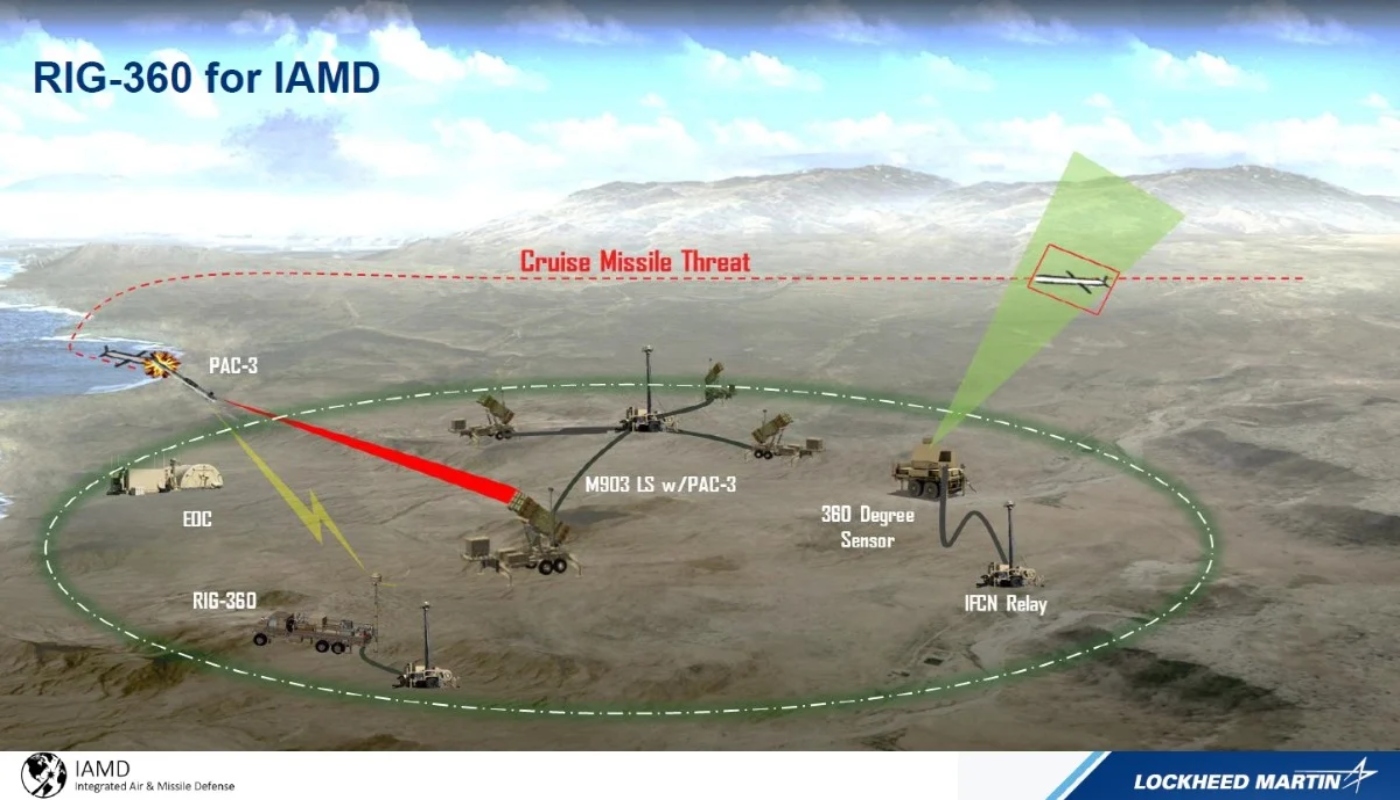

Lockheed Martin, the American defense contractor, announced the signing of a major $61 million contract with the U.S. Army to upgrade the Patriot air defense system, with the aim of eliminating its blind spots.
The new initiative includes the deployment of:
- a containerized launcher (MSECL: Missile Segment Enhancement Containerized Launcher)
- a missile guidance device (RIG-360 DCS: Remote Interceptor Guidance 360 Degrees Containerized System).
These two systems will work together to address the Patriot’s fundamental tactical drawback—the existence of dead zones where enemy targets can strike unhindered.
The concept of a dead zone means that the Patriot system cannot engage targets outside its radar coverage area. According to the contract terms, the development of both systems must be completed by May 31, 2027.
Currently, a standard Patriot system relies on the AN/MPQ-53 radar, which provides coverage only within a specific arc and not 360°.
When a threat approaches from outside this sector, the system’s ability to intercept it drops drastically, as the radar cannot supply the necessary tracking and fire control data for the effective operation of the Patriot missile.
This limitation makes the deployment of Patriots less flexible, especially when threats come simultaneously from multiple directions (as can be achieved by anyone equipped with dozens of very low-cost drones).
The RIG-360 DCS is designed to solve this problem. It integrates with the U.S. Army’s Integrated Battle Command System (IBCS), which collects data from any connected sensor (network-centric era).
A 360° sensor feeding the IBCS can provide targeting data, which the RIG-360 DCS converts into missile guidance. This allows Patriots to counter threats from any direction without needing to reposition their main radar.
Meanwhile, the new MSECL launcher is expected to accelerate system deployment compared to existing M-901 launchers while also reducing its logistical footprint.





